A line of baking soda stops the ants
An ant feels the spot ahead of it. Powder wipes its scent trail, so it loses the way. Flour, cinnamon, vinegar, soap and a puddle stop it too, each for its own reason. There is no list of what stops ants.
Game Tailors
Source: How Professor Oops works: what it really simulates
The drawing app where the paper is real. No ads. No accounts. No personal data: only anonymous counts, which you can switch off.
Game Tailors · Schieweg 15Y-40, 2627 AN Delft (NL)
KvK 92437702 · VAT NL866044474B01
info@gametailors.com · +31 6 4227 5919
© 2026 Game Tailors
How it works
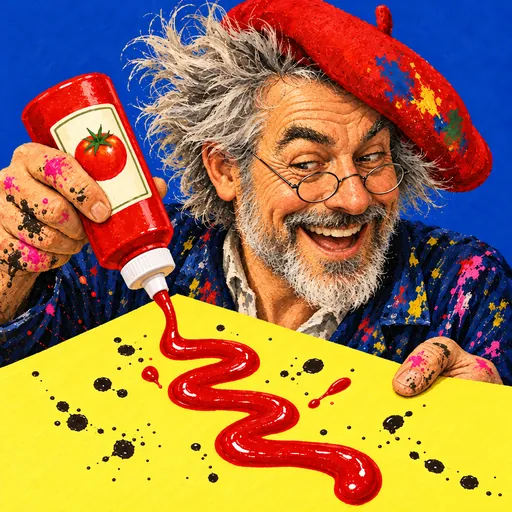
Every spot on the page keeps track of its own water, colour, heat and what's dissolved in it, and works out what happens next, many times a second. So the same ketchup ends differently, depending on what your child did first.
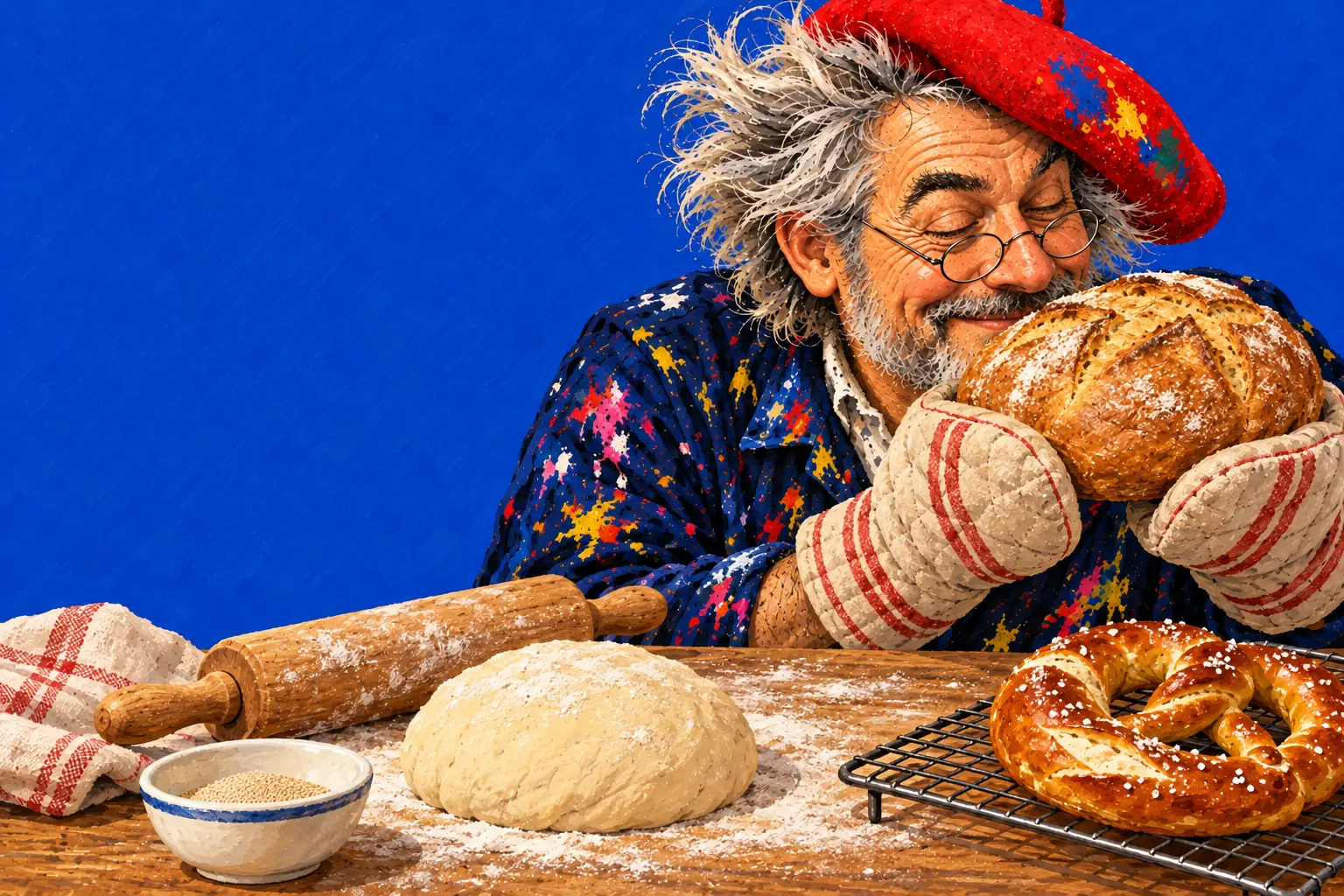
Shake flour into a puddle and it drinks the water and turns into dough. Knead it and its gluten builds up. Add yeast and the yeast makes gas, fastest when it's warm, slower with salt in the dough, not at all once it's too hot.
The gluten holds that gas, so the loaf rises. Skip the kneading and the gas gets away. Leave it far too long and the dough sinks back. Nobody animated any of that: it comes from what's in the dough.
Clip a battery to anything on the page and the current finds its own way, spot by spot, through whatever carries it. Copper wire carries plenty. A pencil line carries a trickle, too little for a bulb. Crayon carries nothing. Salty water carries enough to split the water.
We checked this one against the arithmetic. With a little torch bulb in copper wire, the 1.5 V battery gives 0.27 amps and the 9 V gives 1.23, just what Ohm's law says for that circuit. The 9 V burns the bulb out with a pop.
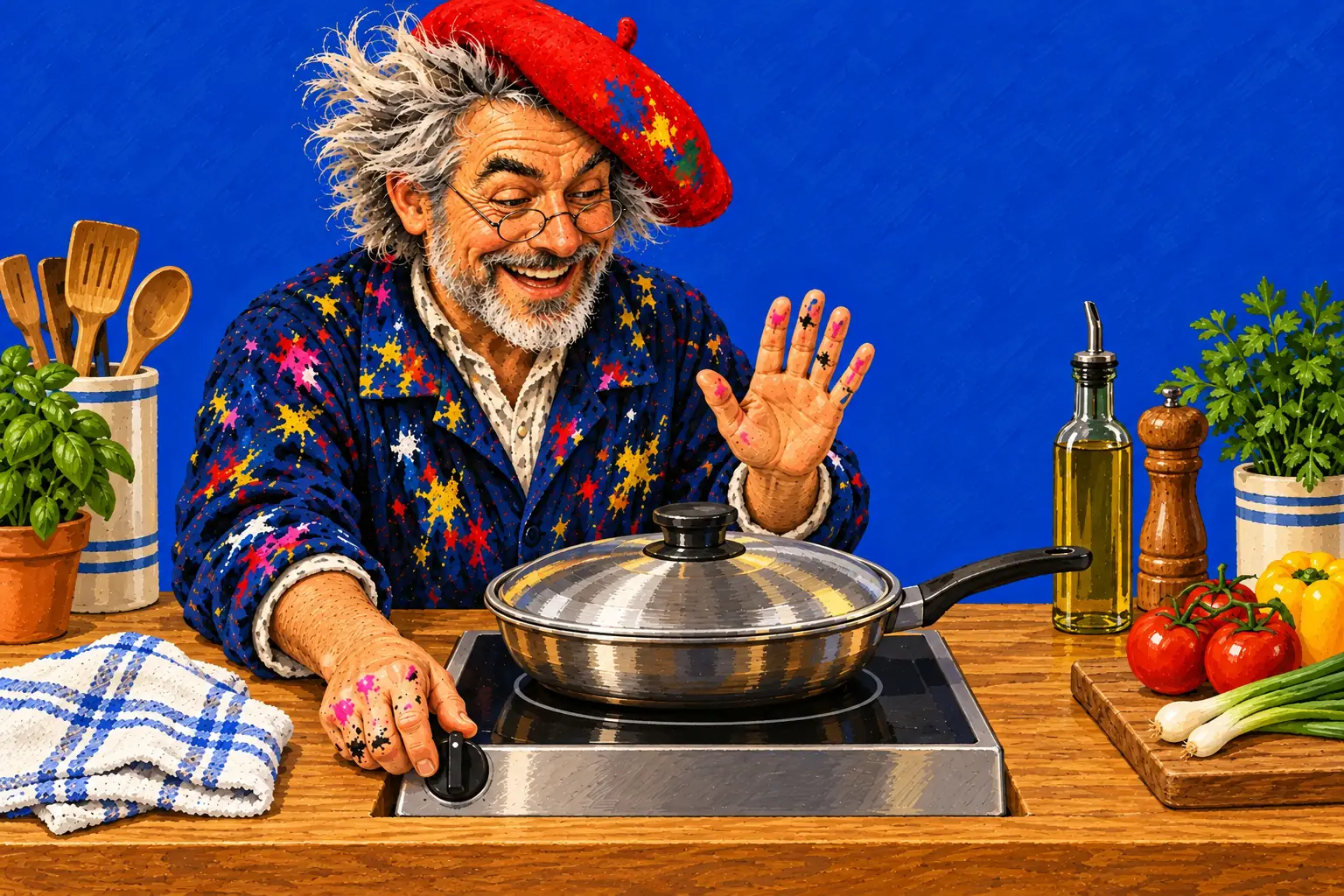
Paper catches at about 230 °C. Oil, butter and wax each catch at their own, higher temperature. Water that reaches burning oil turns to steam at once and flings the burning oil up, so on screen you see why a pan fire gets a lid and never water. Wet paper holds a flame back until its water has boiled off.
A lid cuts off the air and the flames go out. Baking soda gives off a gas that does the same. Flour flares up instead, because its fine dust catches as it falls.
Fire stays on the screen.
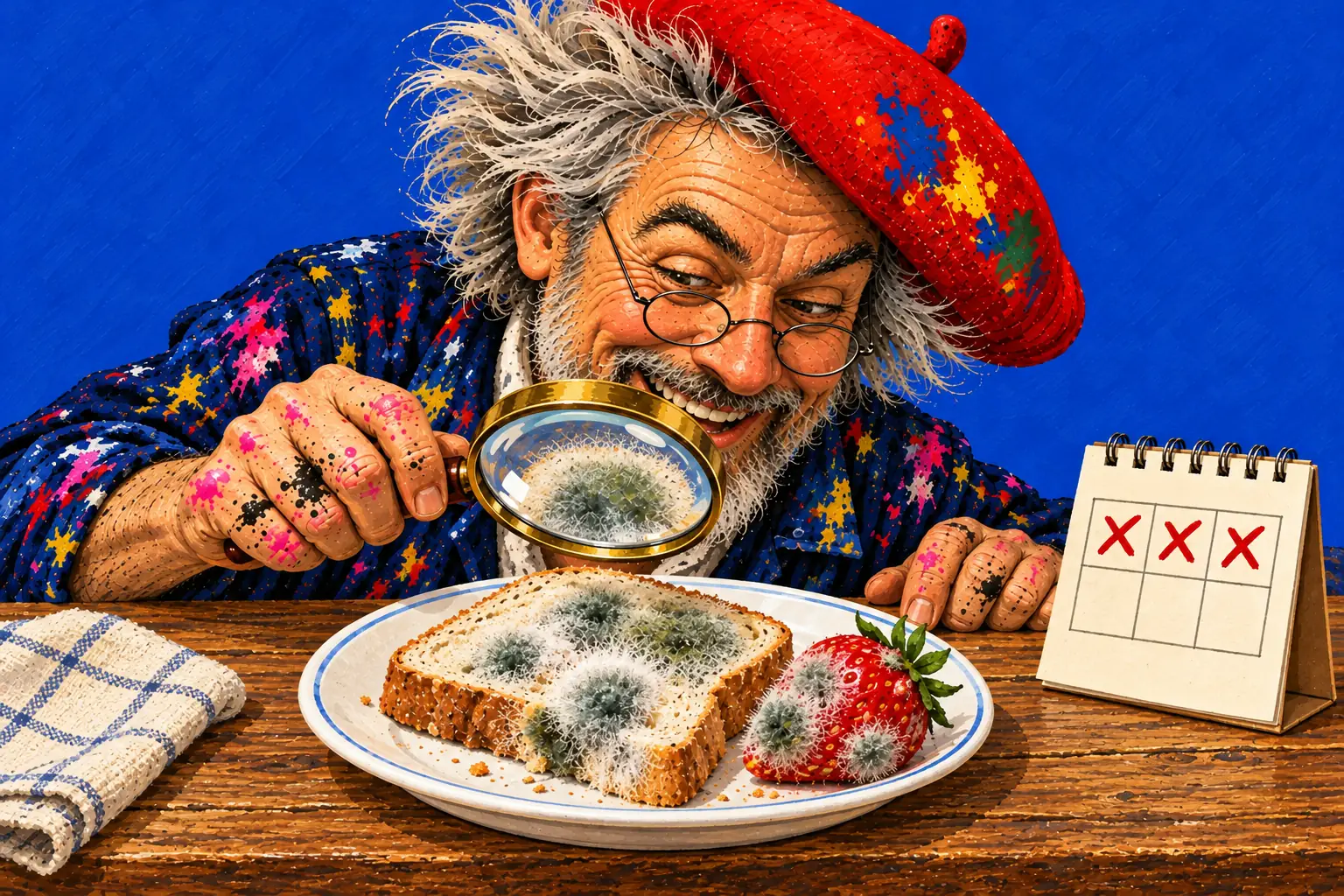
Squeeze out honey and ketchup and tap Wait 3 days. The ketchup goes mouldy (moldy). The honey stays clean, because sugar that thick keeps mould off. Shake plenty of salt on a blob of ketchup and it grows far less.
The page asks the same questions everywhere: is there food, is it damp, how much salt, sugar and acid is there? Disturb a ripe colony and its spores go up into the air, ride the draught, and start new colonies where they land on food.
Paper soaks up water by itself, and the water takes along what's in it: acid, salt, sugar, dye. Wet a black marker dot and its dyes travel at different speeds, so it splits into rings of colour. A wash dries with a darker rim. Pencil stays put when you wash over it, because water doesn't move it, and watercolour lifts again.
The air works the same way. It moves over the page as a fluid, pushed by anything going past, and carries smoke, smells and spores. Ants and flies follow those smells.

This is the part we care about most. Things don't know about each other: they only meet on the paper. Almost everything leaves something on the page, or reads what's there, by its own properties. So things can work out that we never tried ourselves. Three that we can trace all the way through:
It's a toy, and these are worth spotting together.
Time runs fast. Ice cream goes soft in under a minute, a soaked sheet dries in a couple of minutes, and mould that takes days appears in a tap.
Falling is slow. Things fall far slower than real gravity, so you can watch the splash.
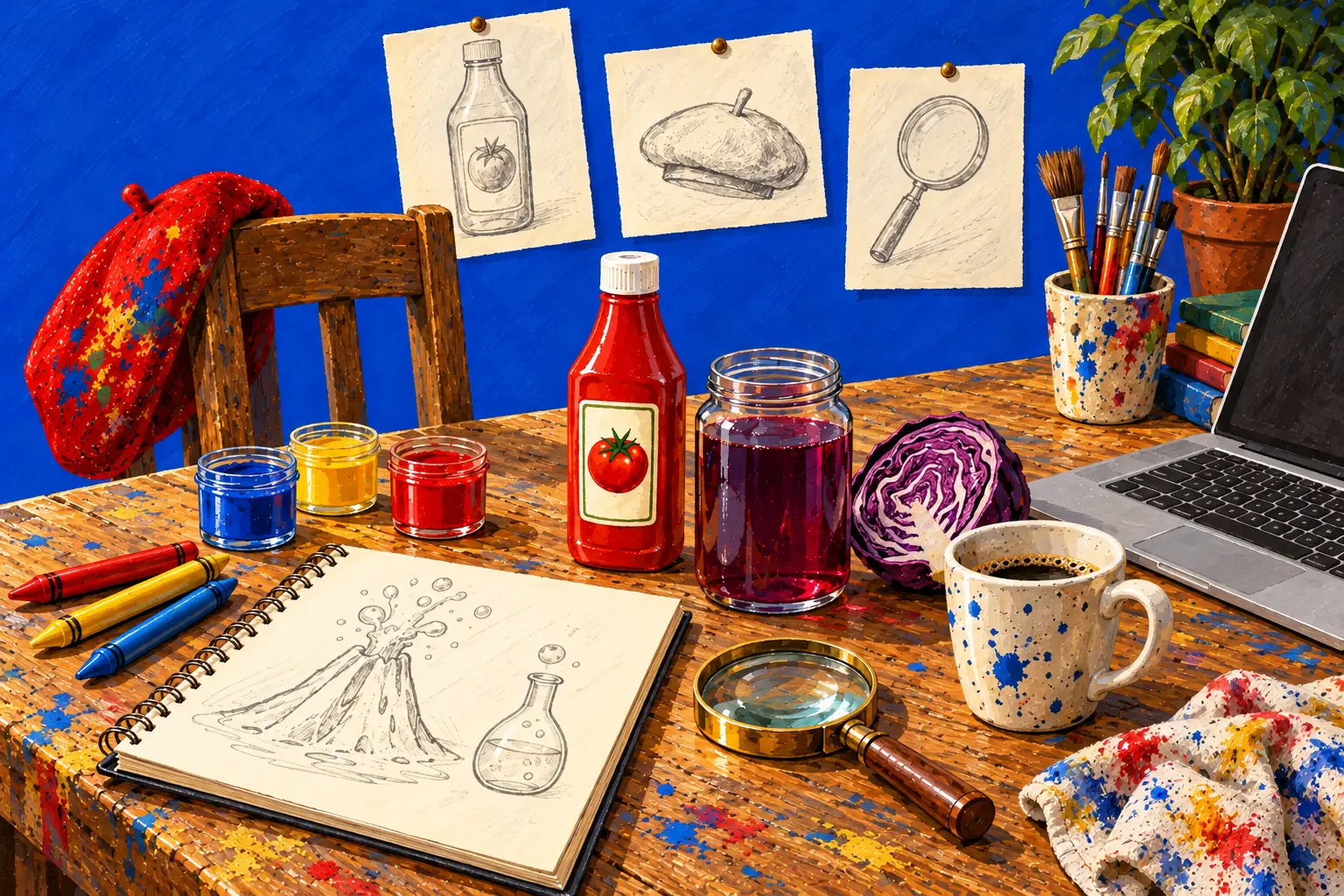
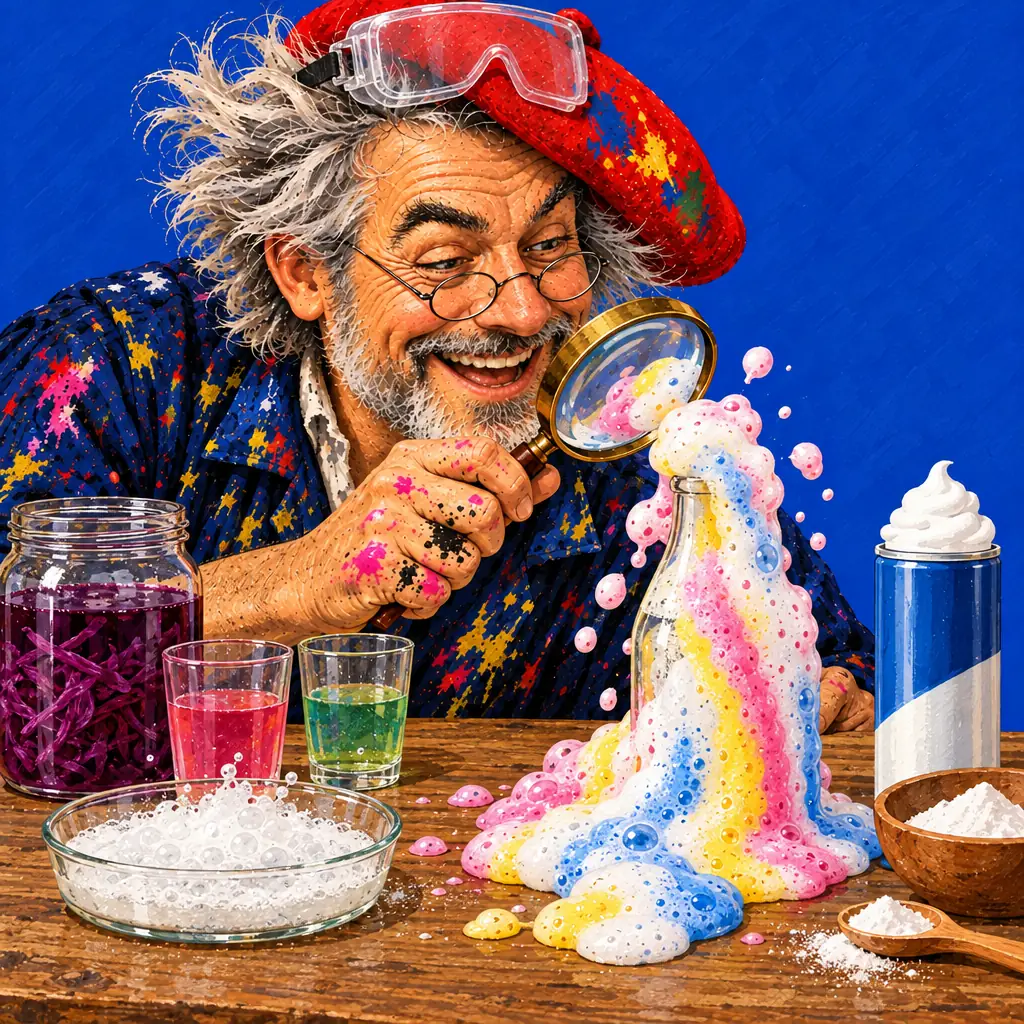
The cabbage colours are looked up. The dye's colours follow charts of the real thing, but the acidity behind them is a rough reading, not a chemistry lab. Lemon juice even fades away as it dries, which real lemon juice doesn't.
The oven and the freezer are a shortcut. Twenty minutes at 180 °C is worked out in one go, not played out as heat moving through the page.
Sound is not simulated. Things are heard by how loud they are and where, and animals react to that. No sound waves travel.
The paper is flat. Air and water are worked out across the sheet, and heights are only piled on top.
No. Some of it is worked out step by step, like the current in a wire or yeast in dough. Some of it is a shortcut, like the oven or how fast mould grows. The list above says which.
You can use it to show something and talk about it, and then try the real thing where that's safe. Check anything you rely on against the real thing: the game's numbers are good for some things and rough for others.
Yes, on the device, with no internet. A phone uses a coarser page than a big tablet, so everything is a little bigger and simpler there. The game works out how much your device can take.
Knead, prove and bake a loaf, on screen and for real.
What grows on food you leave out, and what keeps it away.

A kitchen indicator that goes from pink through purple to green.