Plain text
Every chapter's headings and captions tell the story on their own. Read only those and you know what's special.
Game Tailors
Source: Inside Professor Oops
The drawing app where the paper is real. No ads. No accounts. No personal data: only anonymous counts, which you can switch off.
Game Tailors · Schieweg 15Y-40, 2627 AN Delft (NL)
KvK 92437702 · VAT NL866044474B01
info@gametailors.com · +31 6 4227 5919
© 2026 Game Tailors
Inside Professor Oops
Professor Oops gives a child a sheet of paper and 83 real things to try on it: watercolour, ketchup, a match, a fan, a battery, ants. Every tiny spot of the paper keeps its own heat, its own water and what's dissolved in it, and every tool and animal reads and writes those same numbers. So a child can try something nobody planned for and still get a sensible answer. These pages show how that is built.
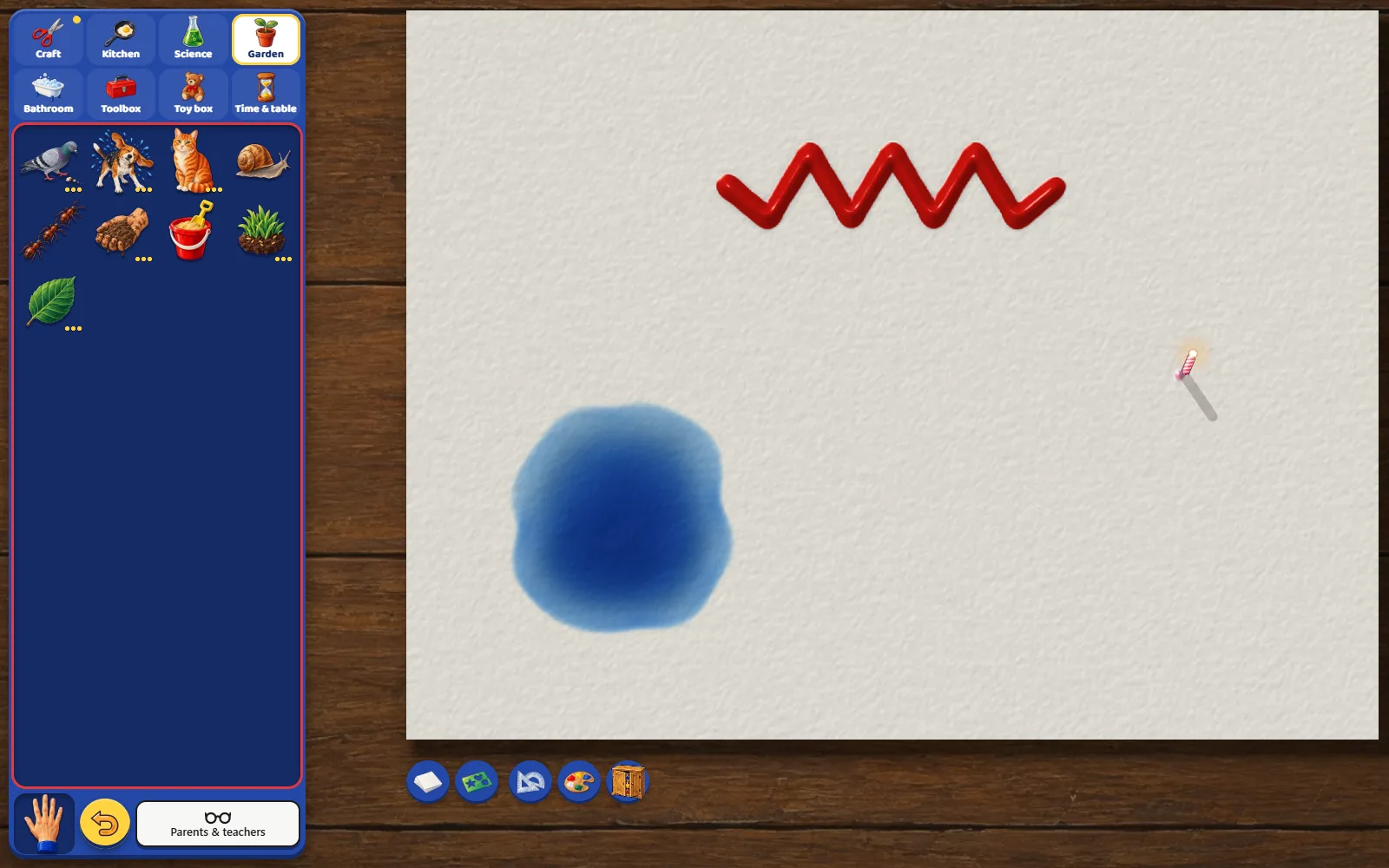
Open Professor Oops and there is a sheet of paper on a table, with drawers full of things from the kitchen, the bathroom, the garden, the craft box, the toy box, the science shelf and the toolbox. There are no levels, no scores and nothing to win. A child paints, pours, squeezes, lights, bangs and waits, and watches what happens.
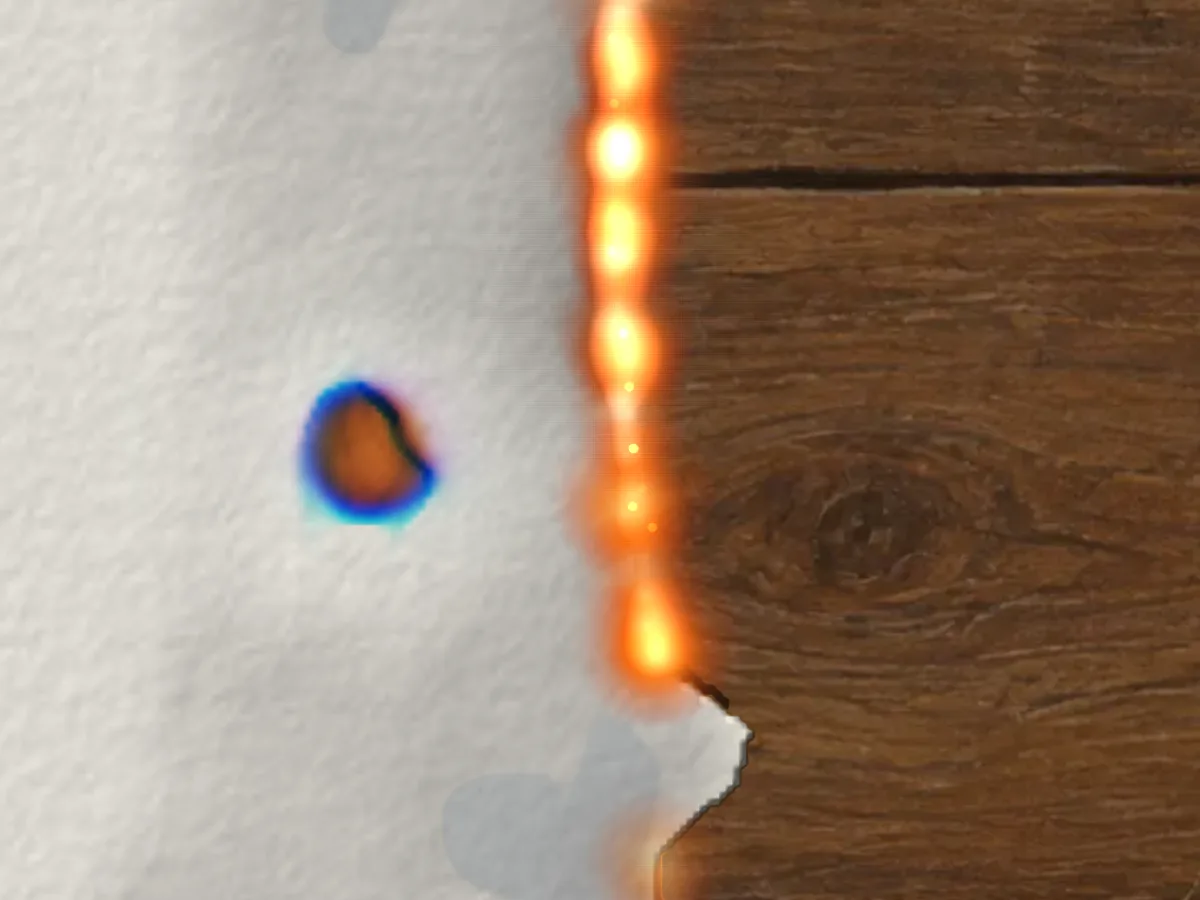
Every result is worked out as it happens. Drop water on a black marker dot and it opens into rings of blue, pink and yellow. Let a fire reach it and the fire is held back at the wet edge until its heat has boiled the water off. Roll a football past a candle and the candle goes out. Leave ketchup out for three days and it grows mould; leave honey out and it doesn't. Each of these comes from a small rule about one thing, such as heat or water or air, applied the same way to everything on the page.
That is why the game can surprise the people who made it. A child who combines two things nobody thought of still gets an answer that makes sense, because both things already speak the same language.
Every chapter's headings and captions tell the story on their own. Read only those and you know what's special.
The engineer's layer: the idea behind each rule, real units and grid sizes, the shortcuts we take and how a test holds each result.
The game's own rule A live demo running the game's real rule and constants, only on a smaller grid. Illustration marks a sketch of the idea.
next update Built and tested, coming in the next update. Everything without this badge is in the game you can play today.
In most games, a programmer decides what happens when two things meet: "if the ball touches the candle, put the flame out". Professor Oops almost never works that way. A rolling ball only pushes the air in front of it. A candle only checks how fast the air round its flame is moving. Neither knows the other exists. Roll the ball past fast enough and the flame goes out, because they share the air.
The same goes for heat, water, what is dissolved in the water, noise and shaking. Each tool writes into a few shared layers, and each thing on the page reacts to those layers by its own numbers. Built for surprises maps them all and lets you follow each one's connections.
Scientists call this emergence. The behaviour comes from parts that share one world, with no list of special cases behind it. It is also why the game can answer questions nobody wrote into it.
Shared: wind
The flame goes out from the ball's wind, with no rule about balls and candles (pinned by a test).
Shared: CO₂ in the air
The heavy gas creeps along the paper and puts the candle out: one 26 cells away goes out, one 84 cells away doesn't (pinned by a test).
Shared: carbonate (a base)
The juice turns blue in a thin ring round the burn and stays purple on clean paper, because burning leaves carbonate in the ash and the indicator reads pH (pinned by a test).
Shared: acid
The water by the plus clip turns pink (pinned by a test).
Shared: wet + water
A match won't light it, and the front stalls until the water has gone (pinned by a test).
Every figure here comes from the released game's code, a test or a recorded measurement, and the chapters say which.
Each chapter takes one part of the world on the paper: what a child sees, what is really computed, how it links to the rest, and where we simplify on purpose. Most have live demos running the game's own rules.
How every system writes into a few shared layers and reacts by its own numbers, and the program that read the code to count the links. 689 links · 55 layers · 0 pair rules.
Thirteen systems, each with its own rules, all on the same sheet.

Marker rings, darker drying edges, tea stains and salt painting, from water moving between neighbouring specks. salt-crust water kept to 1e-6 over 600 solves.

A smudge, a wash and a later pencil each read a different store, so pencil smudges under the hand and stays under water. smudges when dry · holds under water.
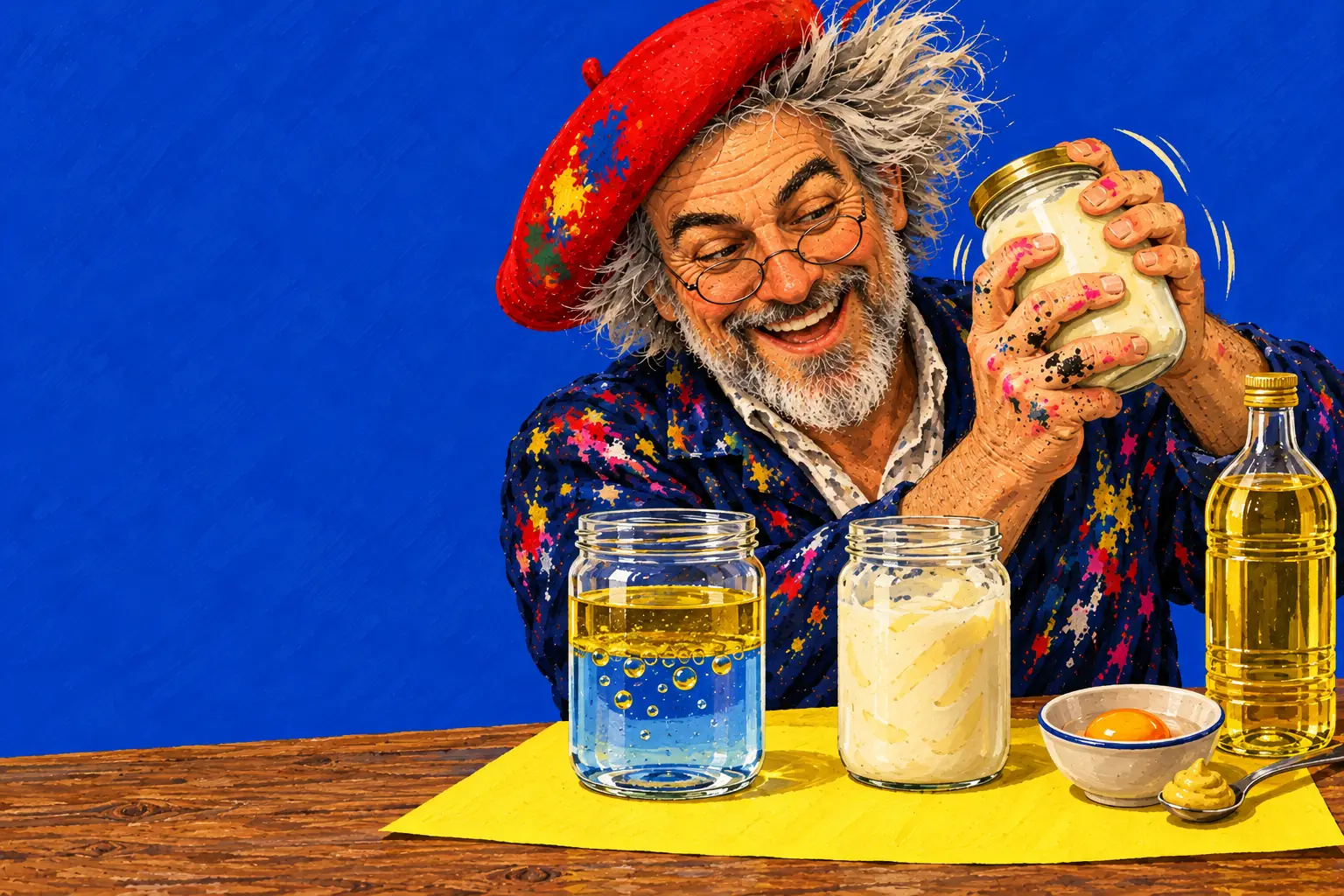
Two numbers decide whether a sauce holds its bead; three questions decide what floats; no file that moves liquid names one. 3 layers a cell · 0 liquids named in code.
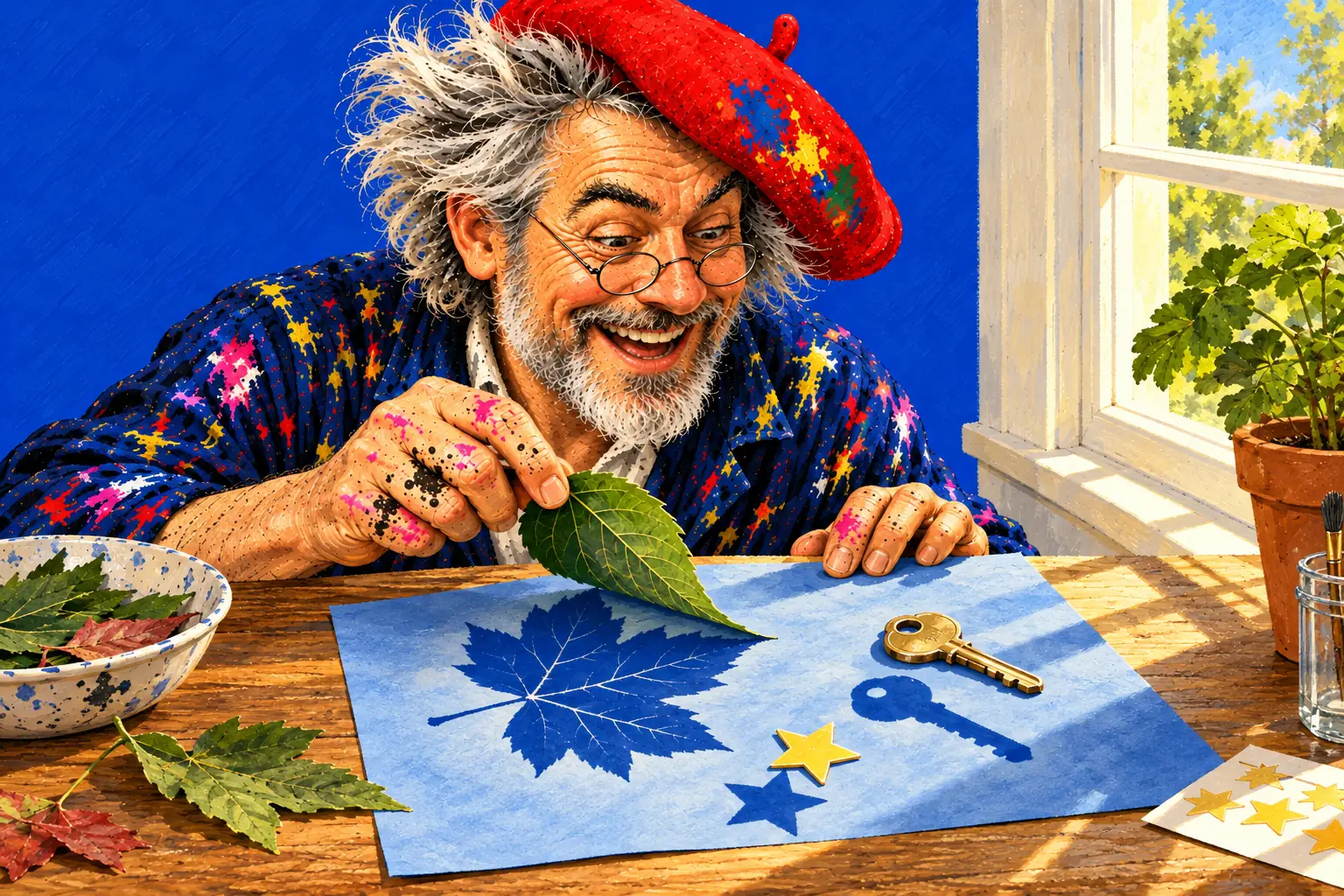
Three numbers per spot, so stirred paint lands between its colours and washes laid over each other go darker. A = −ln c · drawn as e⁻ᴬ.

Twelve dissolved things per spot, eleven reaction rules, and red cabbage juice to show the pH. 12 dissolved things · 11 reaction rules.
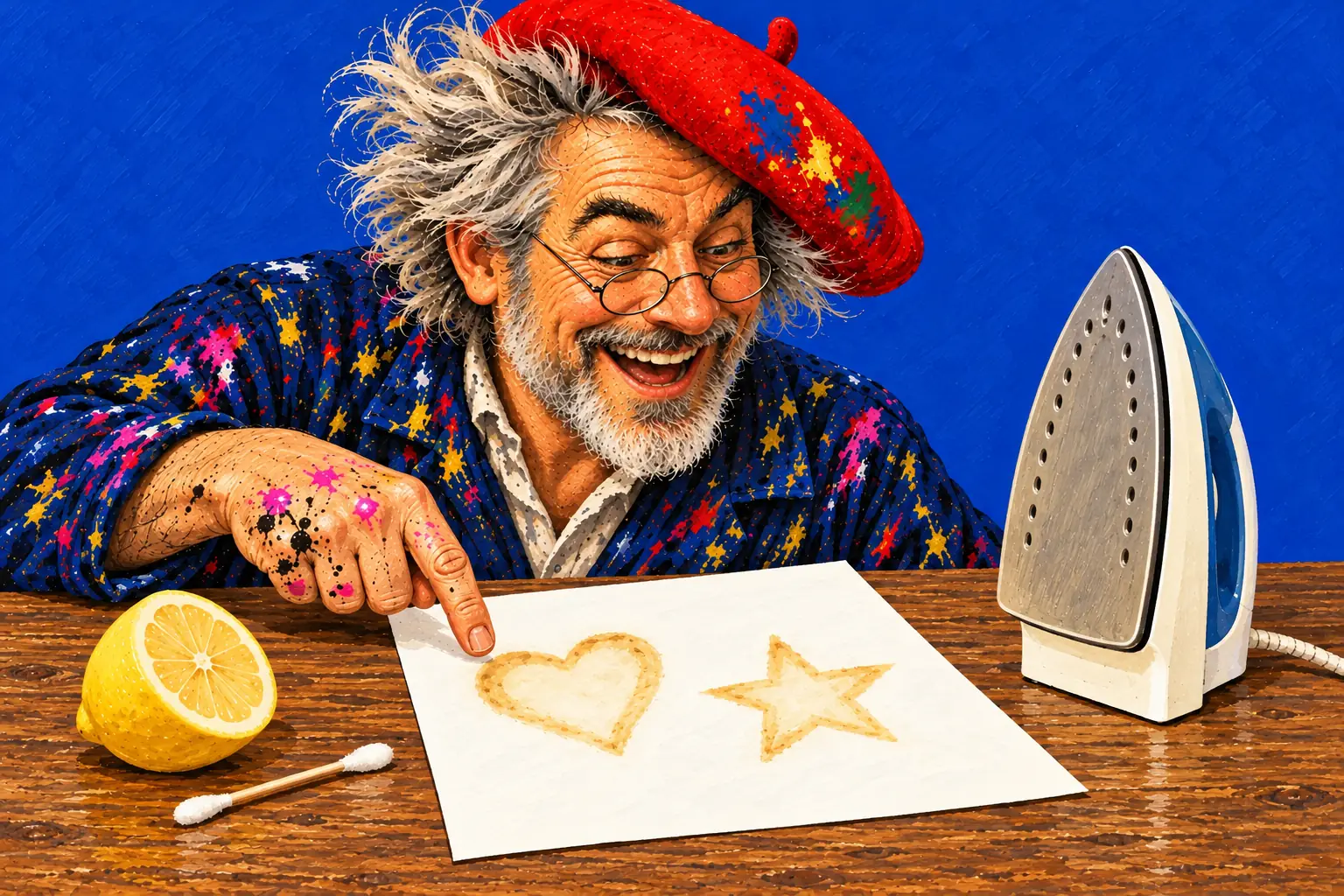
Irons, candles, lenses and batteries write one thermometer. No line of code sets how fast fire spreads. paper lights at 230 °C · front 1.85 cells/s.

Fans, hair dryers, footballs and hot cups push the same air, and flour, smoke, smells and flames answer it. 64 × 48 air cells · multigrid solve.

Real volts, ohms and amps on every speck, through copper, pencil and salty water, with nothing telling it how the wires join. one bulb 0.273 A · exact solve 0.272 A.
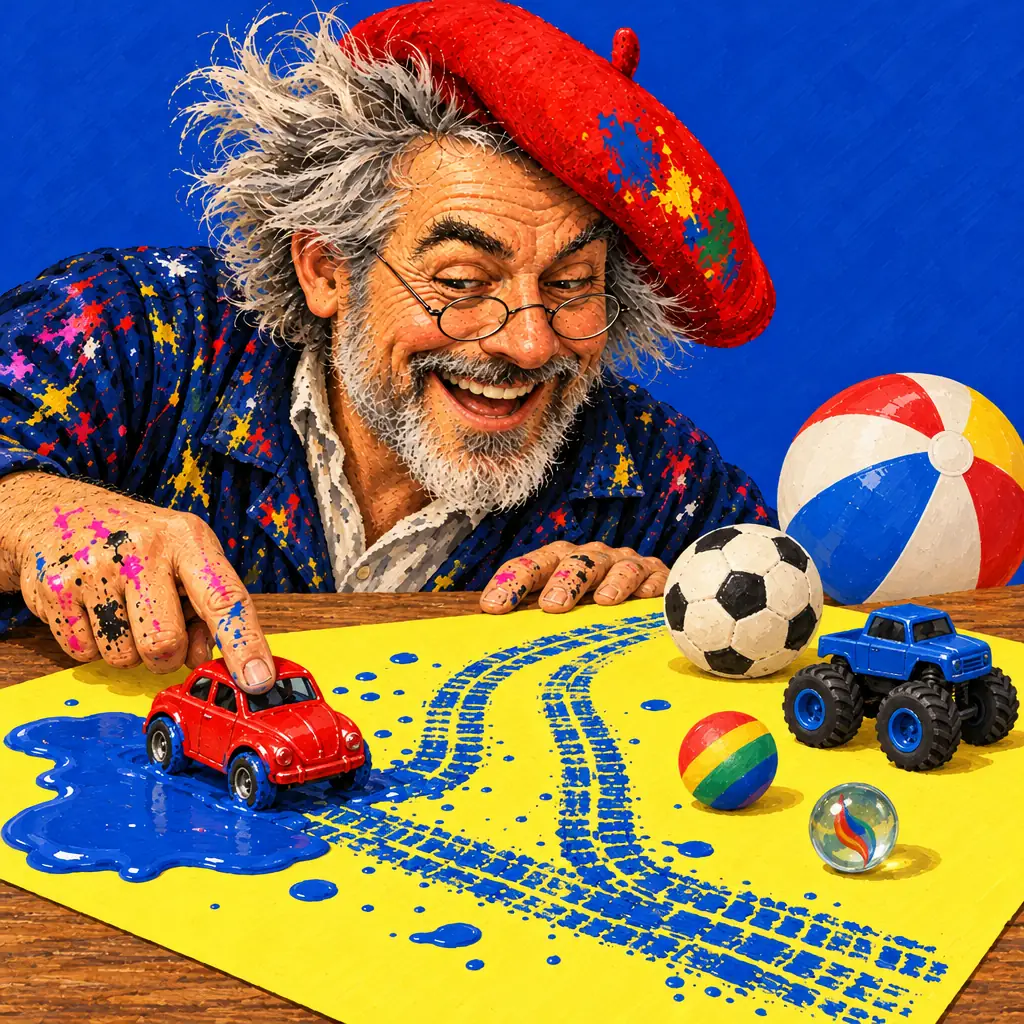
One bump rule from weight, size and height, one press a dozen systems feel, and one downhill when the tablet tilts. J = −(1+e)·vₙ / (1/mₐ + 1/m_b).
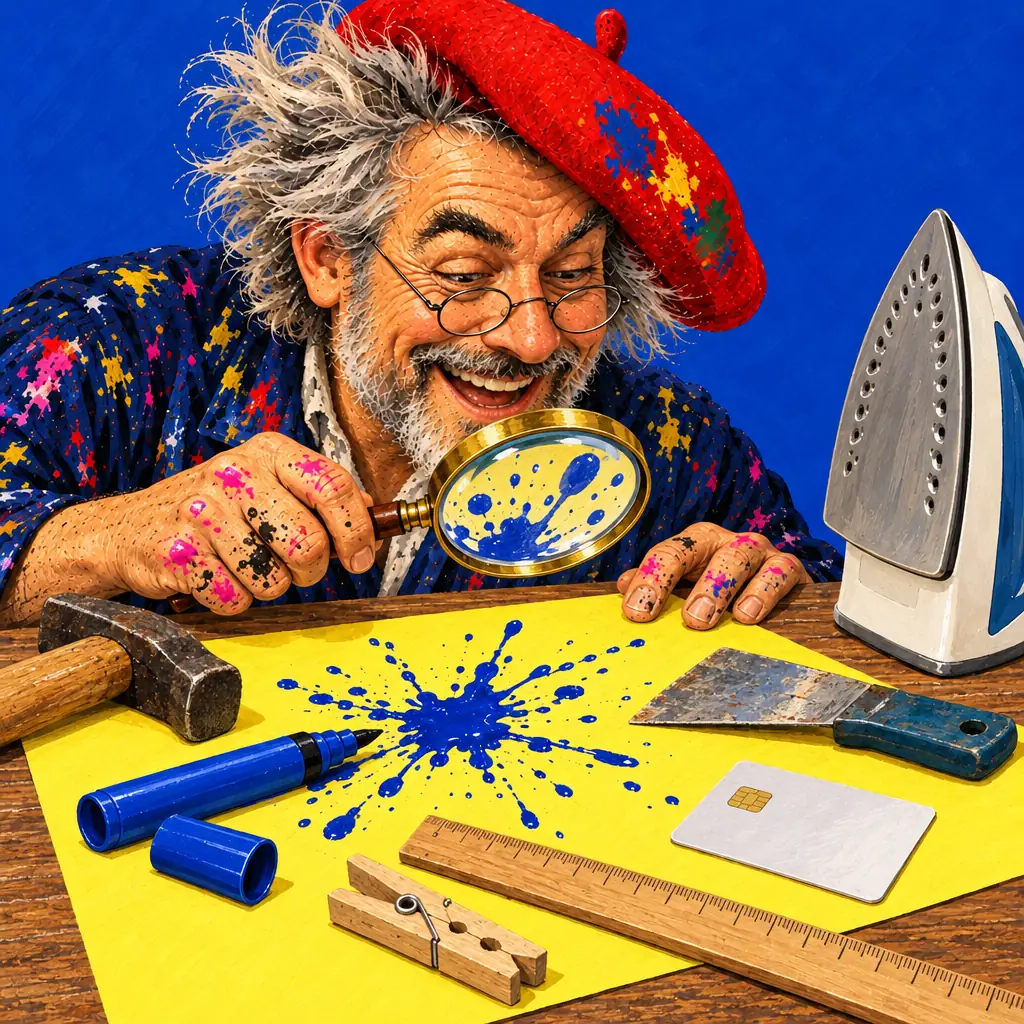
Every spot has a height, so paint, dents and puddles are lit alike, and a still magnifying glass can burn. a height on every spot · one key light.
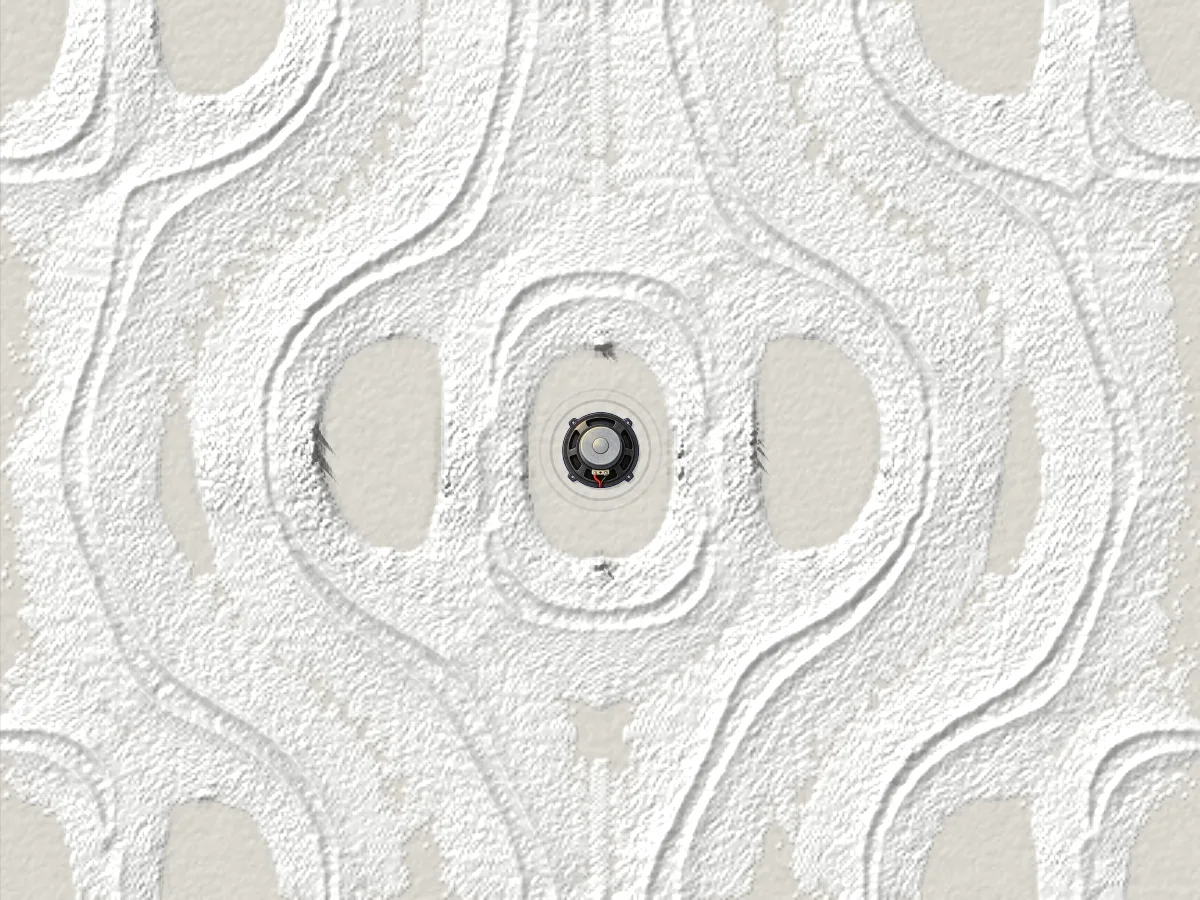
The speaker only shakes the sheet; salt and flour move by their own grain rule. Every sound effect is made by code as it plays. hundreds of vibration shapes · 0 recorded sounds.
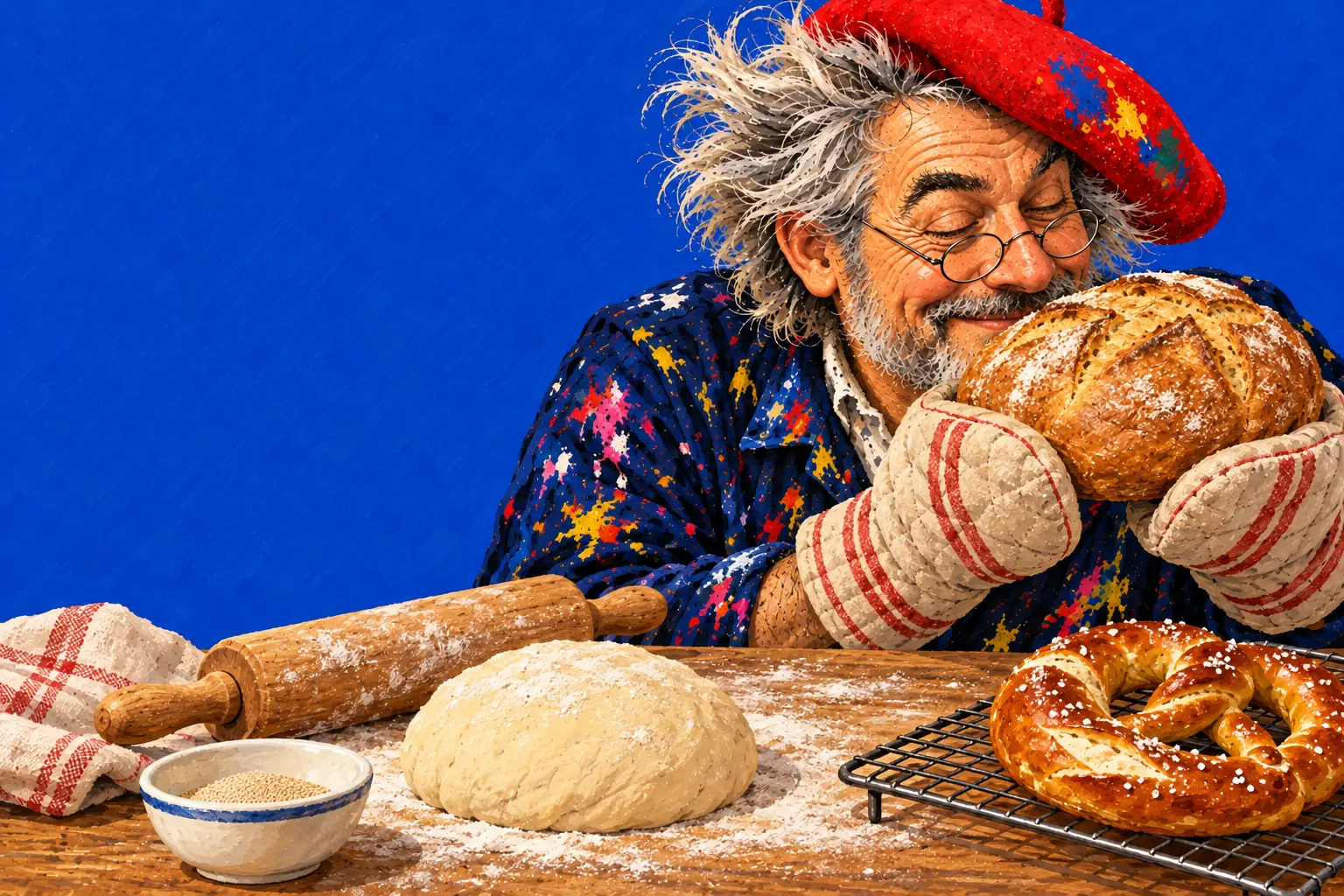
Yeast, gluten and salt in every speck of dough, and a three-day wait worked out instead of played. 3 days worked out, not played.
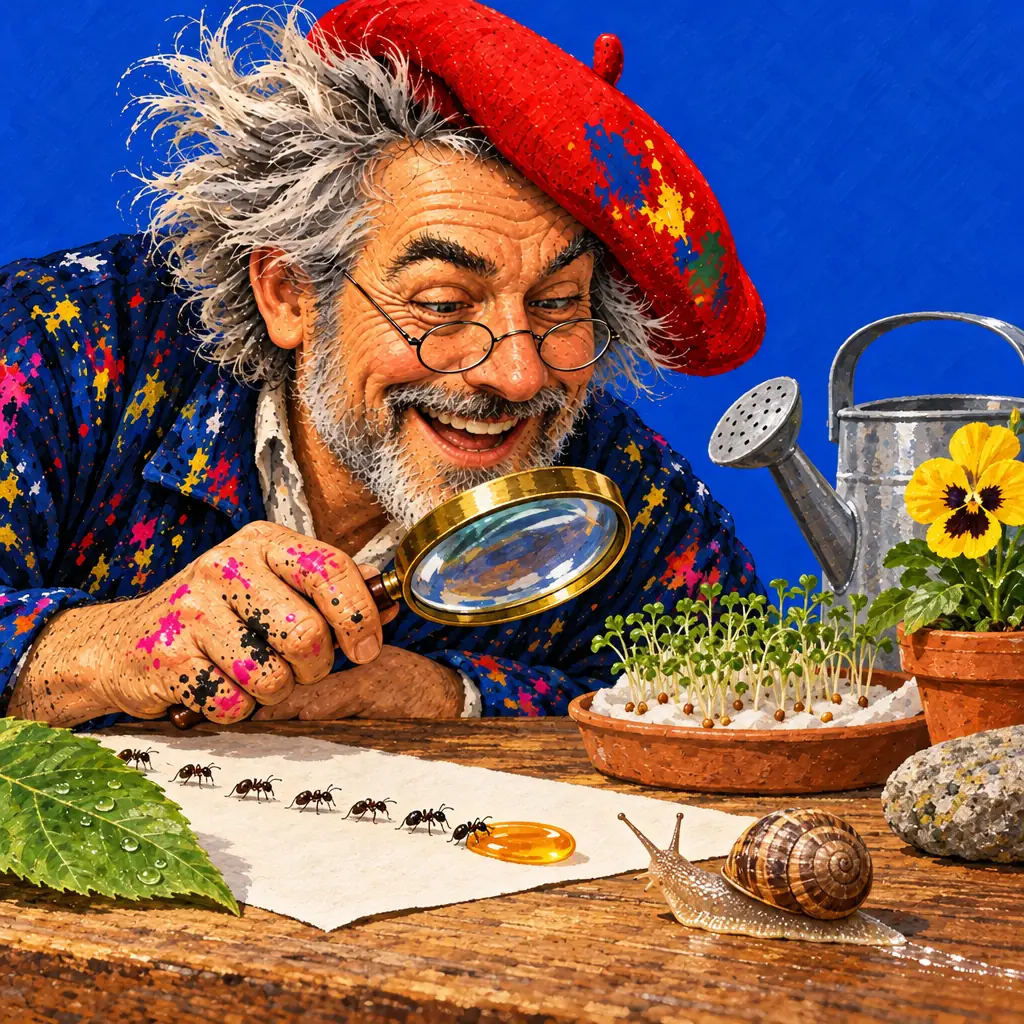
They hear, feel and smell shared layers, follow scent trails a child can break, and are never hurt. 3 sense layers · 488 harm checks.
How it stays fast on a cheap tablet, and how it stays right.
A Web Worker, WebAssembly kernels, tiles that sleep and a scheduler that serves the hand first. 7 kernels · the hand served first.
Tests that play like children, fast loops held to readable twins, and promises to families written as checks. 2,614 tests · 0 any under strict.
A tablet can't compute the real world, and a child doesn't need it to. The craft is choosing what to keep: the effect a child can see and test, at a cost a cheap device can carry. Here are six of the shortcuts, each explained in its chapter.
Four pages list every source we drew on, from fluid solvers and forensic drop stains to real ants and the rules on selling to children. Each one is labelled by what it really did: applied, shaped a rule of our own, or found later and consistent. We have run no learning study, and we don't claim one. The research behind it brings them together.
Two methods followed by name, the rest cut down to fit a tablet, and the clever papers we turned down. 56 sources.
Ants that steer by a measured rule, paper that lights near real paper's temperature, and where we bend the numbers. 57 sources traced to the code.
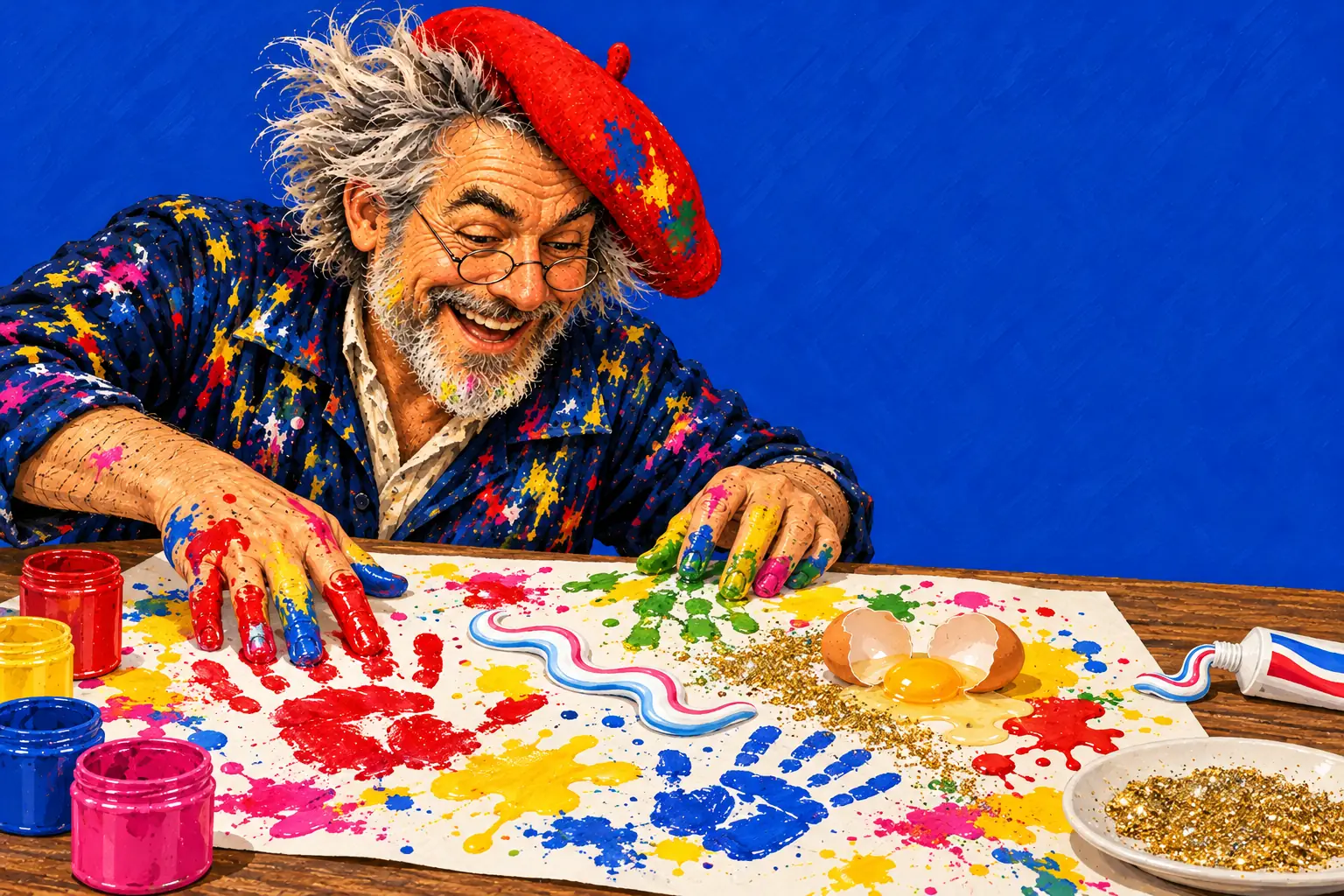
What research says about surprise and self-led play, where the game fits it, and where it pushes back. 0 goals, scores or ways to fail.
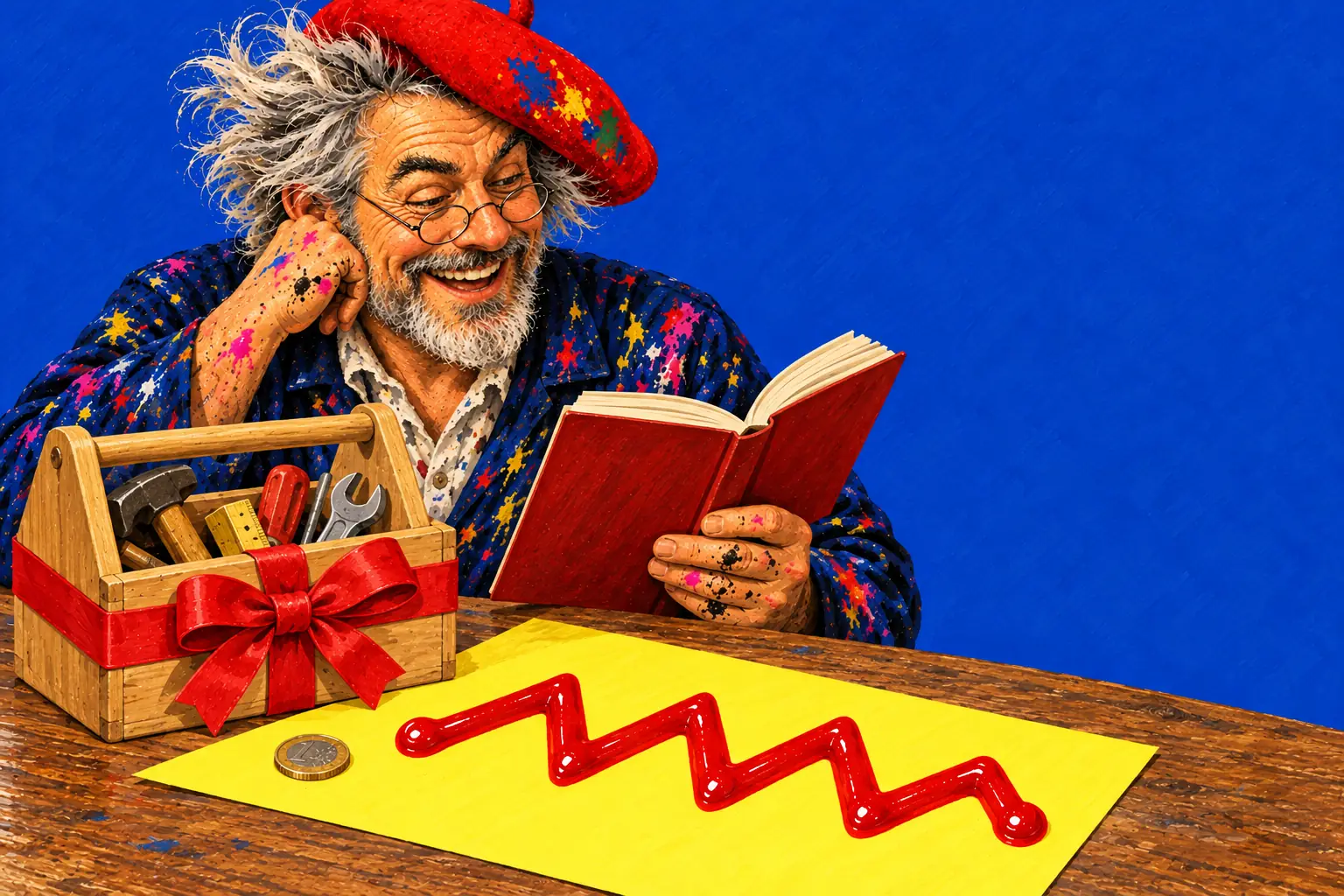
No ads, nothing locked in play, a grown-ups' sum, at most three asks, one purchase. 0 ad or analytics libraries.