16 Oct 2026
A review of earlier creative apps and sandbox games
No rules, no failure, no wrong move; destruction as play; an undo the child can trust; no ads, after a press report of an app study Meyer 2019.
Game Tailors
Source: How children learn through play
The drawing app where the paper is real. No ads. No accounts. No personal data: only anonymous counts, which you can switch off.
Game Tailors · Schieweg 15Y-40, 2627 AN Delft (NL)
KvK 92437702 · VAT NL866044474B01
info@gametailors.com · +31 6 4227 5919
© 2026 Game Tailors
How children learn through play
Research on young children keeps pointing the same way: they learn from surprises they can follow up, in play they lead themselves. Professor Oops gives them a sheet of paper where everything really reacts, with no goals, no scores and no way to fail. We built that toy first and read the research afterwards. Much of it fits what we built. Some of it pushes back, and this page says where.
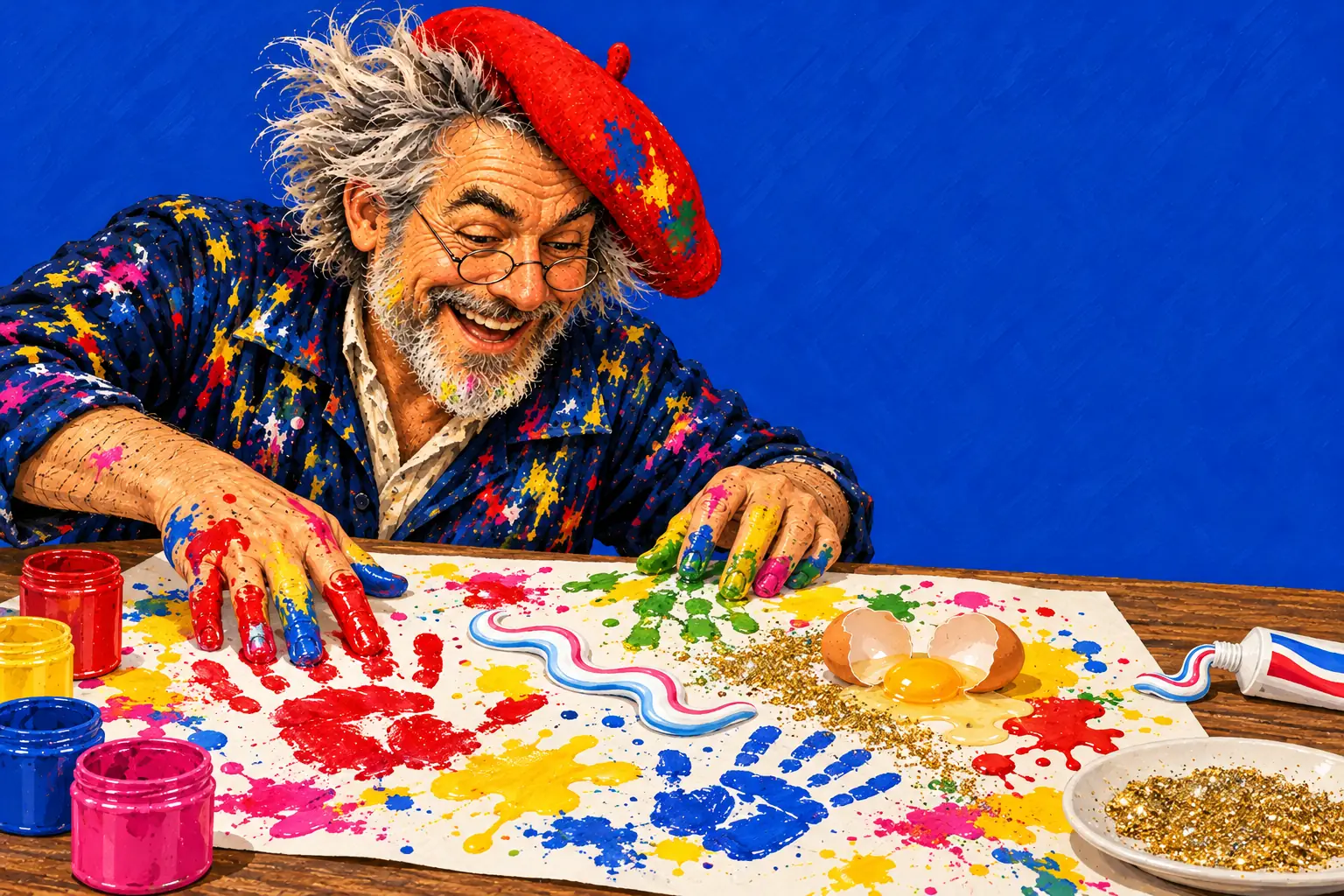
Professor Oops started as a toy, not a lesson. The first design says it in one line: “There are no goals, scores or failure states. A child can make art or just make a mess.”
Those rules came from a review of what children already play with, among them Kid Pix and its dynamite eraser, Tux Paint with its big simple tools, and falling-sand games, where a few simple rules make endless stories. That review also set the bar for the simulation: “The simulation has to be real enough that combinations surprise people, even the designers.”
The learning research came later, when we wrote pages for parents and teachers. That order matters for how you read this page. The game was not derived from the papers below. We checked it against them, and we report what we found, including where they disagree with us.
One more thing to say plainly: we have never measured whether children learn anything from the game. There is no study of our own, no control group and no test score. What follows is what the design draws on, never what it proves.
No rules, no failure, no wrong move; destruction as play; an undo the child can trust; no ads, after a press report of an app study Meyer 2019.
"No goals, scores or failure states." Materials must interact with each other, and it must run on a mid-range tablet.
Nothing locked or teased in the child's view, written after a review of consumer law, regulators' guidance and a study of manipulative design in children's apps Radesky 2022.
Built because Brazil's ECA Digital asks for parental time tools.
Cited on the Professor Oops website, on a page for parents asking whether children learn anything from it.
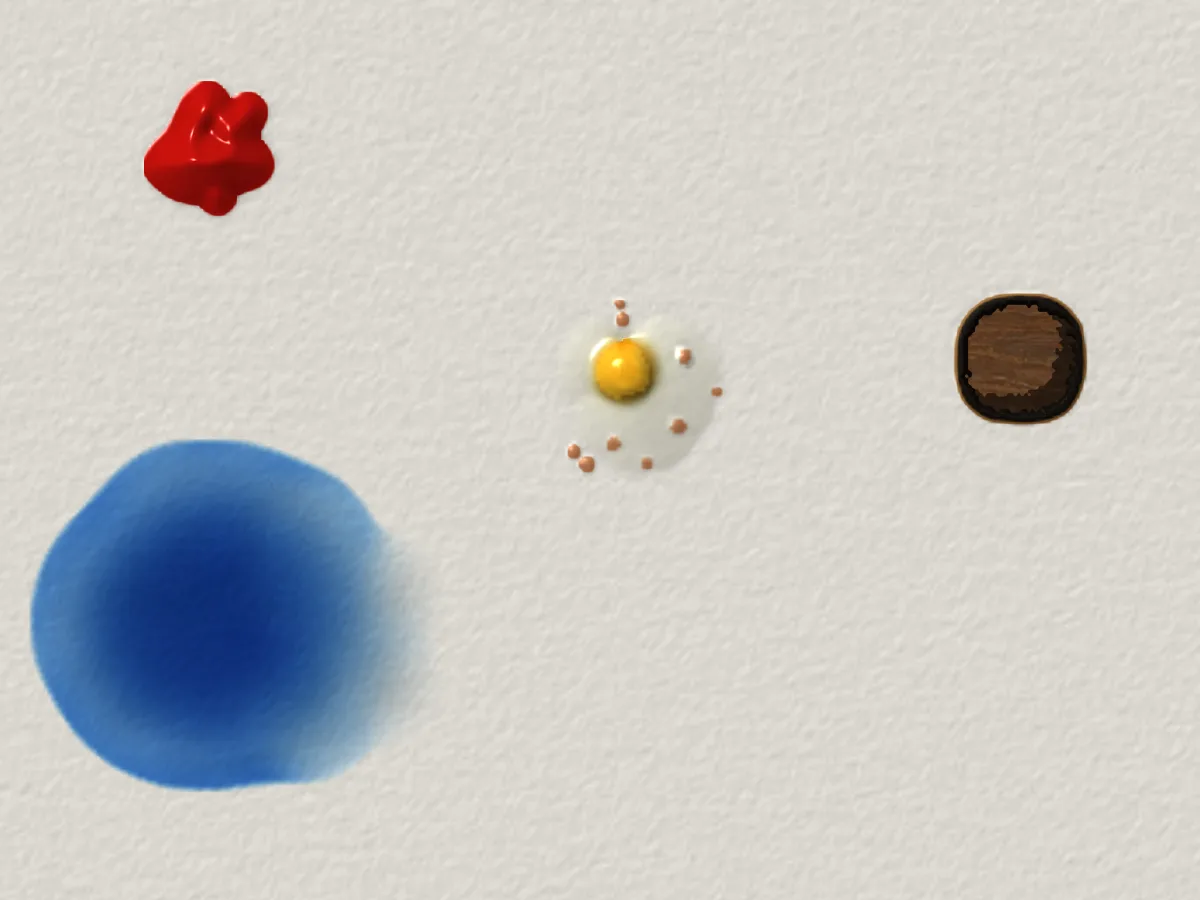
Even babies do it. Eleven-month-olds who saw an object break their expectations learned more about it, explored it more, and tested it in ways that fit what had gone wrong Stahl 2015. With 3- to 6-year-olds the same researchers found better learning after a surprising event, and only about the thing that had behaved surprisingly Stahl 2017.
Preschoolers go further. Given a toy whose causes were muddled, they chose to explore it and sorted the causes out in free play Schulz 2007. Given ambiguous evidence, they picked and designed little experiments that would tell them something Cook 2011. A review in Science sums it up: young children test hypotheses and learn causes from statistics, experiments and other people Gopnik 2012.
A surprise only helps if it holds up when you poke it again. That is the one thing the game is engineered for. No line of code says where a fire must stop. Every material writes into a few shared layers over the paper, such as heat, water, what's dissolved in it and the air, and reacts to what it finds there by its own properties. So a child who paints a line of water and lights the paper beside it sees the fire held at the line until its heat has boiled the water off, because the fire reads how wet each spot of paper is, whatever made it wet. If they try again, it's held again. If they make the line thinner, the fire finds the thin part. Each new try gets an answer that follows from the same rules.
The research also sets limits. A surprise is not a lesson on its own: scientists and science students have seven ways to respond to evidence that doesn't fit, and only one of them is changing their mind Chinn 1993. And the strongest evidence comes from children younger than most of our players.
A fire is already burning on the left. The water line is thick at the top and bottom and thin in the middle. What to look for: the fire is held at the thick water but slips through the thin part, then spreads out behind the line and can burn back into it from the other side. In the game, given long enough, the fire boils even the thick water dry and burns on. Once the sheet has burnt away, a fresh one is laid. Pick Water or Match and draw on the paper to try your own idea, or press the buttons. Paper fibre changes how fast heat travels and how fast the paper burns.

This part of the page could not start.
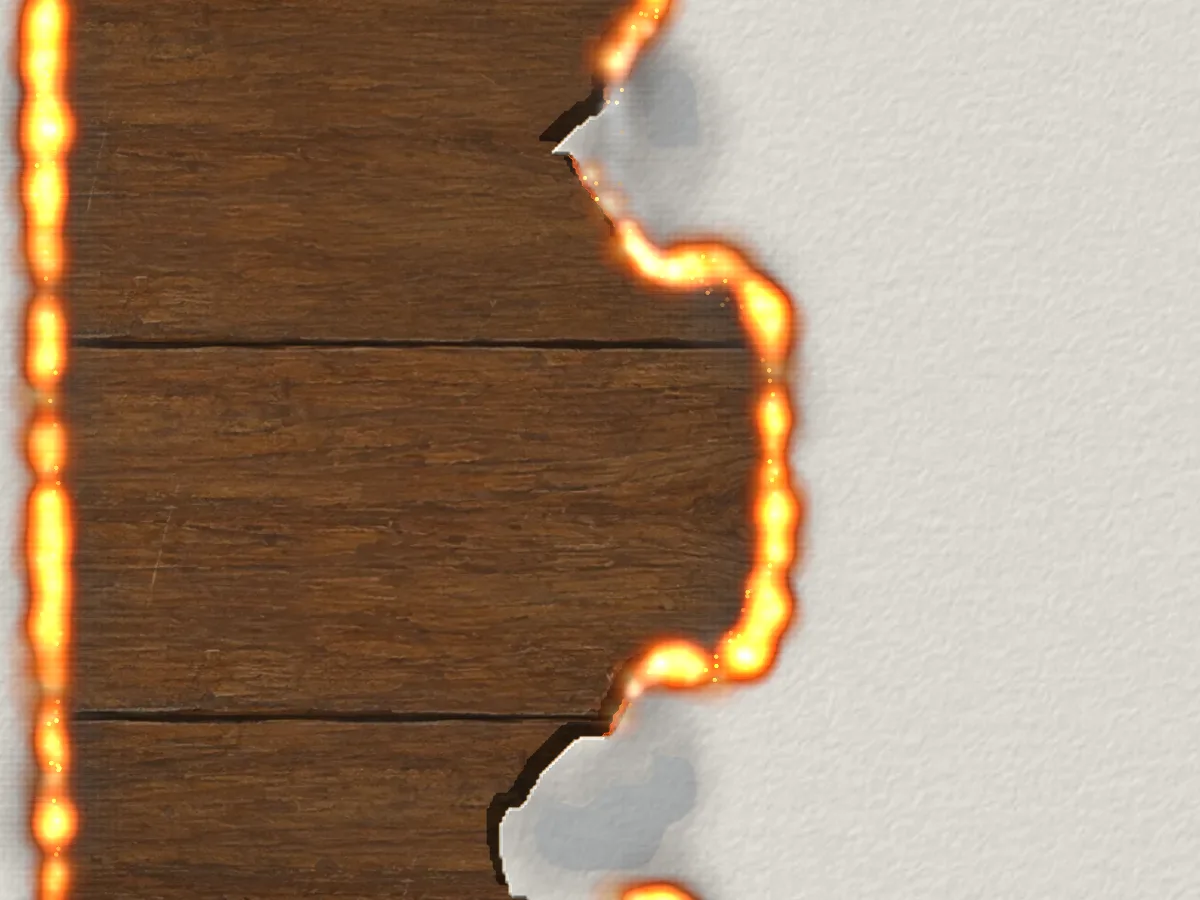
In a well-known experiment, preschoolers were given a new toy. When a teacher showed them one thing it could do, they stuck almost entirely to that one thing. Children who weren't taught explored widely. Even overhearing the teaching given to another child narrowed their play; watching it given to an adult did not Bonawitz 2011. The game sets no tasks and has no right answers. A child picks up the ketchup and finds out.
But there is a strong other side, and a jury may know it. Across 164 studies, explicit instruction beat unassisted discovery, while discovery with feedback, scaffolding or prompts to explain beat other kinds of teaching Alfieri 2011. Third and fourth graders learned to design a fair experiment far more often from direct instruction Klahr 2004. Reviews argue that guided discovery beats pure discovery Mayer 2004 and that minimal guidance does not work for teaching content Kirschner 2006. A sandbox on its own is unassisted discovery. So we do not claim the game teaches science by itself, and we never call it the teacher.
The best-supported middle is guided play: the child leads, in a prepared setting, with light help from an adult Weisberg 2016. A review of 39 studies, 17 of them pooled in a meta-analysis, with 3,893 children aged 1 to 8, found it beat direct instruction on early maths, shape knowledge and task switching, and beat free play on spatial vocabulary, with no difference on other key outcomes Skene 2022. Play can be seen as a spectrum from free play through guided play to games Zosh 2018. The game sits at the free end, on purpose.
The light help comes from people. The Professor Oops website pairs its experiments, where that's safe, with a version to do for real in the kitchen, ends them with questions that ask what will happen next, and gives teachers a plan: a hook, a prediction, a try in the app, the real thing, then the explanation. That fits the research on simulations, where the evidence is strongest for simulations used to enhance ordinary lessons, especially lab work Rutten 2012. And paediatricians recommend play with parents and peers Yogman 2018.
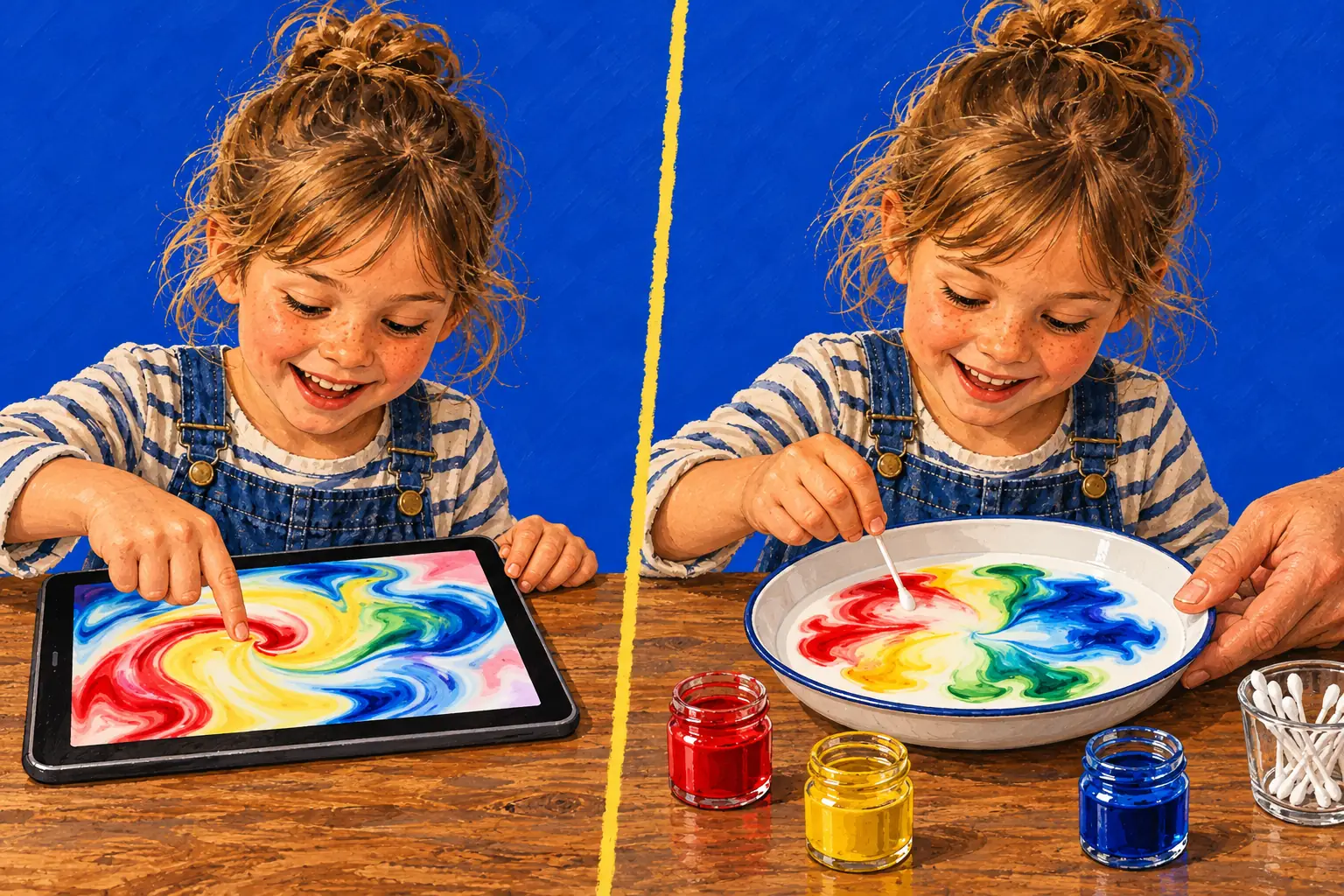
In a classic study, preschoolers who drew in order to earn an award they had been promised later showed less interest in drawing than children who got an unexpected award or none Lepper 1973. A review of 128 experiments found the same pattern: rewards for taking part, for finishing or for performing lowered the wish to do the activity freely, and tangible rewards were worse for children. Positive feedback did the opposite and raised it, though less for children Deci 1999. A rival review argues the harm is narrower: it shows up on interesting tasks when rewards are tangible, expected and loosely tied to how well you did Cameron 2001.
Professor Oops has no points, stars, badges, streaks, levels or "game over". Nothing is locked or teased in the child's view: tools the family hasn't bought are hidden from the child, and the door to them is a small, plain tile for grown-ups. There are no ads. We decided that after reading that 95 % of apps for children under five carried ads. The study behind that figure also found that apps labelled "educational" were no better Meyer 2019. More on that in Designed with respect for children.
We went further than the evidence. Research says positive feedback can raise motivation, and some researchers find the harm of rewards much narrower; our rule leaves out rewards of every kind anyway. That is a choice, not a finding.
Play also ends calmly. A grown-up can set a daily limit of 15, 30 or 45 minutes or an hour. It is off unless they pick one. Two minutes before the end, the professor says so once. At the end the game rests behind "Time for a break!", never in the middle of a stroke, with the drawing kept. The break screen has no timer, no streak and nothing to come back for. The limit wasn't drawn from screen-time research. It exists because Brazil's ECA Digital asks for parental time tools. Paediatric advice itself now looks beyond screen limits, at how the media is designed Munzer 2026, and the WHO's limits cover children under five WHO 2019.
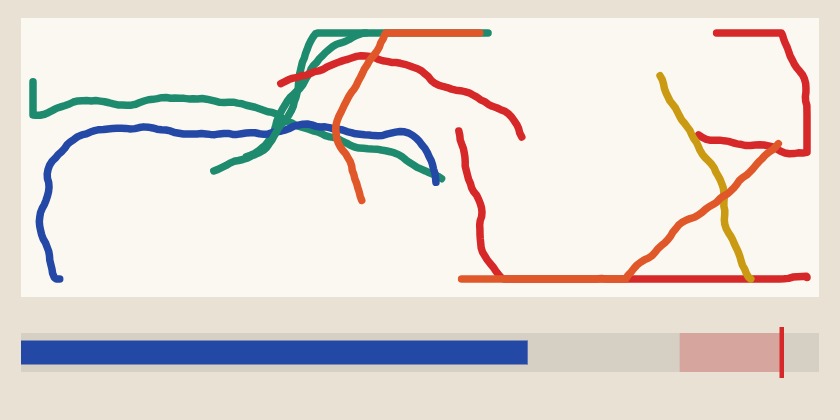
A child is drawing, and the clock runs fast. What to look for: the break waits for the stroke to finish; putting the game in the background stops the count; a device that sleeps for an hour costs only a few seconds; and a grown-up's 15 minutes count from now. Set the limit to Off and the game never ends.
This part of the page could not start.
A toy for setting paper on fire only works if the fire never costs a child their drawing. The review that shaped the game found a designer describing a child in tears after erasing a drawing by accident. Its conclusion became a rule: destruction must be undoable.
In Professor Oops, undo always goes back at least four touches, and usually far more. A step is everything that changed from one touch to the next, including the paint drying and soaking in. If a child leaves a fire burning and skips ahead three days, the fire stops during the wait, so they never come back to a page that burned away while they weren't looking.
This came from product experience, not from a paper. We know of no study on undo buttons and children's learning, so we don't cite one. What we can say is that it keeps the extreme thing safe to try, which is the whole point of a game about doing what you're normally told not to do with paper.
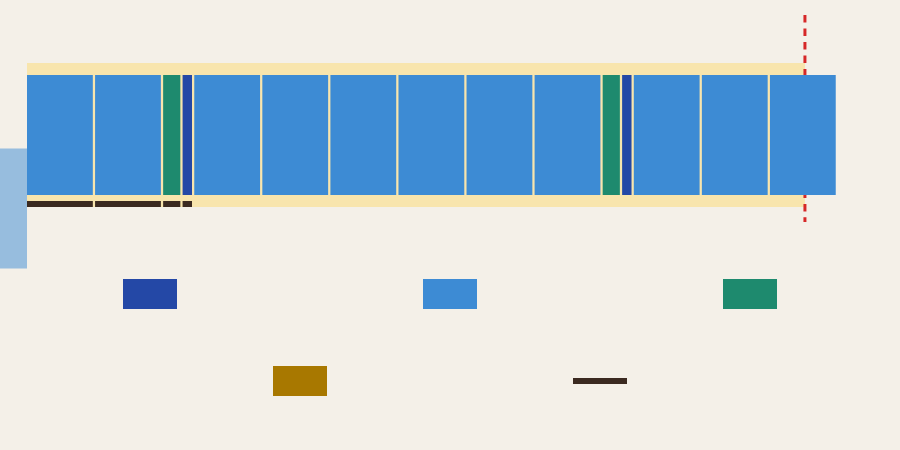
A pretend child is playing; each block is one undo step, oldest on the left, sized by its memory: a stroke on a dry page 0.6 MB, a stroke on a wet page 3.5 MB, a pour 1 MB, a time skip 2.5 MB. The dark line under the oldest blocks marks the 4 steps always kept. What to look for: dry strokes are small, so dozens fit; a run of wet strokes fills the budget fast and the oldest steps drop off, but never below four. Add steps yourself, tap Undo, or shrink the budget to the paint board's smaller one (its sheet is smaller, so its steps are too).
This part of the page could not start.
Few of these studies looked at children of our players' age, and none tested learning in a sandbox on a tablet. The surprise studies tested infants and preschoolers. The teaching study tested preschoolers with a toy. The classic reward study tested preschoolers. Our public age range is about 4 to 10, and on Apple's App Store the game sits in the 6 to 8 band. The chart shows how little overlap there is.
So we read this research as direction, not proof. Here is what that rules out.
We don't say the game teaches. No study, no control group, no learning measure. A child who just plays gets nothing explained, and the discovery research says that alone teaches content weakly.
We don't say "educational app". The label means little: apps sold as educational were no better on ads Meyer 2019, and the science of learning sets a much higher bar for an app than the label does Hirsh-Pasek 2015.
We don't say drawing helps children learn science. Drawing as a learning strategy looks largely ineffective before secondary school Brod 2021. Art is the reason to play here, not a proven route to learning.
We don't say "play builds" a skill. Even for pretend play, the evidence doesn't support strong causal claims Lillard 2013, and the paediatric case for play is about play with people Yogman 2018.
We don't say rewards always kill motivation. The size and reach of that effect are disputed Cameron 2001. Our no-rewards rule is a design choice.
Every surprise a child can follow up on this page comes from systems that share their layers. These are some of the chains a child can find, each held in place by a test.
Shared: wet + temp
The paper won't light until the water has gone.
Heat and fire · pinned by a test
Shared: carbonate (ash)
The purple dye turns blue in a thin ring round the ash.
Chemistry and pH · pinned by a test
Shared: air speed
It blows out; rolled slowly, it doesn't.
Air that really moves · pinned by a test
Shared: heavy gas (CO₂)
The candle goes out with no gust; further off it stays lit.
Built for surprises · pinned by a test
Shared: every layer, saved as changes
Exactly the page you had, a few touches back.
How we keep it right · pinned by a test
Shared: play clock
The professor says so two minutes before, then the game rests, with the drawing kept.
Designed with respect for children · pinned by a test
Each bibliographic entry was checked against its DOI record and its abstract, or the page cited. The label says how the source relates to the game you can play today (see the definitions near the top).
110 eleven-month-olds learned better about objects that broke their expectations, explored them more, and tested them in ways that fit the violation. Infants, far from our players.
Ages 3 to 6, four experiments: learning was better after a surprising event, and only about the thing that behaved surprisingly. Closer in age than the infant study.
Mean age 57 months: children preferred to explore toys whose causes were confounded, and sorted the causes out in free play.
Mean age 54 months: given ambiguous evidence, children chose and designed informative interventions.
A review: preschoolers test hypotheses, make causal inferences and learn from statistics, experiments and other people.
Pushes back. Seven responses to anomalous data, only one of which is changing the theory. About scientists and science students. A surprise on paper may simply be shrugged off.
Preschoolers (85 and 64 children, mean ages 58 and 61 months) shown one function of a toy by a teacher stuck to it; untaught children explored widely. Overheard teaching narrowed play too. First cited on the website, after the game's design.
164 studies. Explicit instruction beat unassisted discovery (d = −0.38, 580 comparisons); enhanced discovery beat other instruction (d = +0.30, 360 comparisons). Cited on the website. The clearest reason a sandbox alone shouldn't be called a teacher.
Pushes back. 112 third and fourth graders: many more learned experimental design from direct instruction than from discovery.
Pushes back. Guided discovery beat pure discovery. Pushes back on any claim for the sandbox alone.
Pushes back. Argues that minimally guided instruction is less effective for teaching content. Pushes back on any claim that a sandbox teaches by itself.
Defines guided play as midway between free play and instruction: a learning goal, a scaffolded setting, the child in control. The game presents no learning goal.
Autonomy within a prepared environment, with adult scaffolding.
39 studies, 17 in the meta-analysis, 3,893 children aged 1 to 8. Guided play beat direct instruction on early maths (g = 0.24), shape knowledge (0.63) and task switching (0.40), and free play on spatial vocabulary (0.93); no differences on other key outcomes. Studies defined guided play very differently.
Play as a spectrum from free play through guided play to games. The game sits at the free end.
Four pillars (active, engaged, meaningful, socially interactive) within a supported learning goal. Fits in part: social interaction is weak for a child alone, and the learning goal is deliberately absent.
Robust evidence that simulations can enhance traditional instruction, especially lab activities; most of that research ignored teacher support and the lesson around the simulation. Fits "on screen, then for real"; pushes back on a simulation as the only teacher.
Design principles, including "low floor and wide walls", "make powerful ideas salient, not forced" and "support many paths, many styles". The game resembles them; it wasn't based on them.
Preschoolers who drew to get an expected award later showed less interest than those given an unexpected award or none. The game's no-rewards rule predates our reading of it.
128 studies. Engagement-, completion- and performance-contingent rewards undermined free-choice motivation (d = −0.40, −0.36, −0.28); tangible rewards were worse for children. Positive feedback enhanced it (d = +0.33), less so for children.
Pushes back. Rewards in general don't harm motivation; negative effects appear on high-interest tasks when rewards are tangible, expected and loosely tied to performance. Tempers "rewards undermine".
129 of 135 apps for ages 5 and under had ads: all of the free ones, 88 % of the paid ones; apps labelled educational were no better. Read through press coverage in the prior-art review; behind the game's no-ads rule. It counts ads; it doesn't measure harm.
160 children aged 3 to 5 and the 133 apps they used: only 26 apps (19.6 %) had no manipulative features. Read through a press release while the business rules were written; it shaped those rules, not the play.
Developmentally appropriate play with parents and peers builds the skills behind executive function. It is about play with people, not about apps.
Pushes back. Existing evidence does not support strong causal claims for pretend play's unique importance. Tempers every "play builds X" sentence, ours included.
Pushes back. Predicting and testing seem to work from lower elementary school; drawing and self-questioning look largely ineffective until secondary school. This is drawing to learn content, not art play, but it rules out "drawing helps them learn the science".
Designing media for children and adults to use together. Fits the website's kitchen versions; nothing in the game pulls a grown-up in during play.
At ages 2 to 4, sedentary screen time of no more than an hour, less being better; at age 1, not recommended. Covers under-fives only. The game's limit was not derived from it.
Media use can't be judged by screen limits alone; engagement-first and commerce-first design is the concern. Read for context, not used for design, and it endorses no product.
Applied directly. The actual source of the sandbox: no rules, no failure, no wrong move; destruction as play; simple per-cell rules that give emergent stories; an undo a child can trust. Taken from press, reviews and parents' reports. These are product lessons, not evidence that anything teaches.