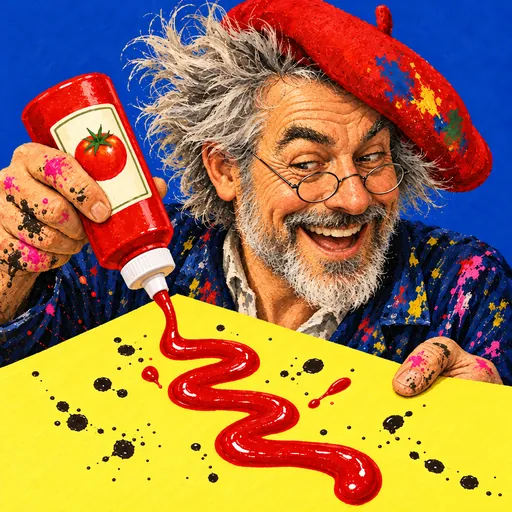
Yellow and blue make green
The first big surprise: neither paint is green, but together they are. More yellow gives a bright yellow-green, more blue a deep blue-green.
Game Tailors
Source: Color mixing for kids: what paint really does
The drawing app where the paper is real. No ads. No accounts. No personal data: only anonymous counts, which you can switch off.
Game Tailors · Schieweg 15Y-40, 2627 AN Delft (NL)
KvK 92437702 · VAT NL866044474B01
info@gametailors.com · +31 6 4227 5919
© 2026 Game Tailors
What kids learn: mixing colours
In Professor Oops paint mixes like real paint, not like the light of a screen: yellow and blue make green, red and yellow make orange, and everything stirred together turns brown. Children find it out by painting, and you can check it with real paint.
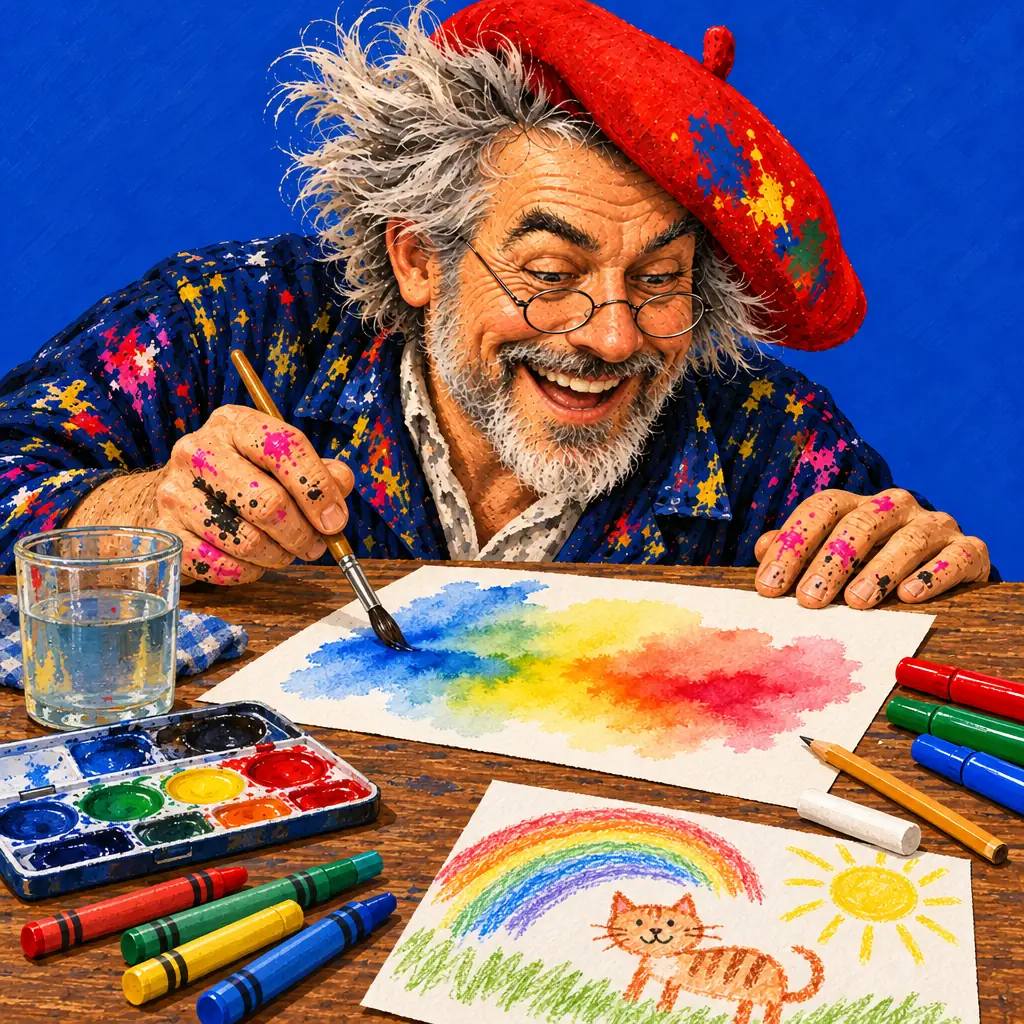
Nobody has to tell them. Put two colours together on the paint board or on wet paper and the result is right there. These are the mixes that come up first:
The first big surprise: neither paint is green, but together they are. More yellow gives a bright yellow-green, more blue a deep blue-green.
A warm, reddish orange. Add more yellow and it turns towards tangerine.
Darker and duller than most children expect. Real school paint does the same.
Keep stirring in colours and the puddle heads for brown. Every paint you add takes away a bit more light.
Red and green, purple and yellow, orange and blue: each pair mixes to a dull brown or olive. Painters use that on purpose to tone a colour down.
A little black goes a long way. And black in yellow gives an olive colour, not a darker yellow.
The drawing tools are in the Craft tab. Each one mixes the way its real version does:
On the paint board. Tap Paint board by the lower corner of the sheet: a wooden palette with ten Paint tubes (white and black included) and a Palette knife. Squeeze two colours, drag the knife or the brush through them, and watch the green, orange or brown appear. Dip the Paint brush in the mix and paint with it.
Wet paint into wet paint. Brush into paint that is still wet and the colours blend. The brush picks up a little of what it ran through, so the next stroke starts a bit muddy and cleans up as you go, just like a real brush.
Watercolour and marker, layer on layer. They are see-through: yellow over dried blue turns green without any stirring. Two wet watercolours that touch run into each other and blend where they meet.
Crayon, dark over light. Blue crayon over yellow turns green. Yellow over blue hardly shows, as with real crayons.
Paint covers, watercolour doesn't. Thick paint hides the paper and the lines underneath; watercolour lets them shine through.
All of it is free, the paint board too.
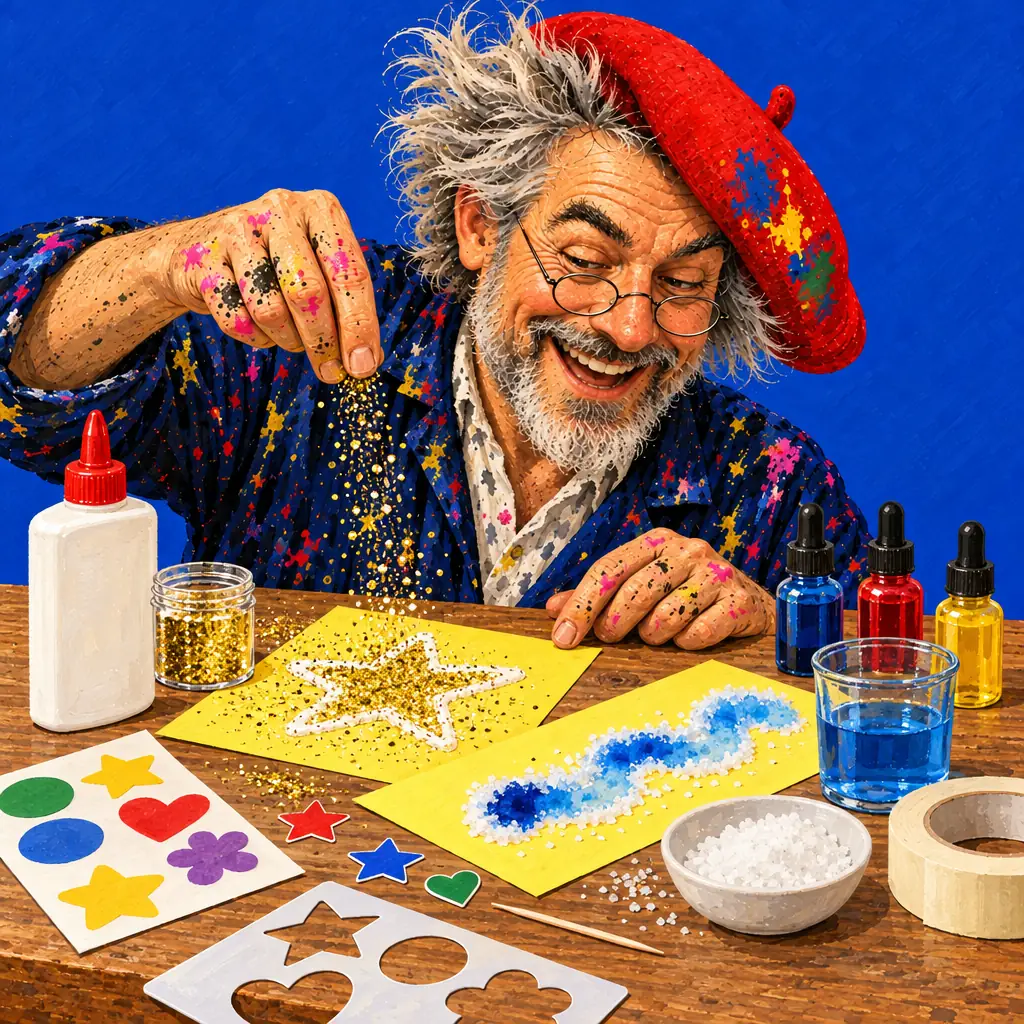
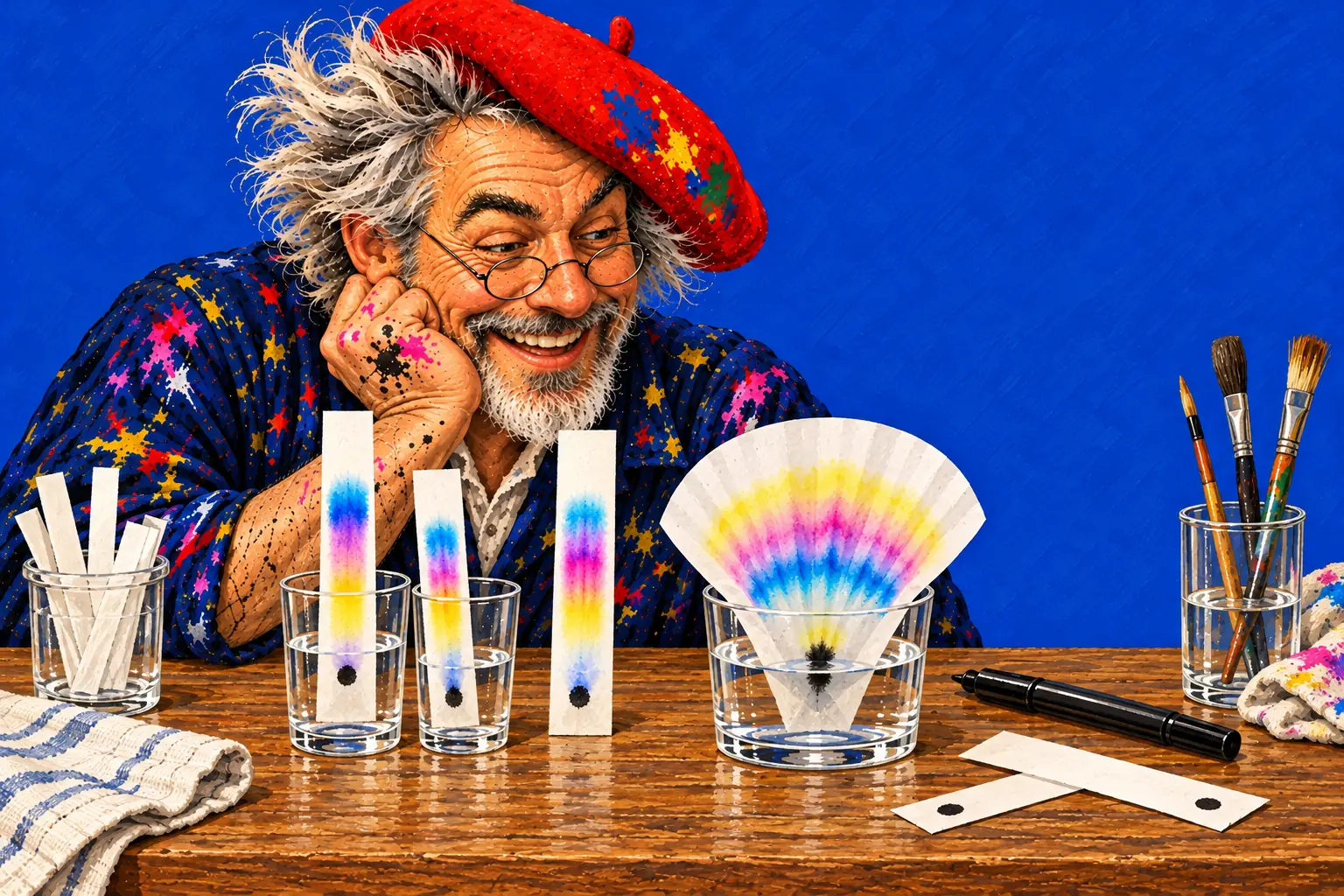
Paint gets its colour by swallowing light. Yellow paint swallows the blue light, and blue paint swallows the red and the yellow. Mix them, and green is about the only light that's left to bounce back to your eyes.
For grown-ups. This is subtractive mixing: each pigment absorbs part of the light, so every colour you add takes more away, which is why mixes get darker and end in brown. A screen works the other way round. It adds coloured light: red and green light together look yellow. So a drawing app that simply averaged the screen colours of yellow and blue would give a greyish mush. Professor Oops instead works out how much of the red, green and blue light each paint absorbs, and mixes those amounts, weighted by how much of each paint there is. That's why its blue and yellow make green.
Want to see the screen side? Look at a white patch of a screen through a strong magnifying glass: on many screens you can make out tiny red, green and blue lights. And black marker ink turns out to be a mix too: paper chromatography splits it into blue, pink and yellow.
Yellow and blue make green, not grey
More colours make darker mixes, and in the end brown
Opposite colours dull each other down
A little black changes a lot
See-through layers mix without stirring; thick paint covers
A dirty brush carries colour into the next stroke
White is weaker. Real white paint also scatters light, so a little of it makes a colour pale fast. In the game you need more white to turn red into pink.
One blue is one blue. Real blues (and yellows) differ, and give different greens. The game has one of each, so its green always comes out the same.
Dry paint blends a little. Painting over dried paint in the game mixes into it for the first strokes; real dry paint takes a clean new coat.
It's still a screen. The result is shown with light, so a colour can look a little different from the same mix on paper.
For teachers
Colour mixing fits KS1 and KS2 art and design (techniques in using colour). The idea that we see colours because light bounces off things comes back in the KS2 Year 3 science topic on light. Let the class predict each mix, show it on the paint board on the whiteboard, then make the chart for real in pairs.
Yellow and blue. More yellow gives a bright yellow-green, more blue a deep blue-green. It works the same way in Professor Oops.
Every colour stirred in takes away more light, so lots of colours together end up brown. Mixing two at a time and rinsing the brush in between keeps the colours clean.
At school: red, yellow and blue. Printers use cyan, magenta and yellow, which mix to cleaner colours. Screens use red, green and blue light, which is a different kind of mixing: adding light instead of taking it away.
Yes: mixes behave like paint, not like screen light, so yellow and blue give green, not grey. It is simpler in a few places (white is weaker, there is only one blue), which this page lists.
From about 4, with two colours at a time and a grown-up squeezing out the paint. Older children enjoy making a full chart and mixing a colour to match something they see.
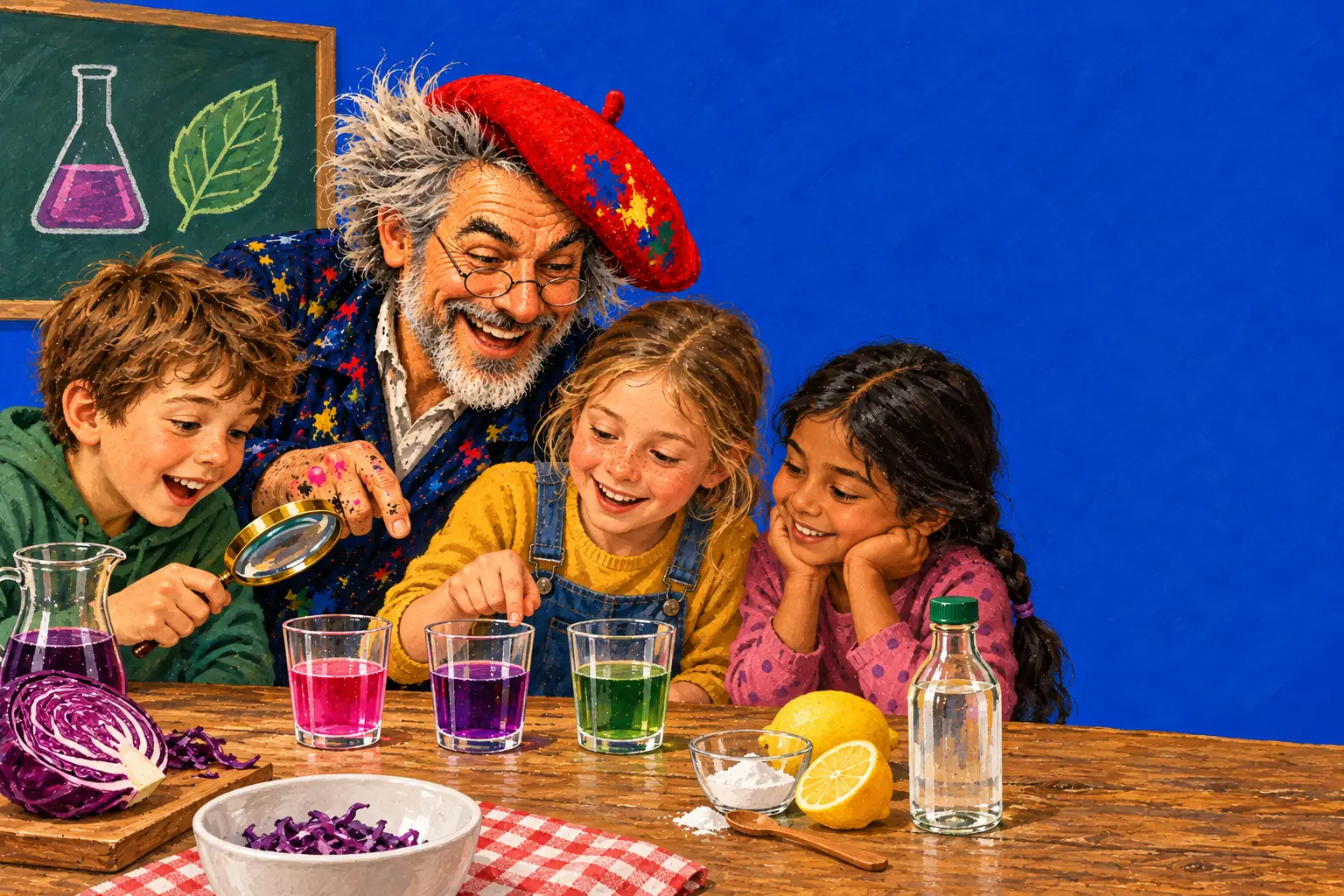
The kitchen science they find by playing, and the freedom of a game with no goals.
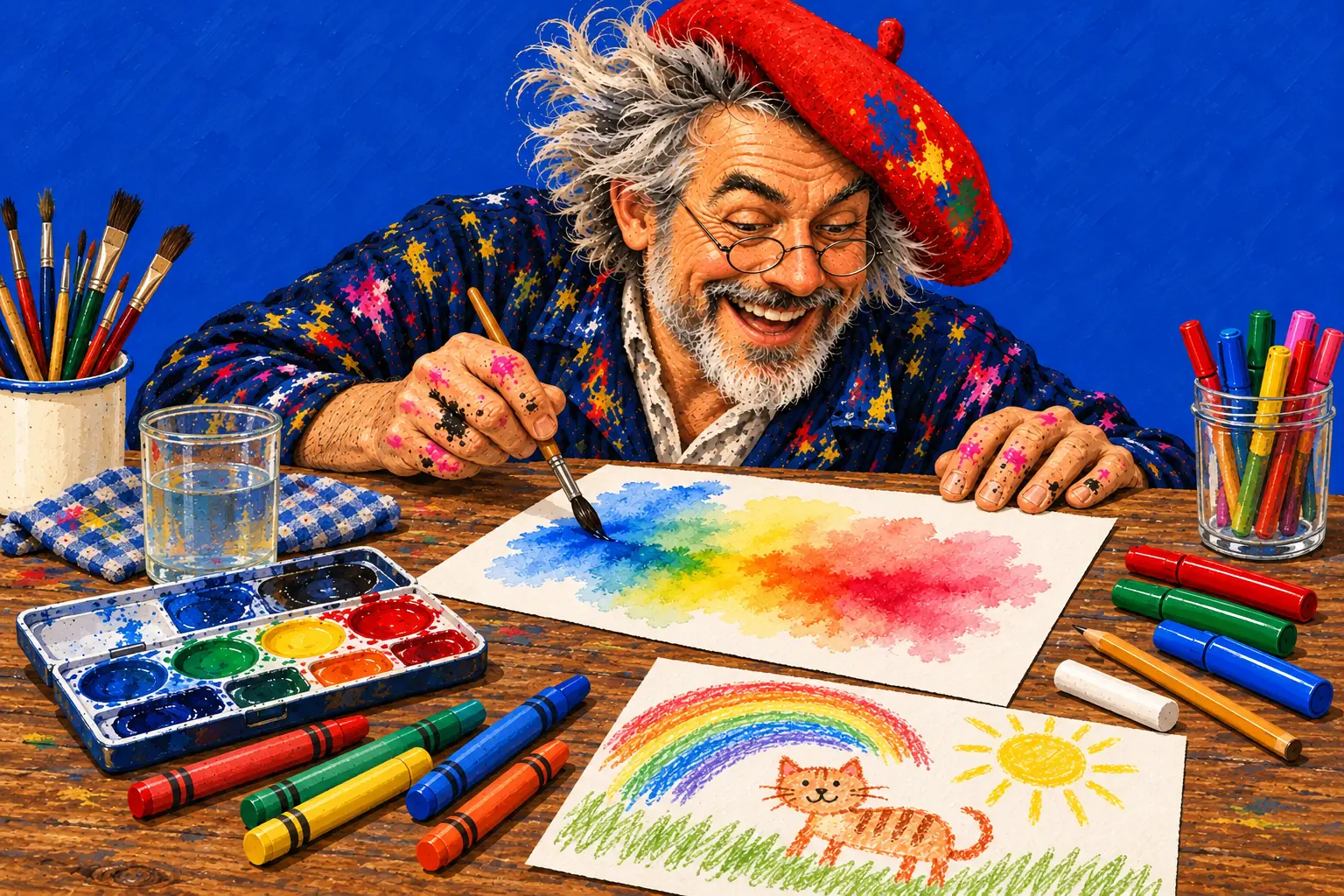
Wet-on-wet, crisp edges, blooms and salt stars.
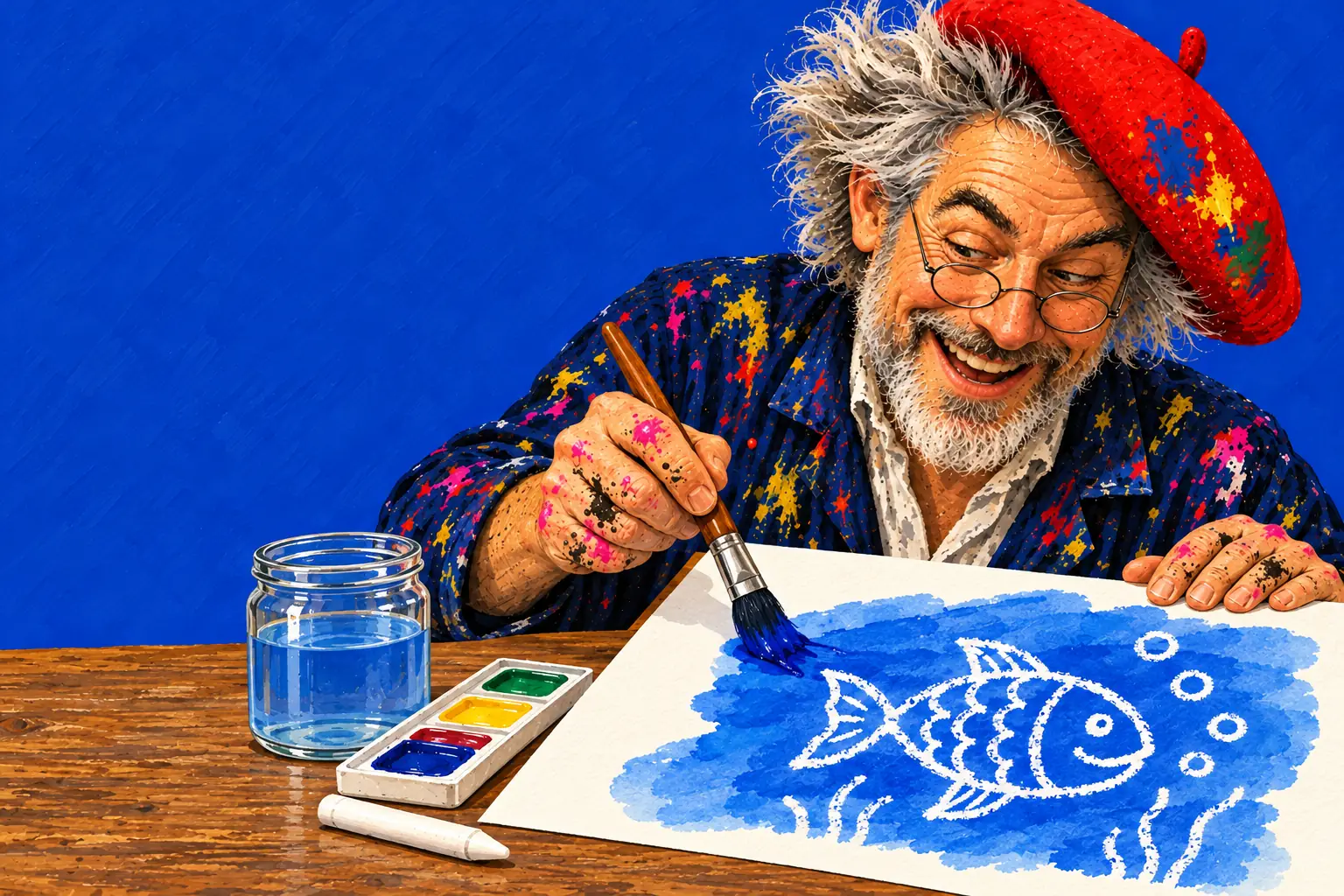
A white crayon drawing appears under the paint.