Red cabbage juice tells sour from soapy
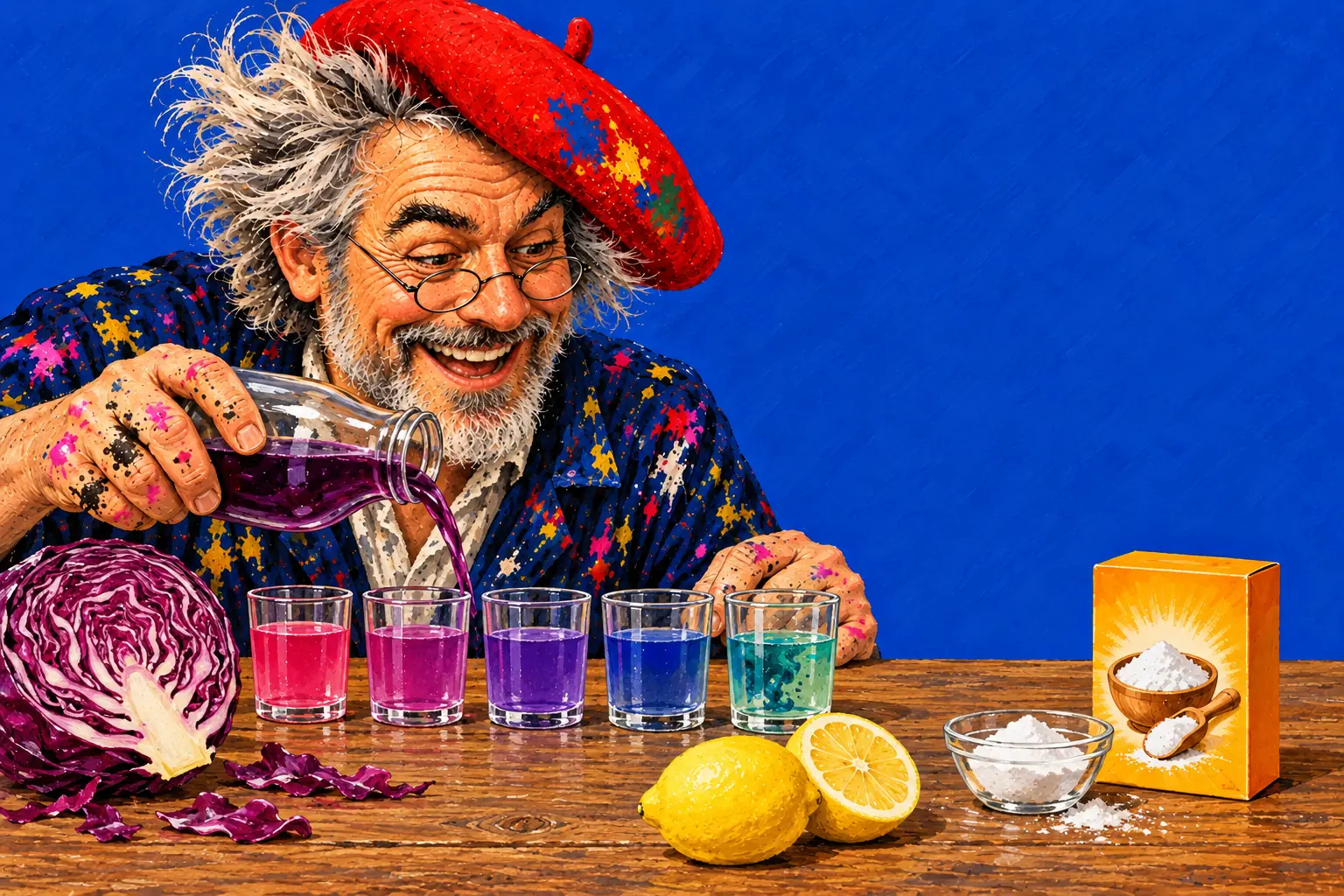
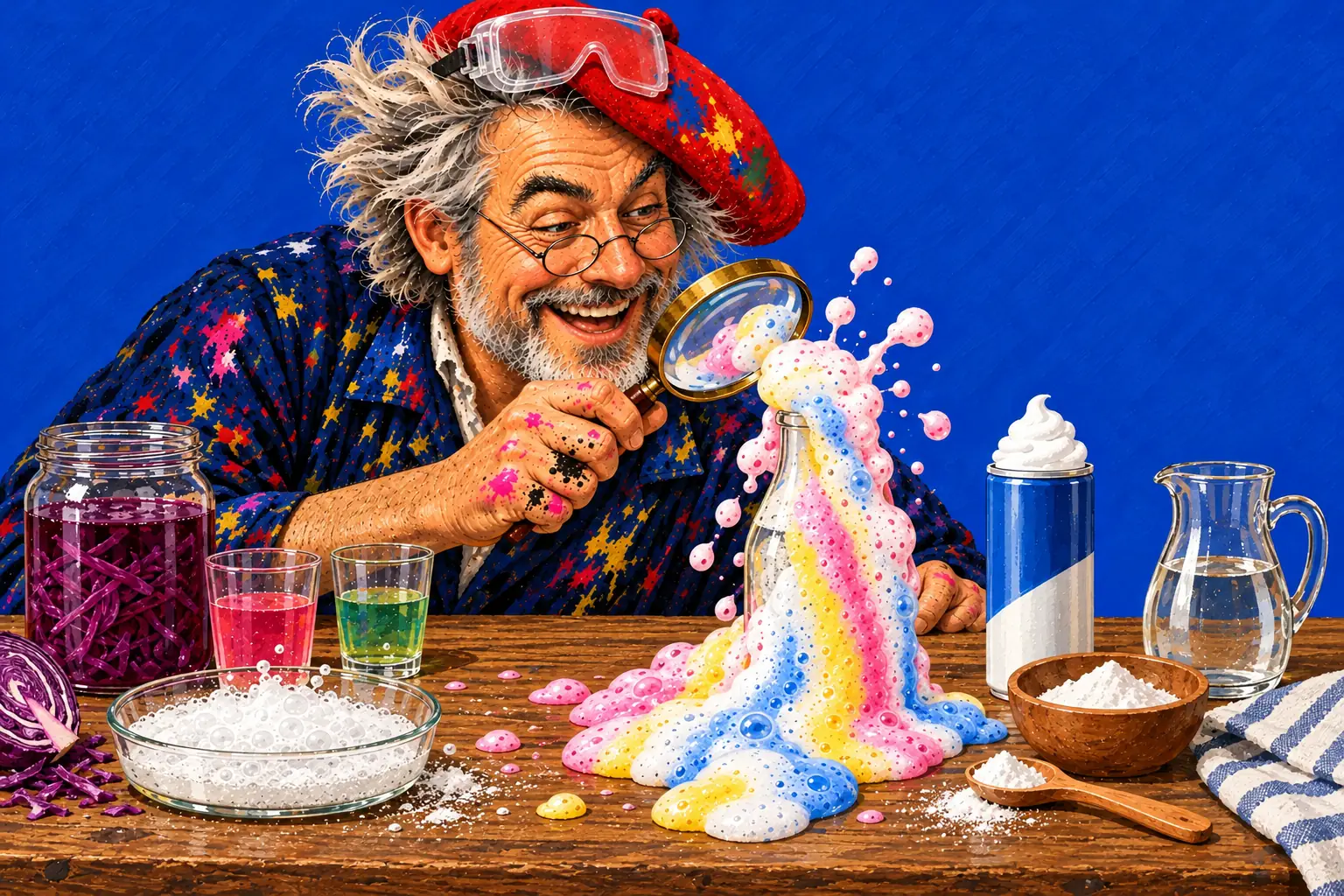
Purple stripes turn pink under vinegar and blue to green with baking soda or soap. That's an acid–base indicator: the first step to the pH scale.
Game Tailors
Source: What kids learn from Professor Oops: science and free play
The drawing app where the paper is real. No ads. No accounts. No personal data: only anonymous counts, which you can switch off.
Game Tailors · Schieweg 15Y-40, 2627 AN Delft (NL)
KvK 92437702 · VAT NL866044474B01
info@gametailors.com · +31 6 4227 5919
© 2026 Game Tailors
For parents and teachers
Two things at once. By playing, children discover real science: red cabbage juice turns pink with vinegar, baking soda fizzes, black ink splits into colours on wet paper. And because the game sets no goals at all, they choose their own, try things out and try again.
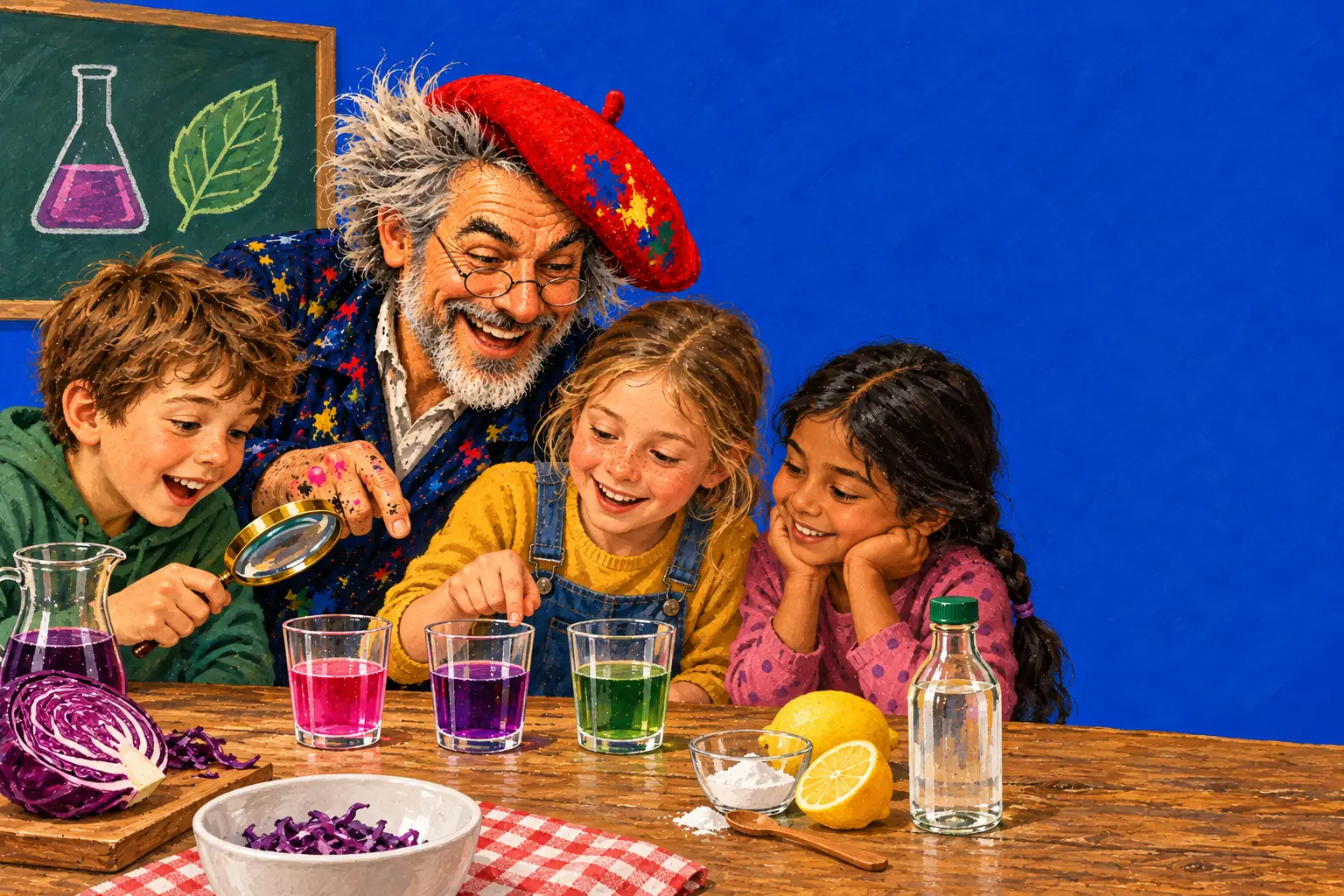
Professor Oops is a drawing and painting app for children aged about 4 to 10 in which the paper behaves like the real thing: paint bleeds, ketchup splats, pages bake and freeze, and real kitchen science happens on screen.
It has no lessons, no levels and no quizzes, and we won't promise better marks. What we can show you is what a child actually does in it, and what they find out on the way. That comes in two halves: the science they bump into, and the play itself, which has no goal except the one they choose.
Half one: science
Every material follows the rules of the real one, so what a child finds out on screen is also true in the kitchen. Six discoveries that come up again and again:
Purple stripes turn pink under vinegar and blue to green with baking soda or soap. That's an acid–base indicator: the first step to the pH scale.
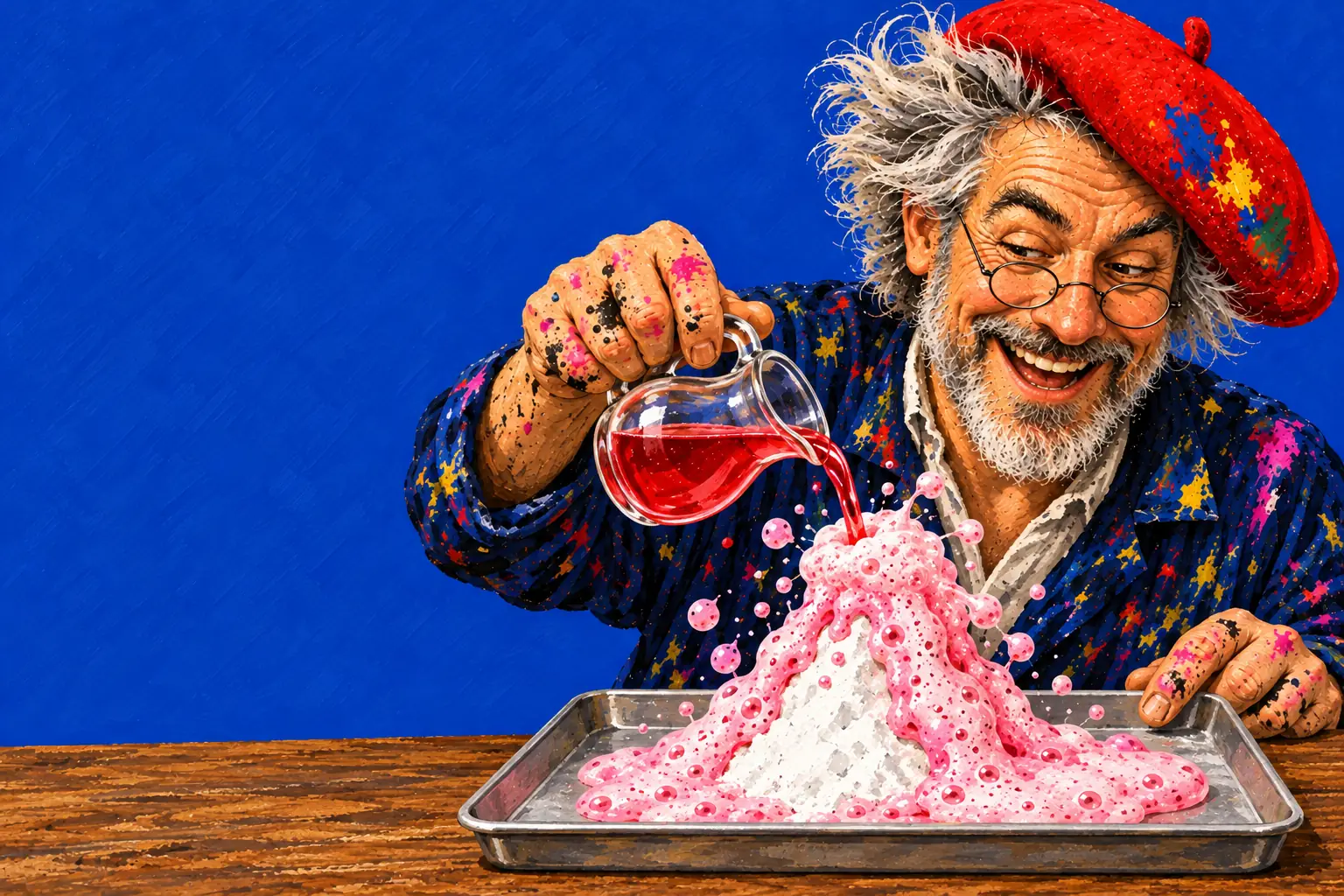
Drip vinegar on a heap of baking soda and it foams up, runs like lava and gets used up as it goes. Lemon does it too: any acid will.
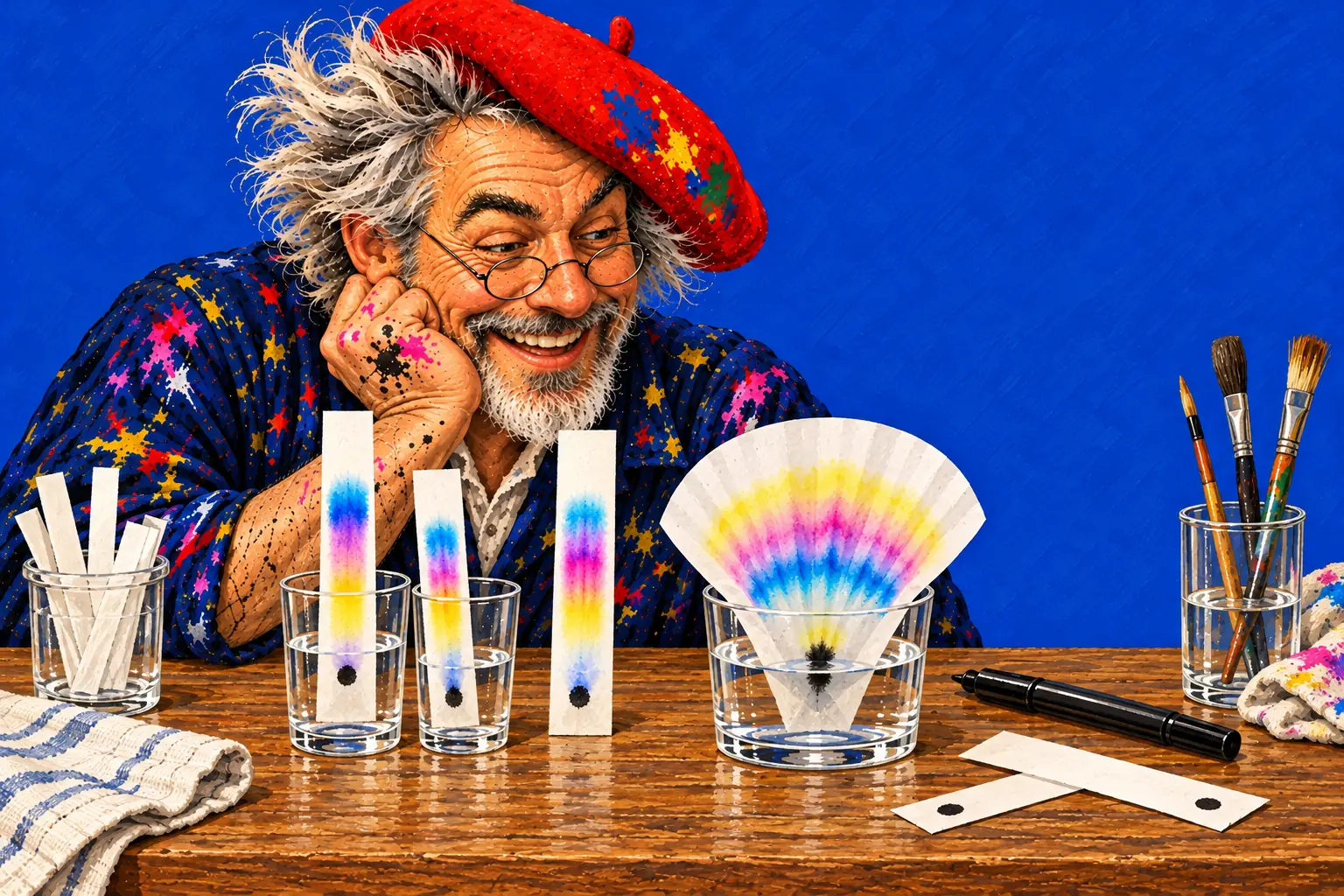
A drop of water on a black marker dot creeps through the paper and dries into a blue ring, a pink band and a yellow middle. That's paper chromatography.
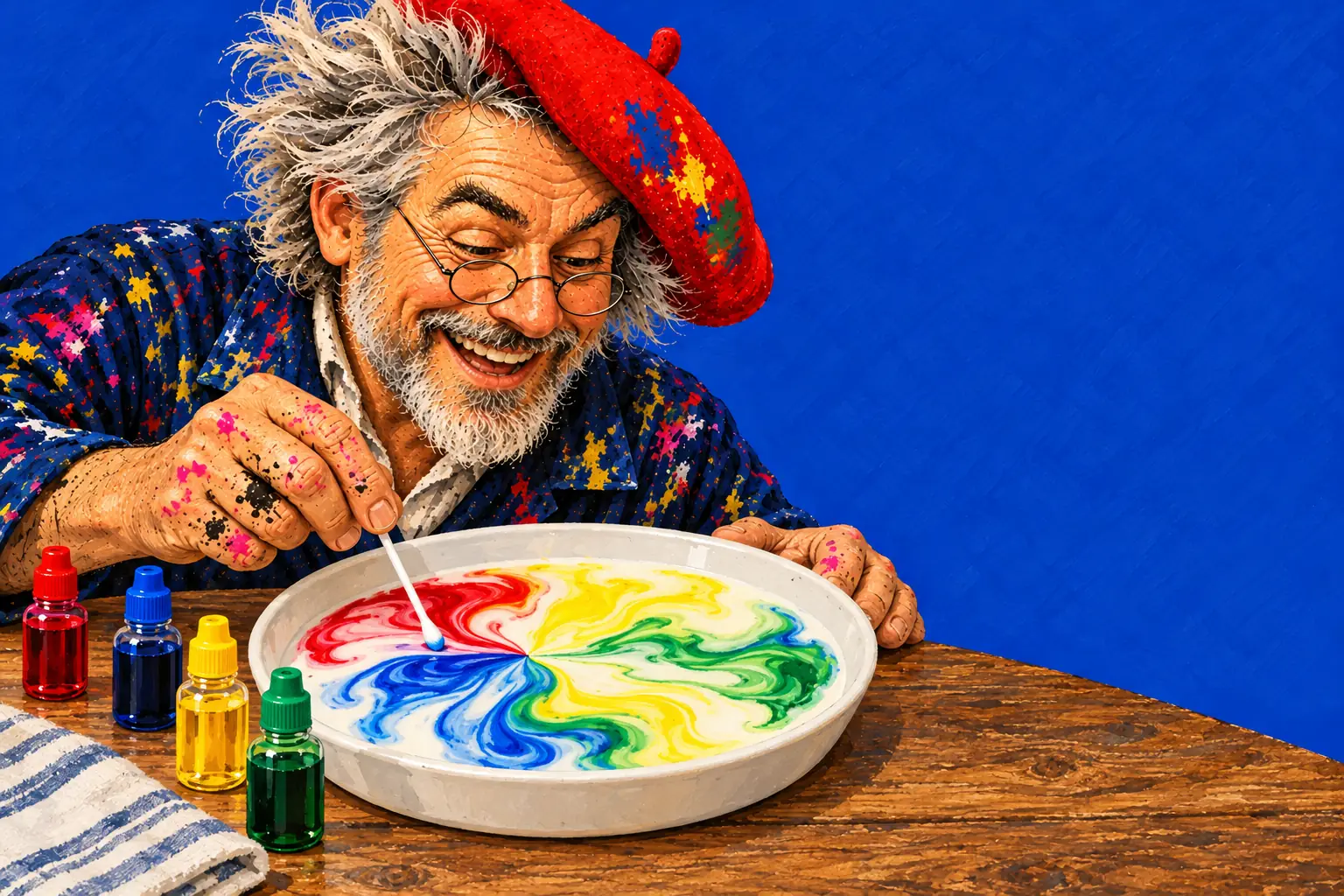
Touch milk with dish soap and the food colouring rushes away from it: the soap lowers the surface tension and the surface flows away.
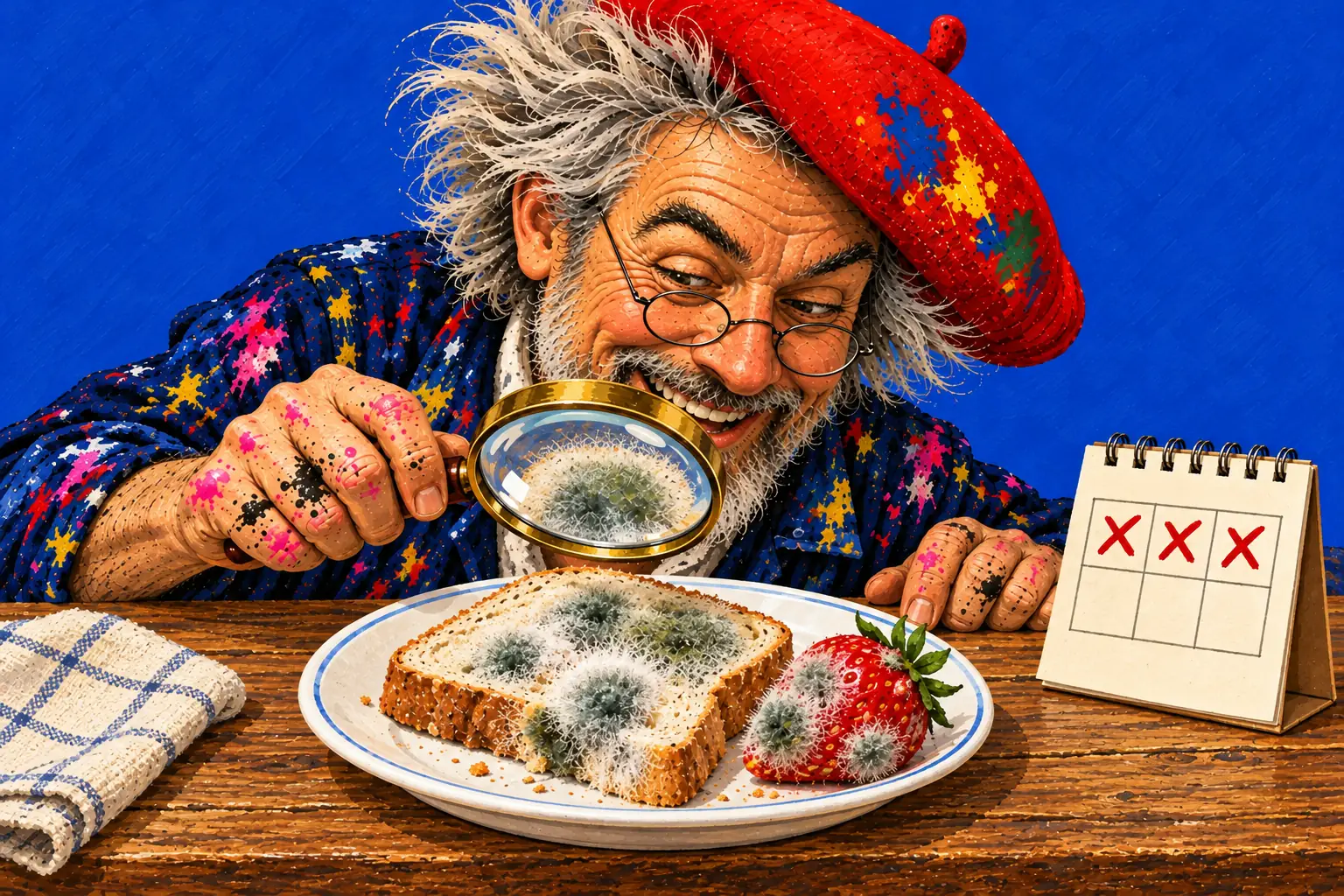
Leave food for three days and mould grows on it, but not on the bare paper. Salt keeps it away; vinegar kills it.
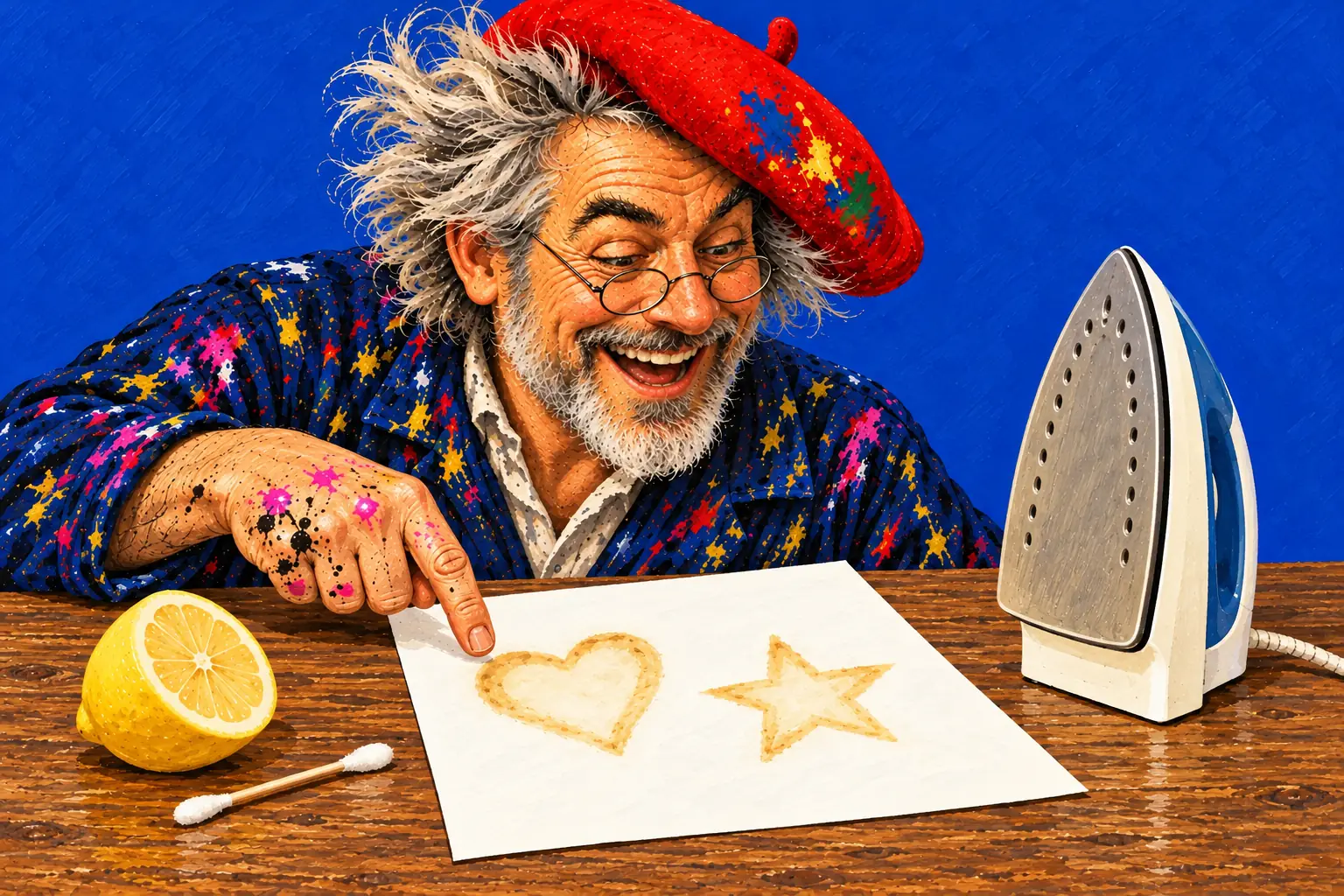
Lemon-juice writing disappears as it dries and comes back brown under the iron. The heat changes the sugar in it, and it never goes back.
Melting and setting. Chocolate melts under the iron and sets again, ice cream freezes hard again in the freezer, and an egg in the oven sets white for good.
Oil and water. Oil floats on water as a golden film. Stir it into an egg yolk and it turns into a mayonnaise that holds.
Seeds need water. Chia seeds on wet paper sprout; on dry paper they just wait.
Sound is shaking. The speaker makes the sheet vibrate, and salt gathers on the lines that stay still.
Ants follow a trail. Leave something sweet out and the ants come for it. They won't cross a line of vinegar or baking soda.
Safety, without the risk. Fire, and bleach mixed with vinegar, happen only on the screen, and the game says why you never try them for real.
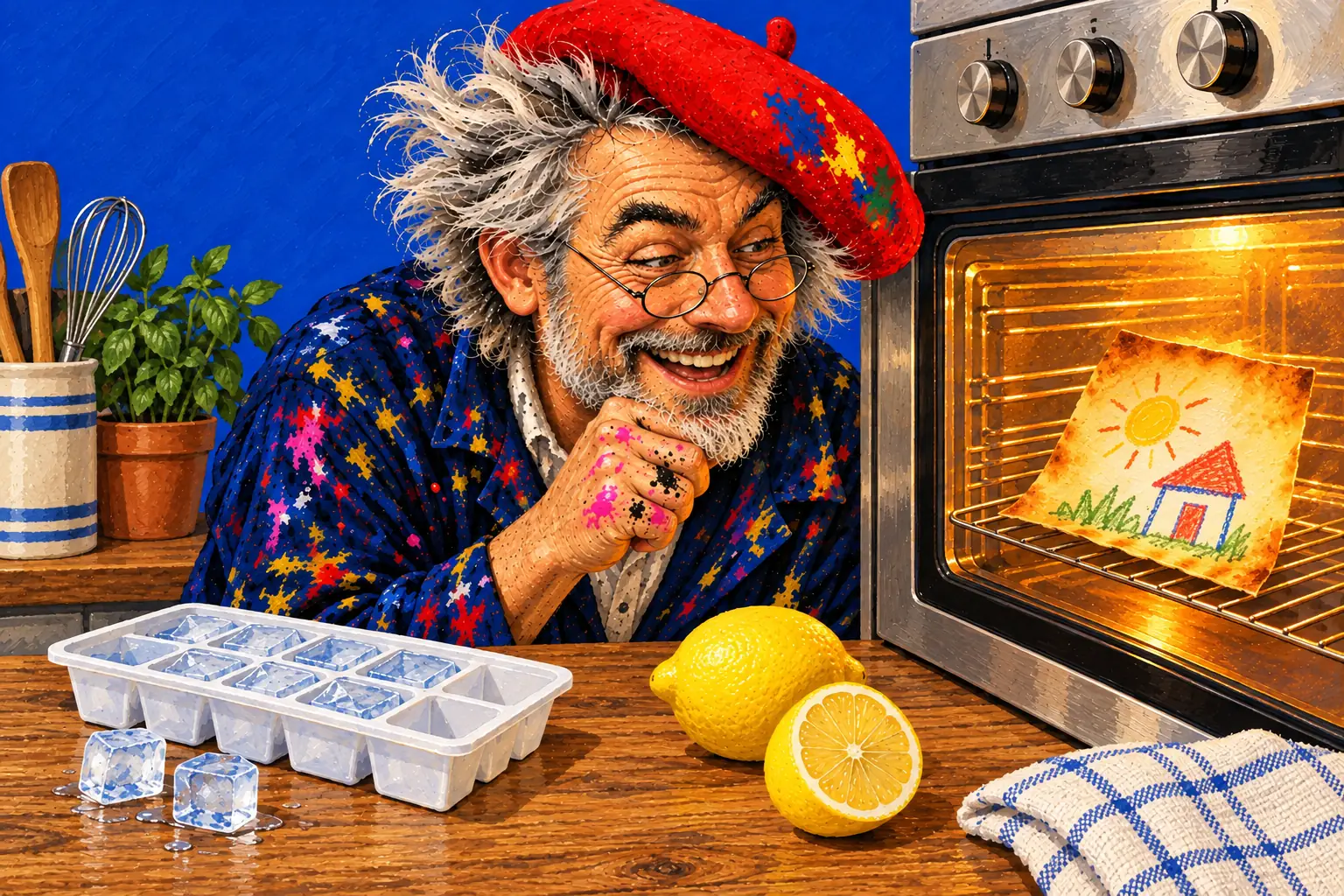
Nothing in the game is explained up front. A child pours, drips and waits, sees what happens, and changes one thing: wet paper or dry, one drop of soap or five, salt or no salt. That is the loop science runs on: wonder, guess, try, look again.
Then comes the best question of all: would that really happen? Every experiment has a real version on this site, with what you need and what to watch out for, so the answer can be tested at the kitchen table.
Half two: free play
There are no levels, scores, timers, stars or wrong answers. A child opens a sheet and decides what it's for today: a treasure map, a volcano, a portrait of the cat, or finding out what happens when everything goes in the oven. That freedom isn't a gap in the design. It is the design.
We'd rather point you to the research than make big claims of our own. Three studies worth knowing:
Play is not frivolous. That's how the American Academy of Pediatrics puts it in its report The Power of Play (Yogman and colleagues, Pediatrics, 2018): play builds the skills children use to plan, focus and pursue a goal, and the report asks paediatricians to recommend it.
Being shown how can narrow what they discover. In an experiment with preschoolers (Bonawitz and colleagues, Cognition, 2011), children who were taught one thing a new toy could do mostly stuck to that one thing. Children who weren't taught explored more and found more of what the toy could do.
Discovery works best with a little help. A review of 164 studies (Alfieri and colleagues, Journal of Educational Psychology, 2011) found that discovery entirely on your own did less well than being taught directly, but discovery with some guidance (questions, feedback, being asked to explain) did better than other kinds of teaching. Which is where you come in.
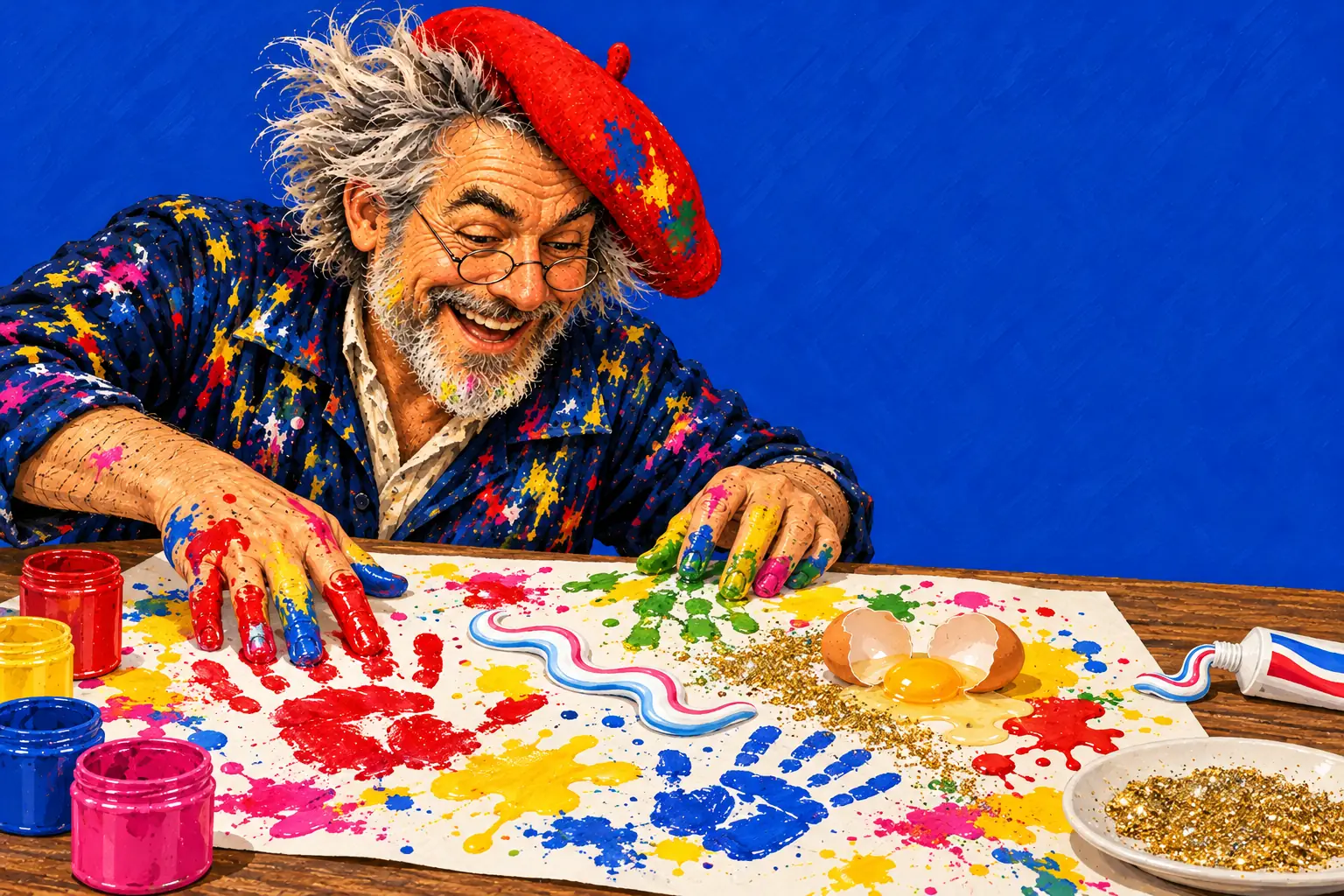
Your child can play perfectly well alone. If you want to make more of it, this is all it takes:
Let them tell you the plan. It may change three times, and that's fine.
"What do you think will happen if…?" Before the vinegar goes on, not after.
After the surprise: "Why do you think it did that?" Any answer is a good start; the experiment pages have the real one.
Pick one experiment and try it in the kitchen together. Then compare: what was the same, what was different?
Talk about what they did and tried, not about whether it came out "right".
A course with lessons and levels
A quiz, a test or a score
A promise of better marks
A replacement for real paint, real paper and real experiments
A sheet of paper where real things happen
Real science they find out for themselves
A place to make their own plans, where failing doesn't exist
A way in to the real thing: every experiment has a version for your kitchen
For teachers
On the whiteboard, a class can predict and watch an experiment first and then do it for real. The teachers' page maps the experiments to NGSS, KS1/KS2, the Dutch kerndoelen and the Flemish minimumdoelen, with lesson plans of 30 to 45 minutes, including one on digital creativity: making, not scrolling.
It's a drawing and painting app in which real science happens. There are no lessons, quizzes or scores: children find things out by playing, and the experiment pages explain the why, for them and for you.
The materials follow the real rules: red cabbage juice changes colour along the real pH chart, and a black marker splits into bands the way real washable marker does. Where the game simplifies, the experiment pages say so: plants in the game need water, for example, but not light.
Often, yes. Messing about is how young children find out what things do: what's runny or thick, what soaks in, what changes in the oven. And sometimes it's just fun, which is allowed.
Children can play on their own. A question from you now and then ("what do you think will happen?") and one experiment done for real together make the most of it.
Children of about 4 to 10. The youngest love the splats, the oven and the freezer; older children get more out of the experiments and the reasons behind them.
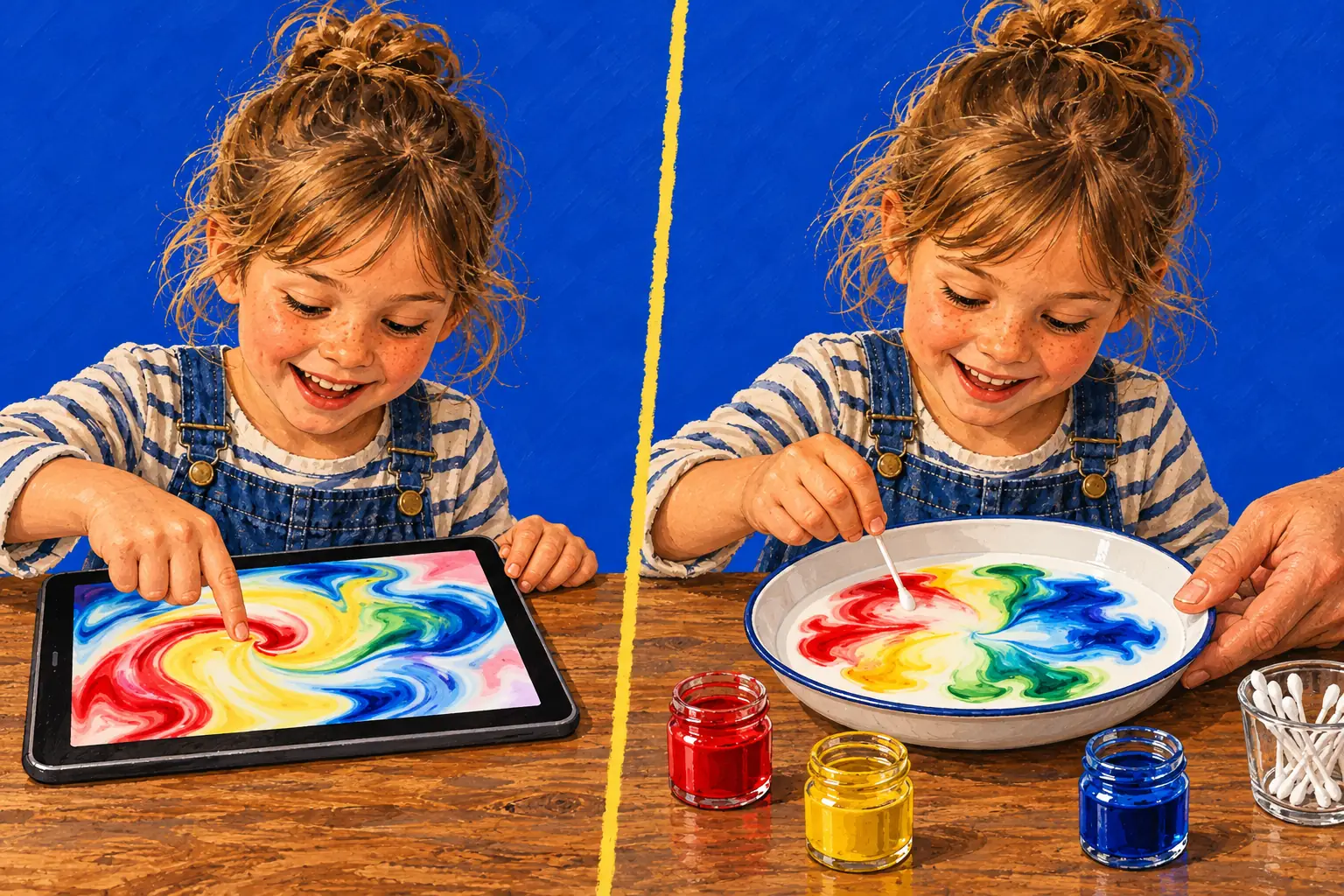
Try it on screen, then do it for real together: one afternoon, start to finish.
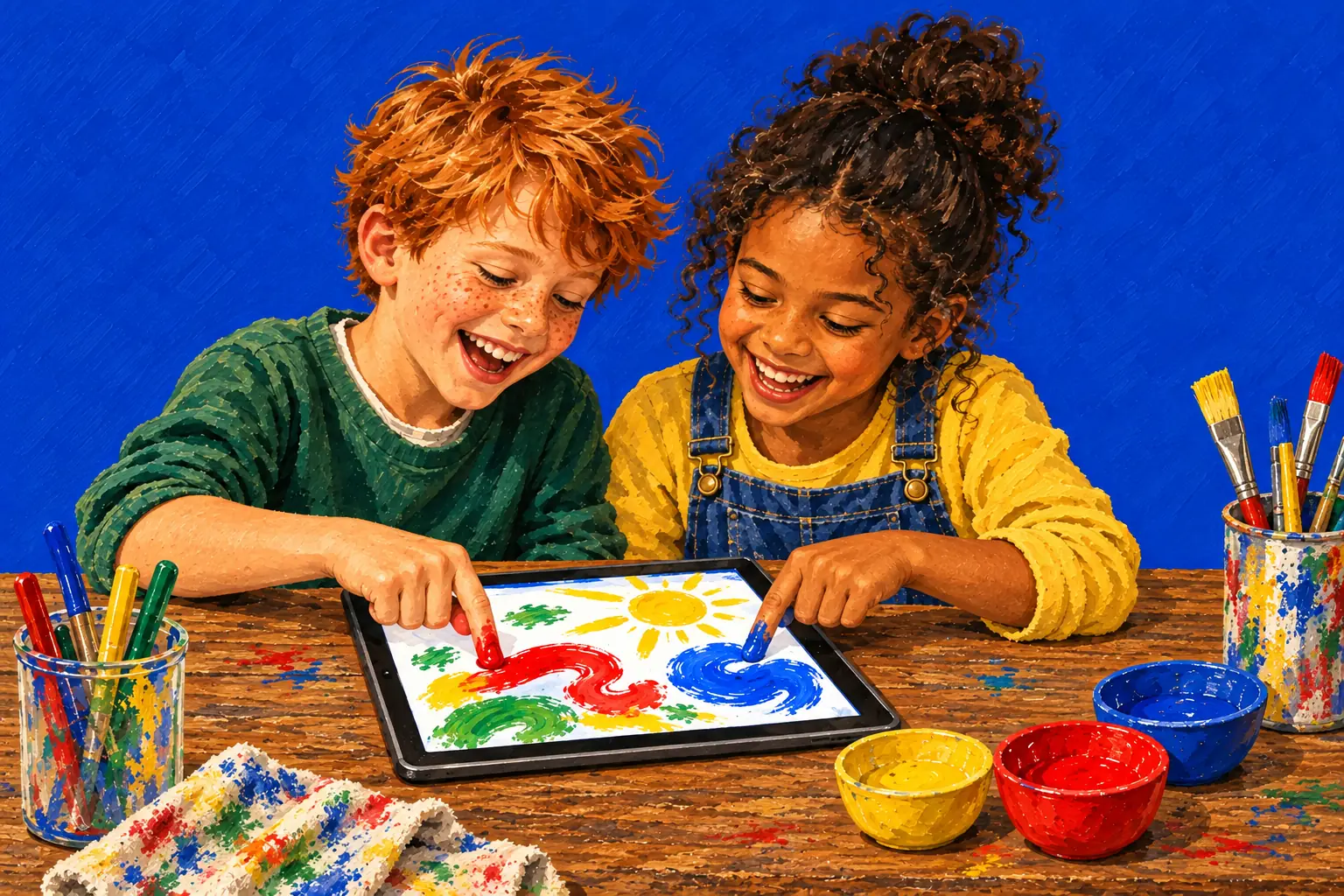
A 40-minute lesson about making something of your own on a screen.
Every experiment in the game, each with a real version for home or class.