57
Sources traced to the code they shaped, or to the code they didn't: 38 from our design notes, 19 found in a later check.
Game Tailors
Source: Real facts, real animals
The drawing app where the paper is real. No ads. No accounts. No personal data: only anonymous counts, which you can switch off.
Game Tailors · Schieweg 15Y-40, 2627 AN Delft (NL)
KvK 92437702 · VAT NL866044474B01
info@gametailors.com · +31 6 4227 5919
© 2026 Game Tailors
Real facts, real animals
The ants in Professor Oops turn by a rule of the same form as one measured in real ants. Paper catches fire at about the temperature real paper does. But the ants' scent fades 63 times faster than a real trail, so a child can watch it go. This page shows where the game's facts about animals and the kitchen come from, how far each one was checked, and where we bend them on purpose.
Before we build an animal or a kitchen substance, we read. A paper on fruit flies says they jump away from whatever looms at them. A paper on garden ants says their trail scent fades. Findings like these decide the mechanism: what the animal senses, and which way it moves. The exact numbers are then set by play, on a sheet of paper about 31 by 23 cm, where a cat is the size of a thumb.
In November 2026 we checked every source behind the animals and the kitchen science, one by one. Each reference was looked up again, by its DOI record, abstract, page or book record, and then traced to the line of code it shaped, if there was one. The chart shows what we found. A handful of sources were applied directly. More of them shaped a mechanism that shipped. Many described behaviour we wrote up and then never built, like the pigeon's hold-and-thrust head bob. Others we found only after building, and we list those as consistent with the game, or not, never as its basis.
We think that's the right order for a game for young children. Real findings decide which way things go, and the toy-sized page decides how fast. Where we checked and the game disagrees with the world, as it does for butter, baking soda and the dog's shake, this page says so.
Tap the page with the ants and a scout walks to that spot, laying a scent nobody can see. The ants behind it feel for the scent with their antennae and turn toward the side with more.
How much they turn is the clever part. The game divides the difference between left and right by the total the ant can smell, so a faint trail and a strong one steer an ant equally well. Researchers who studied Argentine ants found turns of the same form: the difference between the two sides divided by their sum Perna 2012. That paper is in our design notes, but the code doesn't name it, the note asked only for a "probe difference", and the species differ. Dividing by the total is also a common way to steady a steering rule. So we call it a match, not an implementation. Like the ants in the paper, ours keep the same speed on the trail.
The scent fades. In black garden ants, trail scent lasts on average about 47 minutes Beckers 1993. Ours fades about 63 times faster, so a trail nobody walks is half gone in about half a minute. A child can see it go within one sitting. The same paper found ants lay 43 % more trail from a rich sugar source than a weak one, which in the authors' model is enough for a colony to settle on the richer food. Our ants don't: an ant lays the same whatever it found.
Where they lay it differs too. Real black garden ants lay about equally on the way to food and on the way back, and only once food has been found Beckers 1992. Ours lay several times more coming home with a crumb, and the scout lays on its way out. On screen the homeward trail stands out, which reads well. It isn't how real garden ants do it, and we don't claim it is.
The most playful part has no paper behind it. Anything lying on a cell wipes the scent there, whoever put it there: water, soap, acid, bleach, flour or baking soda. No source we found says baking soda keeps real ants away. In the game, fine powder wipes the trail, and that's all we claim.
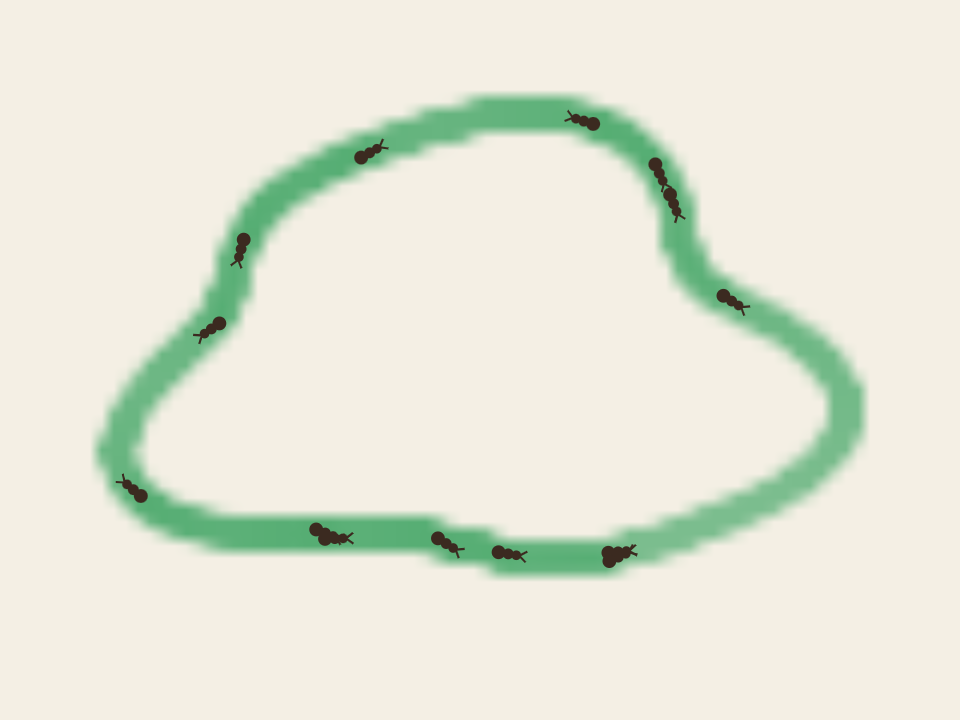
Fourteen ants walk a loop of scent (the green haze, which the game never draws). Drag on the page to lay new scent, or press Lay a line of scent. Then turn the scent each ant lays right down. What to look for: with the game's rule, difference ÷ total, the ants hold the loop on a faint trail as well as a strong one. Switch to difference only and a strong trail still works, but on a faint one (about ×0.1 and below) the ants no longer turn enough at the bends and wander off. Switch the fade to real ants' 47 minutes and the trail hardly fades on this timescale. These are the game's feelers, turning, wander, speed, laying and fade on a 160 × 120 cell page, with every ant laying at the game's going-out rate; the game's pull toward a goal and its pause to feel about for a lost trail are left out, so a loop needs no goal.
This part of the page could not start.
The game's scent is down to 26 % after one minute and under 1 % after six; a real trail with a 47-minute mean lifetime still holds 81 % after ten minutes.
| minutes | game | real black garden ants: mean lifetime 47 min |
|---|---|---|
| 0 | 100 | 100 |
| 0.25 | 71.65 | 99.47 |
| 0.5 | 51.34 | 98.94 |
| 0.75 | 36.79 | 98.42 |
| 1 | 26.36 | 97.89 |
| 1.25 | 18.89 | 97.38 |
| 1.5 | 13.53 | 96.86 |
| 1.75 | 9.7 | 96.35 |
| 2 | 6.95 | 95.83 |
| 2.25 | 4.98 | 95.33 |
| 2.5 | 3.57 | 94.82 |
| 2.75 | 2.56 | 94.32 |
| 3 | 1.83 | 93.82 |
| 3.25 | 1.31 | 93.32 |
| 3.5 | 0.94 | 92.82 |
| 3.75 | 0.67 | 92.33 |
| 4 | 0.48 | 91.84 |
| 4.25 | 0.35 | 91.35 |
| 4.5 | 0.25 | 90.87 |
| 4.75 | 0.18 | 90.39 |
| 5 | 0.13 | 89.91 |
| 5.25 | 0.09 | 89.43 |
| 5.5 | 0.07 | 88.96 |
| 5.75 | 0.05 | 88.48 |
| 6 | 0.03 | 88.02 |
| 6.25 | 0.02 | 87.55 |
| 6.5 | 0.02 | 87.08 |
| 6.75 | 0.01 | 86.62 |
| 7 | 0.01 | 86.16 |
| 7.25 | 0.01 | 85.71 |
| 7.5 | 0 | 85.25 |
| 7.75 | 0 | 84.8 |
| 8 | 0 | 84.35 |
| 8.25 | 0 | 83.9 |
| 8.5 | 0 | 83.46 |
| 8.75 | 0 | 83.01 |
| 9 | 0 | 82.57 |
| 9.25 | 0 | 82.13 |
| 9.5 | 0 | 81.7 |
| 9.75 | 0 | 81.27 |
| 10 | 0 | 80.83 |
Source: Game: the ant scent as the released game fades it. Real: the mean lifetime estimated by Beckers 1993, drawn the same way.
Bring a hand down near a fly and it darts off, directly away. Flies filmed at take-off do the same: they jump away from a looming threat, setting the direction of the jump in the fifth of a second before they leave Card 2008. Our fly matches that paper on direction and nothing more. It has no posture before the jump, no delay, and no sideways bias. Since October 2026 "flee straight away" is one rule shared by every animal in the game, so the fly has nothing of its own here.
A hand that creeps up slowly gets close. That's our own design: slow movement counts for far less than fast movement. Our design note put "slow approaches don't trigger it" right after citing the fly paper, but the paper's experiments didn't test slow approaches, so we don't claim it came from there.
One pigeon taking off sends up the pigeon beside it. Its wings write noise and movement into the layers every animal reads, and the other pigeon hears and sees them with its own senses, and an automated test checks it. The idea came from crested pigeons, whose wings whistle differently in alarm; flock mates took off when they heard the alarm whistle and not the ordinary one Hingee 2009. The paper's point is that the pattern of the sound carries the alarm. Ours has no calm take-off and no alarmed one. It's just something loud and sudden nearby. The authors only suggest that take-off noise might warn other flocking birds too.
A frightened pigeon drops a few feathers, more after a bigger fright. That touch came from a page on fright moult, which names diamond doves as prone to it Birds Online. It's a hobby site, about doves rather than pigeons, and we treat the feathers as the small touch they are.
And nothing ever lands on a fly. That isn't physics: it's our rule that no animal is ever hurt, and a fly under a swat is moved out from under it.
Watch the cat run and each paw reaches forward before it lands. The rule comes from legged robots: put the foot down at the "neutral point", and a running machine keeps its speed steady Raibert 1986. Our design note writes that point as half the distance the body travels while the foot is on the ground. Our pets don't balance. Their bodies move by a steering rule, and the feet follow, so the robot's footwork is used only for how the walk looks.
A wet dog shakes itself dry. Ours rocks 7.6 times a second for 1.2 seconds, about 13° each way. A study that filmed wet mammals found dogs shaking at 4.5 to 8 times a second, from Labradors at 4.3 to 4.6 up to a 2.5 kg Chihuahua at 6.8 Dickerson 2012. A Labrador swings about 90°. So our shake sits inside the range for dogs, faster than any dog the study filmed, and much smaller. Each drop it throws off carries a share of whatever is on the dog's coat; the study says nothing about which way drops fly, so that part is ours.
Shine the laser near the cat and it chases the dot. Switch the laser off under its paw and the cat has caught it, and is very pleased. The puppy sees the dot and doesn't chase it. A survey of 618 cat owners, which we found after building this, linked frequent laser play with cats that keep chasing lights and shadows, and mentions the suggestion that never catching the prey may frustrate them Kogan 2021. Letting the cat catch it is consistent with that. The survey is about cats, and it shows a link, not a cause.
Offer the puppy chocolate and it sniffs, sits drooling, looks at you and leaves it, and the game says once why. Chocolate, caffeine, grapes and xylitol are tagged as bad for dogs. A veterinary manual, read after the game was built, agrees on all four Merck: chocolate, Merck: grapes, Merck: xylitol. Passion fruit is tagged too, and for that we found only pet-care blogs, so we make no claim for it.
The dog's tail wag leans a little to one side, the same whatever it sees. Real dogs wag more to one side or the other depending on what they see Quaranta 2007, so ours has the lean and not the feeling, and we claim nothing for it.
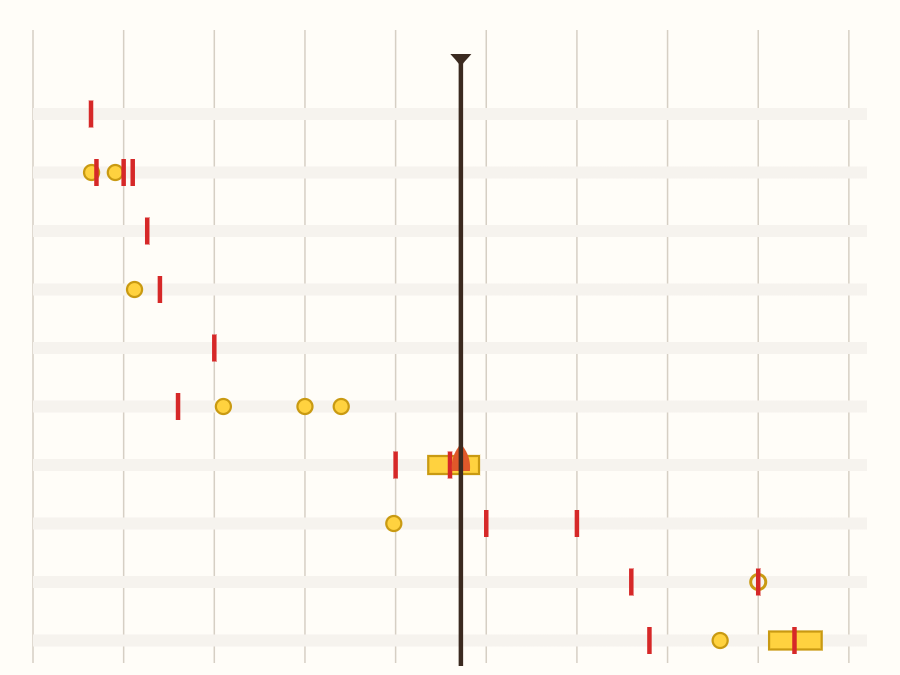
The game keeps one temperature number for every spot on the paper, where 0 is room temperature. To turn that into degrees, it needs a fixed point, and the fixed point is paper. The scale is set so that the point where the game's paper catches is 230 °C. Published figures for paper catching by itself run from 218 to 246 °C Autoignition, Wikipedia, which we found after the fact. Every other threshold sits on the same scale.
Then the kitchen. Chocolate softens at 32 °C. Cocoa butter can crystallise in six ways, and ordinary chocolate is normally in the fifth Wille 1966; the game has one softening point. Baker's yeast in the game works best at 35 °C, suffers above 50 and dies at 55. A published measurement puts its best growth at 32.3 °C and its limit at 45.4 Salvadó 2011. Ours is a little warmer, and it models how fast yeast makes gas, not how fast it grows. Egg white sets at 63 °C and yolk at 70, each at a rate. Real yolk can start to set from 56 °C, and how firm it gets depends on time and temperature together Vega 2011, so a single setting point is our simplification.
Slide the heat and watch what changes. Red ticks are the game's thresholds; yellow marks are the published figures we checked them against. What to look for: paper catches inside the published band; oil catches by itself inside its band, but between 340 and 420 °C only with a flame beside it; butter catches at 400 °C where the one measurement says it never did; secret ink moves from 80 to 105 °C in the next update. These are the game's thresholds on its own temperature scale; the heating here eases toward the slider in about a second. The open ring on the butter row: one measurement, never caught by itself.
This part of the page could not start.
Fats are where the checking bites. Cooking oil in the game lights from a flame at 340 °C and by itself at 420 °C. One study measured cooking oils catching by themselves between 406 and 435 °C Buda-Ortins 2011, and our 420 sits inside that. The same study found that butter didn't catch by itself at all, while ours does at 400 °C. It's a student study, a useful check rather than an authority, but it's the only measurement we found, and it disagrees with us. Candle wax lights from a flame at 250 °C, above the 199 °C flash point on a safety card ICSC 1457, which is the right way round. Its 300 °C for catching by itself we couldn't check.
Some real constants go straight in. Pour water onto burning oil and it flashes to steam under the oil and throws it up. How much water flashes is worked out from water's real latent heat, typed in as 2,260 joules per gram. A reference table we checked it against later gives 2,256 Engineering Toolbox. In the next update next update wet paper also boils dry by latent heat, held near 100 °C until the water is gone.
Secret ink is the clearest case of a source changing the code. Paint lemon juice on paper, heat it, and brown writing appears. In the released game that starts at 80 °C, a number with no source. In the next update next update it starts at 105 °C, the temperature at which fructose, the earliest of the common sugars, begins to caramelise; glucose needs 150 and table sugar 170 Caramelization, Wikipedia. Those figures come from a standard food-science book McGee 2004, which we know only through that page. Nobody has measured the point for lemon juice on paper, and we say so. The next update also gives each ink a make-up per 100 g taken mostly from nutrition tables, so milk, with more sugar and protein, browns darker than lemon next update.
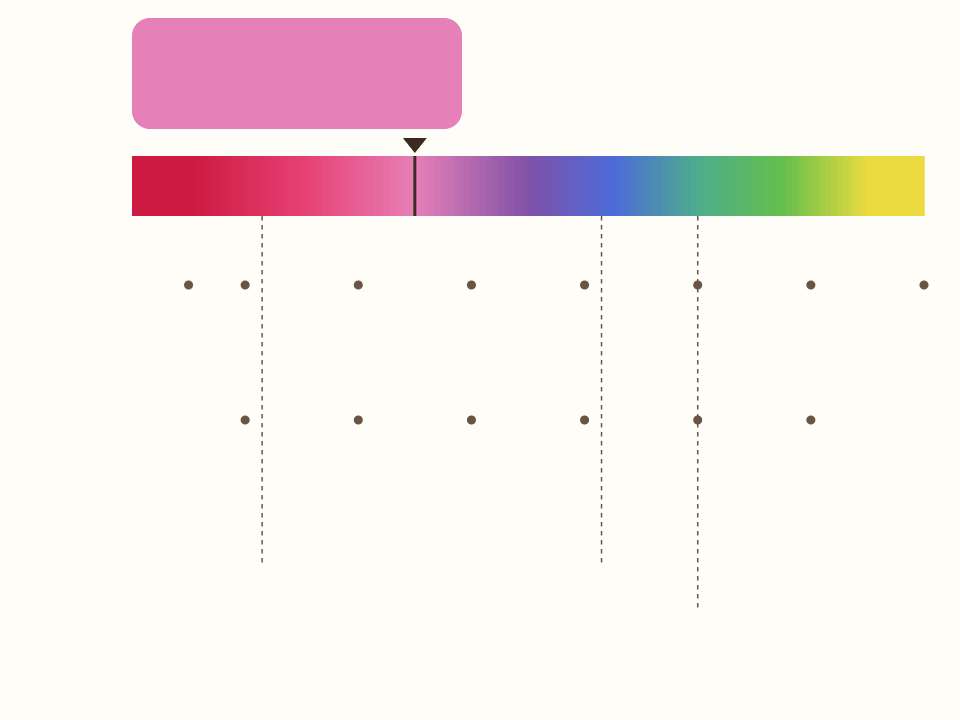
Paint red cabbage juice on the paper and drip vinegar or baking soda on it. The juice goes pink where it's acid and blue to green where it's alkaline. The game estimates how acid each spot is from what's dissolved there, then looks the colour up on a table of eight colours from pH 1 to 13. It isn't a calculation of molecules, and the pH is a game estimate.
Two published colour charts for home and school experiments, found after the table was made, agree with it on the order: red in strong acid, then pink, purple, blue, green, and yellow at the far alkaline end RHS chart, Illinois chart. The shades are our own picks. Our pH 5 is pinker than either chart's colour there, and the two charts don't agree with each other either: one calls pH 4 violet and pH 6 purple, the other the other way round.
Baking soda is where the check found a real error. Baking soda in water sits at about pH 8.3 Science Insights. In the released game, enough of it reads pH 10, which turns cabbage teal-green. In the next update next update it stops at 8.3, and cabbage on baking soda goes blue, as it does in a kitchen.
Alkali also makes food brown faster. That's why pretzels are dipped in lye Maillard reaction, Wikipedia. The game speeds browning up by a fixed factor for every pH unit the paper under the food is more alkaline than the food itself, a factor we estimated; the page gave us the direction, not the number.
Drag along the strip or use the slider to pick a pH. The big swatch is the game's colour; underneath are the colour words from the two printed charts. What to look for: the order matches everywhere; the game's pH 5 is a clear pink; and baking soda lands on teal-green in the released game, on blue in the next update, where real baking soda sits. This is the game's colour table, drawn at full strength on white.
This part of the page could not start.
A child plays for minutes, not hours, on a page smaller than a placemat. So some things are sped up on purpose. The ants' trail fades about 63 times faster than a real one. A real snail crawls about a millimetre a second; ours was set to three times that, so you can see it move, and comes out at about 3.6 mm a second.
Others ended up faster without anyone aiming. Fire creeps across the released game's paper at about 1.1 mm a second. One published measurement of plain paper burning downward is 0.81 mm a second Ramli 2018: the same order of size, though we never tuned toward it, and a flat sheet isn't a downward burn. The dog's shake is about 1.7 times a Labrador's.
Thirteen of the sources in our notes shaped plans that never reached the game. Some were overtaken by a later rule, such as "no animal is ever hurt" or "animals sense the world through shared layers, never through a pairing of tool and animal". Others simply haven't been built yet. We list them so nobody mistakes the plan for the game.
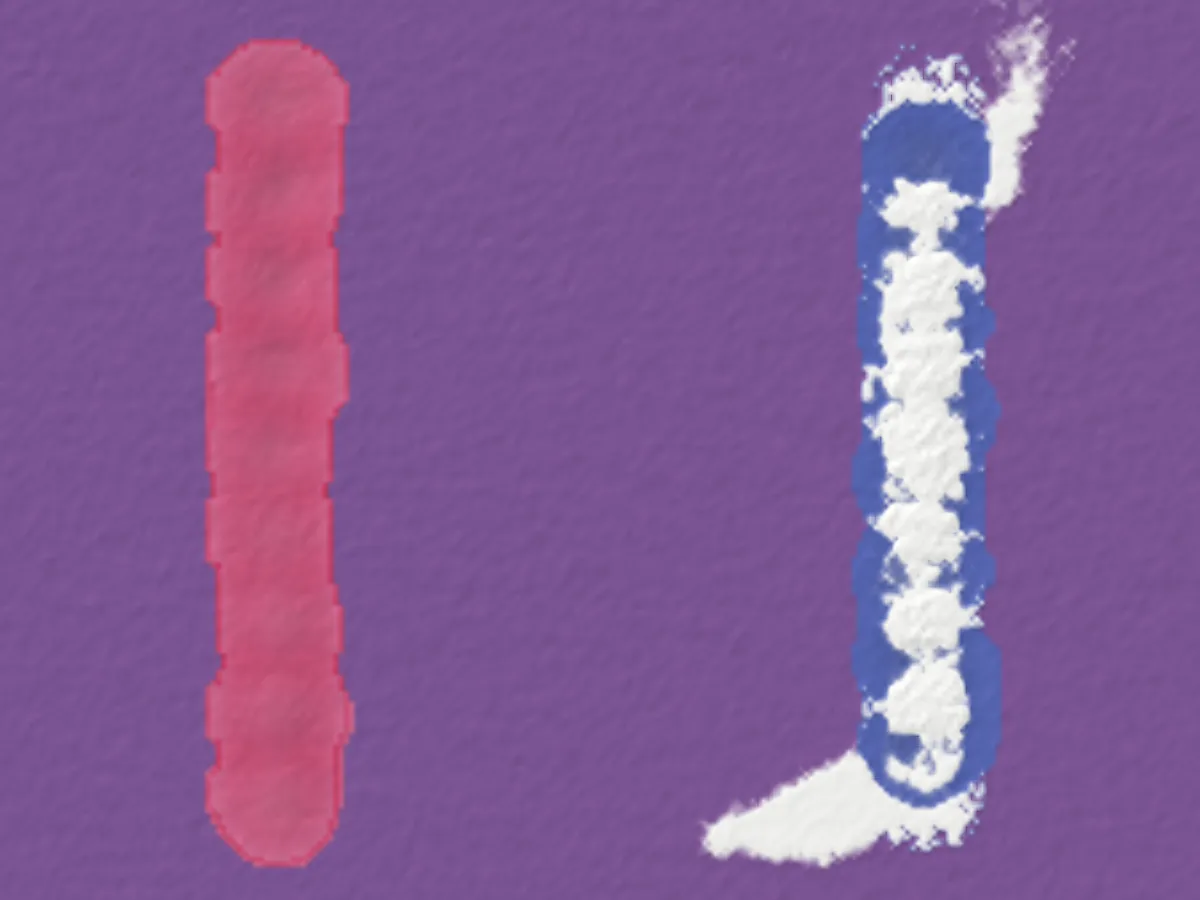
The best example is the pigeon's head. Real pigeons walk with a hold and a thrust: the head stays still relative to the ground for part of each step, then shoots forward. At a run the hold disappears Davies 1988. Our plan said to replace the game's smooth bob with that curve. The code still draws a sine wave, tied to the step, and it doesn't fade at speed. A study of another bird even found head and legs out of step Hancock 2014, which argues against tying the bob to the step at all.
Over two steps the described head holds still, then shoots forward; the game's head rides a smooth wave around the steadily moving body.
Source: Blue: the hold and thrust described by Davies 1988 and Necker 2007; the share of each step spent holding is drawn by eye.
About 200 ms of posture before take-off, and a jump halfway between away and forward when the threat comes from the side Card 2008. Ours leaves at once, straight away.
Eyes, then antennae, abdomen, wings and thorax, each cleaning programme suppressing the next Seeds 2014. Ours picks a grooming bout at random.
Garden ants lay more trail from a rich sugar source Beckers 1993. Ours lay the same whatever they found.
Pigeons drink by suction without lifting their heads, and court by bowing and wing clapping St John 2010, PigeonWatch. Our pigeon pecks, walks and flies.
None of these was written as a pairing. A real figure goes into one shared layer, and whatever reads that layer is affected.
Shared: fine dust on the cell
No ant crosses, and the scent under the line is gone.
Animals with their own minds · pinned by a test
Shared: noise + motion layers
The near one flies, and its wings send up the other.
Sound and shaking · pinned by a test
Shared: latent heat, 2,260 J/g
Steam throws the oil up, and burning drops start new fires where they land.
Heat and fire · pinned by a test
Shared: dust in the flame
It flares up, as a fire-service leaflet warns.
Heat and fire · pinned by a test
Shared: carbonate in the paper → pH
The juice turns blue in a thin ring round the ash. No cabbage code in the fire.
Chemistry and pH · pinned by a test
Shared: material tags
It sniffs, sits, leaves it, and the game says why, once.
Animals with their own minds · pinned by a test
Each entry says what the source found and what became of it in the game. Other chapters link here. Status tags show how each source relates to the code.
Applied: used directly in the code
Informed: shaped a mechanism that shipped
Plan only: shaped a plan that wasn't built
No use: listed in our notes, no traceable use
Found later: found after the code; consistent, or, where the tag says so, not consistent
Not used yet: well-known work we haven't drawn on yet
Mean trail pheromone lifetime about 47 minutes; 43 % more trail from a rich source. Our scent fades in under a minute on purpose; the richer-food part isn't built.
In our notes · same form. Turns follow a Weber-type rule, difference over sum; speed largely unaffected. Our steering has the same form; nothing in the code names the paper.
No use. Ants as a continuous population. The game does the opposite: individual ants on a scent grid.
No use. A popular explainer of laying, following, reinforcing and fading. Background only.
Found later · not consistent. Laying starts only once food is found, then about equally both ways. Ours lays several times more coming home, and the scout lays going out.
Found later · matches a comment. Desert ants count their steps. A comment in our code says so; the code doesn't count.
Flies set their escape direction about 200 ms before take-off and jump away from a looming threat; mean delay 215 ± 42 ms. Ours matches on direction only.
No use. An escape pathway that fires when an approaching object reaches a threshold angular size.
No use. Neurons that respond to things expanding in view, not shrinking or turning.
Plan only. Eyes, antennae, abdomen, wings, thorax, by suppression. Not built: our fly picks a bout at random.
No use. Grooming moves from front to back, probabilistically.
No use. Flies clean one wing at a time with both hind legs. Our fly does put its hind legs over its wings.
Crested pigeons took off to alarm whistles only; the whistle's tempo mattered. Ours: take-off is loud and sudden, by analogy.
Coverage of the paper above.
A hobby site naming diamond doves as prone to fright moult; it doesn't mention pigeons. Our pigeon drops a few feathers when startled, more after a bigger fright.
Plan only. Hold and thrust when walking; no hold when running or flying. Not built: ours is a sine wave.
Plan only. Head still in the hold, rapid forward in the thrust.
Plan only. Pigeons tell shapes apart as well in the thrust as in the hold.
Plan only. On a moving perch the head is held almost perfectly against rotation.
Plan only. Head and legs out of step in a tinamou. Our bob is tied to the step.
Plan only. A popular blog post.
Plan only. Doves and pigeons drink by suction without raising their heads. Not built.
Plan only. Bowing, circling, wing clapping. Courtship not built.
Plan only. Pigeons and doves drink by suction.
Plan only. Bowing and strutting.
Plan only. Bowing, tail-dragging, billing, wing clapping.
Plan only. With their view blocked, sparrows scan more and flee later. There are no sparrows in the game.
About 1 mm/s, up to 4. A weak page that cites no study. Our snail: about 3.6 mm/s, three times faster on purpose.
A foot placed at the neutral point keeps a running machine's speed unchanged. Our pets' feet land at home + v·Tstance/2, for animation only.
Found later · partly consistent. Dogs at 4.5–8 Hz; Labradors 4.3–4.6, a Chihuahua 6.8; Labradors swing about 90°. Ours: 7.6 Hz, ±13°.
A survey of 618 cat owners linking frequent laser play with repetitive behaviours. Correlational. Our cat gets to catch the dot.
Found later · partly consistent. Wagging leans one way toward the owner and the other toward a strange dog (as reported in Nature's news coverage). Ours has a small fixed lean, whatever the dog sees.
Theobromine and caffeine are the toxic principles; dogs are affected most.
A rapid insulin release in dogs that can cause profound low blood sugar.
Kidney failure in some dogs.
Fructose 105 °C, glucose 150, sucrose 170. Secret ink shows from 105 °C in the next update; 80 °C, unsourced, in the released game.
Applied, second-hand. The source of the caramel figures above, reached through that page. We haven't read the book itself.
5.9 g citric acid per 100 g of fruit. Used for the lemon ink's make-up in the next update.
Milk 5.1 g sugar and 3.3 g protein, lemon juice 2.5 g sugar, per 100 g. Used for both inks' make-up in the next update.
Faster when alkaline, with pretzels as the example. How much faster per pH unit is our own estimate.
Paper 218–246 °C (the page's own reference for it is a dead link). Ours: 230 °C.
Pure paper, downward spread: 0.81 mm/s. The released game's front: about 1.1 mm/s, never tuned toward it.
Background on thin-fuel flame spread; no values on the page.
Found later · oil yes, butter no. Canola 424 °C, vegetable 406, olive 435; canola flame point 379; butter did not auto-ignite. Our oil: 340 and 420. Our butter: 330 and 400.
Found later · flash point only. Flash point 199 °C, closed cup; no autoignition figure. Our wax: 250 and 300.
2,256.4 kJ/kg at 100 °C. The code types in 2,260.
Yolk can set from 56 °C; texture depends on time and temperature together. Nothing on egg white.
Baker's yeast grows best at 32.3 °C, up to 45.4. Ours works best at 35, models gas rather than growth.
Six crystal forms; chocolate is normally form V. Our chocolate softens at 32 °C.
Found later · no value. The angle depends on how it's measured. We saw no value for sand, so we don't cite it for our sand's 33°.
Found later · partly consistent. Never water ("it will explode"), never flour; put a lid on it. It calls baking soda an old practice. The game agrees on water, flour and lids; in the game baking soda works.
Some heat-activated inks are organic substances that turn brown when heated; fruit juices work. Ours is a browning rule, not an oxidation model.
Milk browns as its sugars react with proteins. On lemon it disagrees with other sources about the mechanism.
Calls its own figures an illustrative toy model; a hair dryer is too cool.
pH 1 red, 2 pink, 4 violet, 6 purple, 8 indigo, 10 blue, 12 green, 14 yellow. Same order as ours.
pH 2 red, 4 purple, 6 violet, 8 blue, 10 blue-green, 12 greenish yellow.
Found later · not consistent. A 0.1 M solution is about pH 8.3–8.5. The released game reads up to 10; the next update stops at 8.3. A weak source for a textbook figure.
Not used yet. Flies speed up and turn upwind 190 ± 75 ms after meeting a plume. Our animals head upwind while they smell something, a rule written without this paper; the game has none of its timing.
Not used yet. The classic shortest-path result. Whether our ants can find a shorter path has never been tested.
Not used yet. To compare with how our ants meet and step aside.
Not used yet. Escape in flight, where Card & Dickinson studied take-off.
Not used yet. Inertia against gravity sets the lapping rate.
Not used yet. For the day the hold and thrust is built.
Not used yet. The standard book; it could source or correct the numbers in our cat notes.
Not used yet. The play bow, which our dog does.
Not used yet. The place to look for a citable ignition point for wax.
Not used yet. Burning rates for pools of 0.2 m and up, far bigger than any pool on the game's paper.