3 layers
Noise, shaking and movement. Sounds, blows and moving things write into them and every animal reads them, one value per air cell.
Game Tailors
Source: Animals with their own minds
The drawing app where the paper is real. No ads. No accounts. No personal data: only anonymous counts, which you can switch off.
Game Tailors · Schieweg 15Y-40, 2627 AN Delft (NL)
KvK 92437702 · VAT NL866044474B01
info@gametailors.com · +31 6 4227 5919
© 2026 Game Tailors
Animals with their own minds
A cat, a puppy, ants, flies, a pigeon and a snail live on the paper. Bang a hammer and the pigeon hears it the way a pigeon hears. Leave food out and its smell drifts on the air until flies come up it. Ants lay an invisible scent line that a pinch of flour can break. And whatever a child does, no animal is ever hurt: each one gets out of the way in its own manner.
Hit the paper with the hammer near a pigeon and it takes off. Hit it across the page and the pigeon keeps pecking, and an automated test checks both. A dog's bark sends it up too, and so does another pigeon taking off beside it. Nowhere in the hammer's code, or the dog's, is there a line that says "scare the pigeon".
Instead, everything that happens on the page leaves a trace in three shared layers: how loud it is, how much the paper shakes, and how much is moving. A bang writes a burst of loudness that is strongest where it happened and fades within a fraction of a second. A blow writes a jolt. A hand swept across the page writes movement. Each animal stands somewhere on those layers and reads them through its own senses.
Those senses differ, and the table below shows by how much. Ants and snails are deaf in the game; they feel the paper shake. A fly is most alert to movement. A pigeon jumps at noise and movement alike. The cat and dog sit in between, and a dog hardly minds the ground shaking.
It used to be done the old way. Until October 2026 the game had about 45 hand-written calls that scared a particular animal from a particular tool, and they disagreed with each other: a crayon scattered ants and a swiping hand didn't. One change replaced them all with these three layers. Now anything that makes a sound, a jolt or a movement on the page reaches every animal, and nobody has to write the pairing in.
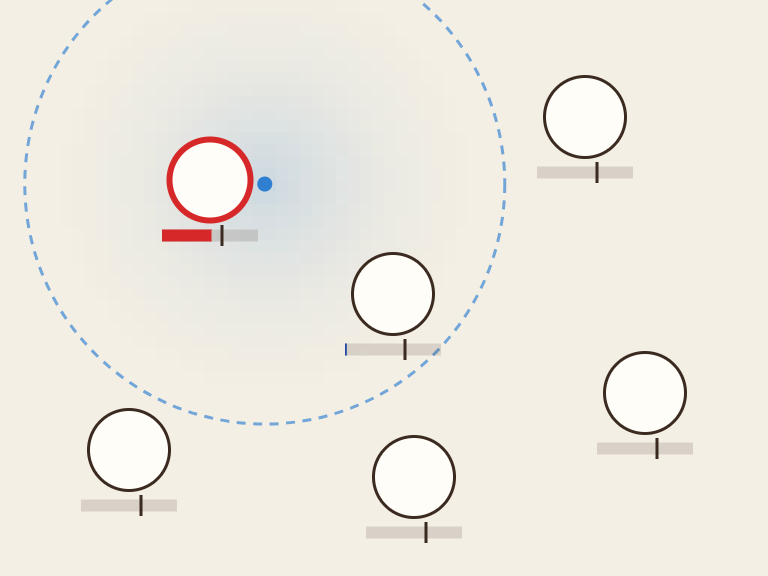
Pick something to happen and tap the page, or press Make it happen. Blue is noise, orange is shaking, pink is movement. Each animal's bar shows how alarming the change is for it; past the notch it startles. What to look for: a bark sends up the pigeon and the cat while the ant and snail don't hear it; the hammer's jolt scatters the ant, snail and fly nearby, while the pigeon and dog sit it out (in the game it is the hammer's bang that puts a pigeon up). Turn on Keep it going and they startle once, then get used to it. The game's field, falloff, decay and threat rule on a full 512 × 384 page, with the animals held still.
This part of the page could not start.
| Animal | Noise | Shaking | Movement |
|---|---|---|---|
| Pigeon | jumpy | calm | jumpy |
| Fly | calm | jumpy | very jumpy |
| Ant | deaf | very jumpy | never, from movement alone |
| Snail | deaf | very jumpy | jumpy |
| Cat | jumpy | steady | jumpy |
| Dog | steady | calm | jumpy |
Hold a fan blowing next to a pigeon. It startles once when the fan comes on, then stays put. Something louder right after startles it again. Animals notice change and stop noticing what keeps going, and the game's animals do the same. An automated test checks it.
That costs one number per animal: how quickly it gets used to things. A pigeon, a cat or a dog gets used to something within a second or two. Each animal keeps a running memory of how loud, shaky and busy its surroundings have lately been, and only what rises above that memory counts as alarming. A steady sound fades out of its attention by itself. Something that creeps up slowly never rises far above it.
That second rule is how the cat hunts. Movement counts by size and speed, with slow speeds counted far less. A cat creeping slowly shows too little movement to make a pigeon look up. When it breaks into a rush the number shoots past the pigeon's threshold, and the pigeon is in the air before the cat arrives. A test lets a cat stalk a pecking pigeon and checks both halves: the creep goes unnoticed, the pounce doesn't, and the pigeon is never touched. The cat ends its creep a little way off, so it never sneaks right up.
Flies and the pigeon can also have had enough. Every fright adds to their fear, and fear drains away at a steady rate. Wave a hand at a fly a few times in quick succession and it leaves the table; the same waves spread out and it stays; a test pins that too. One pigeon taking off frightens the pigeon next to it, because its wings make noise and movement the other one picks up. The idea came from a study of crested pigeons, a different species, whose wings whistle an alarm as they take off Hingee 2009. In the game it is simply something loud and sudden nearby.
A creeping cat at 30 cells a second shows 0.37, under the floor of 0.25; rushing at 150 it shows 1.50, past the pigeon's 0.5. A hand at 150 shows 1.05, a pigeon 0.79.
| speed (cells per second) | cat (size 35) | hand (size 12) | pigeon (size 9) | tennis ball (size 7) |
|---|---|---|---|---|
| 0 | 0 | 0 | 0 | 0 |
| 5 | 0.0175 | 0.006 | 0.0045 | 0.0035 |
| 10 | 0.0613 | 0.021 | 0.0158 | 0.0123 |
| 15 | 0.1225 | 0.042 | 0.0315 | 0.0245 |
| 20 | 0.196 | 0.0672 | 0.0504 | 0.0392 |
| 25 | 0.2784 | 0.0955 | 0.0716 | 0.0557 |
| 30 | 0.3675 | 0.126 | 0.0945 | 0.0735 |
| 35 | 0.4617 | 0.1583 | 0.1187 | 0.0923 |
| 40 | 0.56 | 0.192 | 0.144 | 0.112 |
| 45 | 0.6615 | 0.2268 | 0.1701 | 0.1323 |
| 50 | 0.7656 | 0.2625 | 0.1969 | 0.1531 |
| 55 | 0.8719 | 0.2989 | 0.2242 | 0.1744 |
| 60 | 0.98 | 0.336 | 0.252 | 0.196 |
| 65 | 1.0896 | 0.3736 | 0.2802 | 0.2179 |
| 70 | 1.2005 | 0.4116 | 0.3087 | 0.2401 |
| 75 | 1.3125 | 0.45 | 0.3375 | 0.2625 |
| 80 | 1.4255 | 0.4887 | 0.3665 | 0.2851 |
| 85 | 1.5 | 0.5277 | 0.3958 | 0.3078 |
| 90 | 1.5 | 0.567 | 0.4252 | 0.3307 |
| 95 | 1.5 | 0.6065 | 0.4549 | 0.3538 |
| 100 | 1.5 | 0.6462 | 0.4846 | 0.3769 |
| 105 | 1.5 | 0.686 | 0.5145 | 0.4002 |
| 110 | 1.5 | 0.726 | 0.5445 | 0.4235 |
| 115 | 1.5 | 0.7661 | 0.5746 | 0.4469 |
| 120 | 1.5 | 0.8064 | 0.6048 | 0.4704 |
| 125 | 1.5 | 0.8468 | 0.6351 | 0.494 |
| 130 | 1.5 | 0.8872 | 0.6654 | 0.5176 |
| 135 | 1.5 | 0.9278 | 0.6959 | 0.5412 |
| 140 | 1.5 | 0.9685 | 0.7264 | 0.5649 |
| 145 | 1.5 | 1.0092 | 0.7569 | 0.5887 |
| 150 | 1.5 | 1.05 | 0.7875 | 0.6125 |
| 155 | 1.5 | 1.0909 | 0.8181 | 0.6363 |
| 160 | 1.5 | 1.1318 | 0.8488 | 0.6602 |
| 165 | 1.5 | 1.1728 | 0.8796 | 0.6841 |
| 170 | 1.5 | 1.2138 | 0.9103 | 0.708 |
| 175 | 1.5 | 1.2549 | 0.9412 | 0.732 |
| 180 | 1.5 | 1.296 | 0.972 | 0.756 |
| 185 | 1.5 | 1.3372 | 1.0029 | 0.78 |
| 190 | 1.5 | 1.3784 | 1.0338 | 0.804 |
| 195 | 1.5 | 1.4196 | 1.0647 | 0.8281 |
| 200 | 1.5 | 1.4609 | 1.0957 | 0.8522 |
| 205 | 1.5 | 1.5 | 1.1266 | 0.8763 |
| 210 | 1.5 | 1.5 | 1.1576 | 0.9004 |
| 215 | 1.5 | 1.5 | 1.1886 | 0.9245 |
| 220 | 1.5 | 1.5 | 1.2197 | 0.9486 |
| 225 | 1.5 | 1.5 | 1.2507 | 0.9728 |
| 230 | 1.5 | 1.5 | 1.2818 | 0.997 |
| 235 | 1.5 | 1.5 | 1.3129 | 1.0211 |
| 240 | 1.5 | 1.5 | 1.344 | 1.0453 |
| 245 | 1.5 | 1.5 | 1.3751 | 1.0695 |
| 250 | 1.5 | 1.5 | 1.4063 | 1.0937 |
| 255 | 1.5 | 1.5 | 1.4374 | 1.118 |
| 260 | 1.5 | 1.5 | 1.4686 | 1.1422 |
| 265 | 1.5 | 1.5 | 1.4997 | 1.1664 |
| 270 | 1.5 | 1.5 | 1.5 | 1.1907 |
| 275 | 1.5 | 1.5 | 1.5 | 1.215 |
| 280 | 1.5 | 1.5 | 1.5 | 1.2392 |
| 285 | 1.5 | 1.5 | 1.5 | 1.2635 |
| 290 | 1.5 | 1.5 | 1.5 | 1.2878 |
| 295 | 1.5 | 1.5 | 1.5 | 1.3121 |
| 300 | 1.5 | 1.5 | 1.5 | 1.3364 |
| 305 | 1.5 | 1.5 | 1.5 | 1.3607 |
| 310 | 1.5 | 1.5 | 1.5 | 1.385 |
| 315 | 1.5 | 1.5 | 1.5 | 1.4093 |
| 320 | 1.5 | 1.5 | 1.5 | 1.4336 |
| 325 | 1.5 | 1.5 | 1.5 | 1.4579 |
| 330 | 1.5 | 1.5 | 1.5 | 1.4823 |
| 335 | 1.5 | 1.5 | 1.5 | 1.5 |
| 340 | 1.5 | 1.5 | 1.5 | 1.5 |
| 345 | 1.5 | 1.5 | 1.5 | 1.5 |
| 350 | 1.5 | 1.5 | 1.5 | 1.5 |
| 355 | 1.5 | 1.5 | 1.5 | 1.5 |
| 360 | 1.5 | 1.5 | 1.5 | 1.5 |
| 365 | 1.5 | 1.5 | 1.5 | 1.5 |
| 370 | 1.5 | 1.5 | 1.5 | 1.5 |
| 375 | 1.5 | 1.5 | 1.5 | 1.5 |
| 380 | 1.5 | 1.5 | 1.5 | 1.5 |
| 385 | 1.5 | 1.5 | 1.5 | 1.5 |
| 390 | 1.5 | 1.5 | 1.5 | 1.5 |
| 395 | 1.5 | 1.5 | 1.5 | 1.5 |
| 400 | 1.5 | 1.5 | 1.5 | 1.5 |
Source: The game's own movement rule, counting size and speed with a ceiling, and nothing below a floor; sizes for the cat, the hand, a pigeon and a ball.
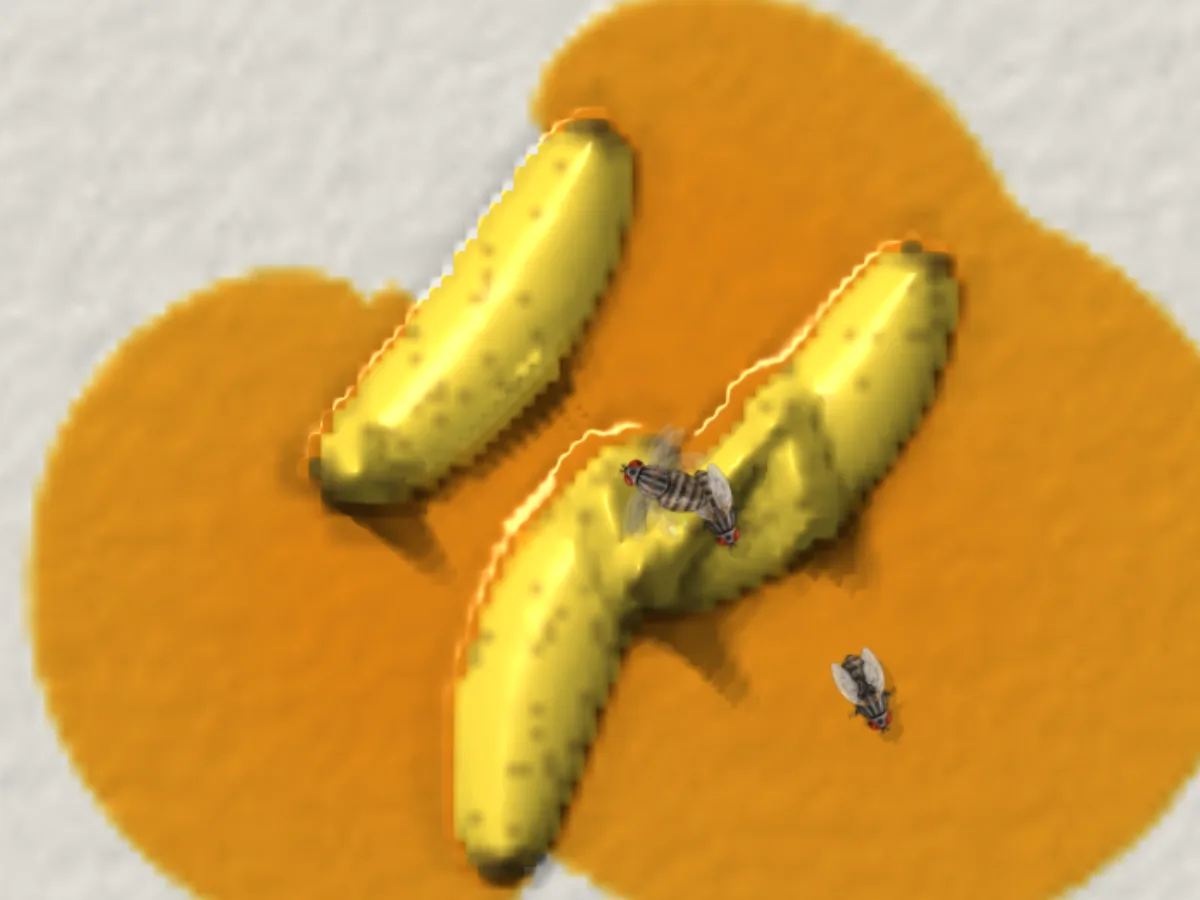
Food in the game smells. Honey, peanut butter, a banana or ice cream gives off a sweet smell; cheese and droppings a foul one; vinegar and lemon a sour one; mustard, pepper and cinnamon a sharp one. Each smell is a gas in the same air that carries smoke and the fan's breeze, so it drifts downwind and fades over several seconds.
Every animal follows its nose the same way. It heads toward where the smell grows stronger, judged as a share of how strong it already is, so a faint smell far off pulls as clearly as a strong one close by. In a breeze it also heads into the wind. Real flies turn upwind within a fraction of a second of meeting an odour Vanbreugel 2014; we found that study after the rule was written, and on heading upwind it agrees. Each animal has its own likes. Flies love sweet, foul and sour. Ants are put off by sour and sharp smells. Everyone keeps away from smoke and hot air.
The stories then write themselves. Set a steady breeze past a banana, as the test does, and flies arrive from the downwind side, flying up the smell; an automated test checks it. In play the fan blows only while it's held, out all round from where it's aimed, so what a child sees is simpler. Food left out on the page draws flies by itself within minutes. The puppy finds peanut butter upwind by its nose, well beyond what it can see. A sleeping dog's breath has a faint smell of its own, and a fly downwind of it picks the dog's nose to land on; a dog that's awake then goes cross-eyed and sneezes. Bread dough with live yeast, kept warm, smells sweeter the busier its yeast is, and a fly comes for that too.
Flies aren't a tool, and nobody puts them on the page. When something smells, a fly may turn up after a minute or two, most often coming in from the edge where the smell is strongest.
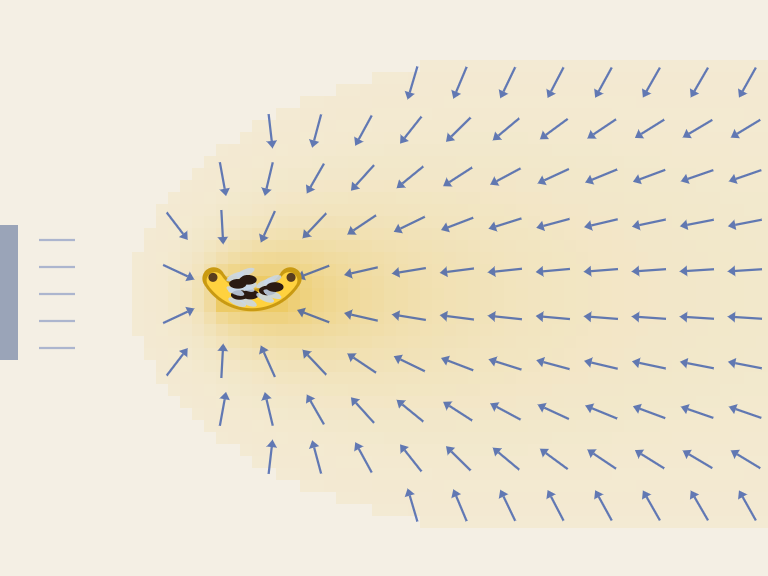
A banana sits on the page with the fan blowing from the left. The yellow haze is its smell; the arrows show the way a fly would steer at each spot. What to look for: flies come in on the downwind side and fly up the smell. Turn the fan off and the smell spreads round; push the wind up and they can't land. The steering arrows, the fly's landing limits and the edge where flies come in follow the game's rules; the air here is a simple stand-in for the game's wind solver, and flies arrive far sooner than in the game. The steady breeze is the test's set-up; in the game the fan blows only while it's held.
This part of the page could not start.
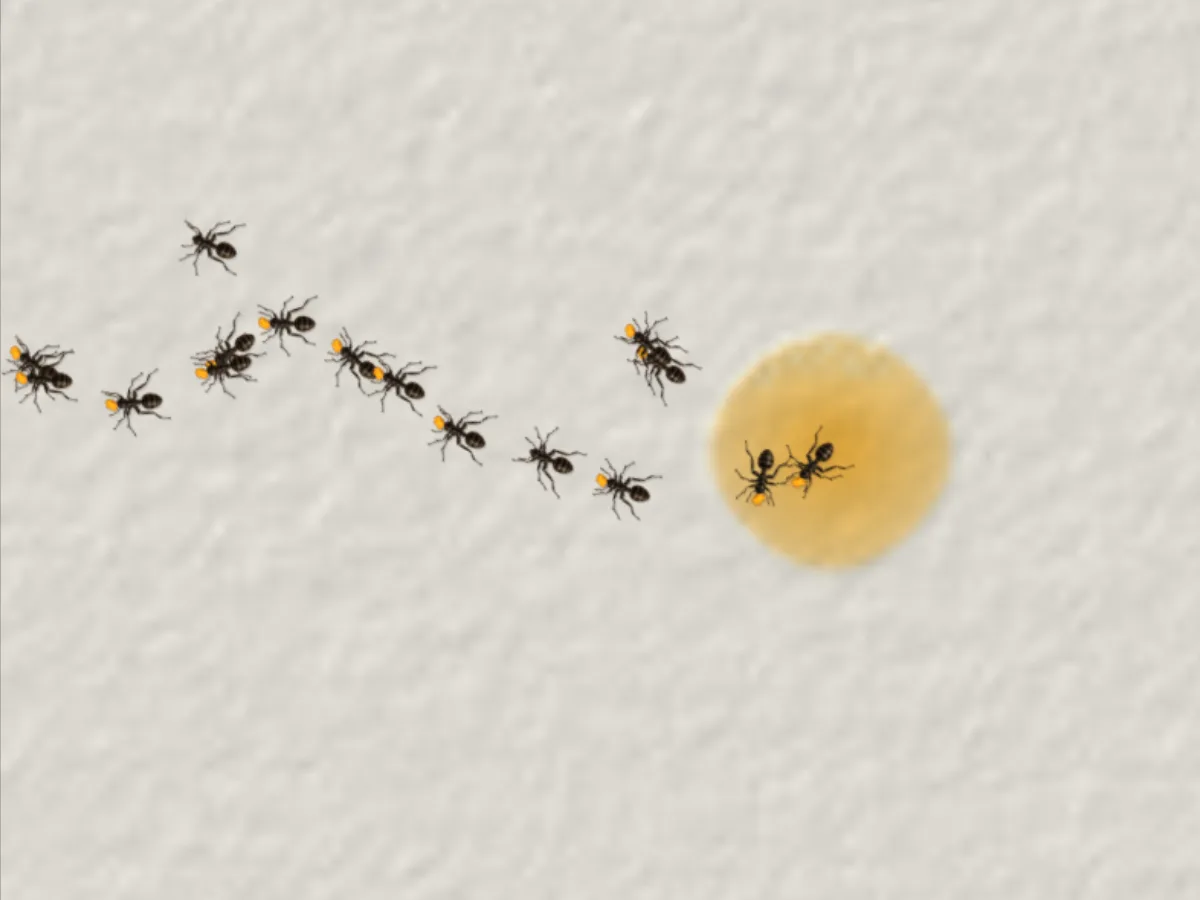
Tap the page with the ants and a scout walks in from the nearest edge to that spot. Behind it comes a line of ants, single file, each carrying a crumb home and coming back for another. The ants are the free gift every player gets on their second launch.
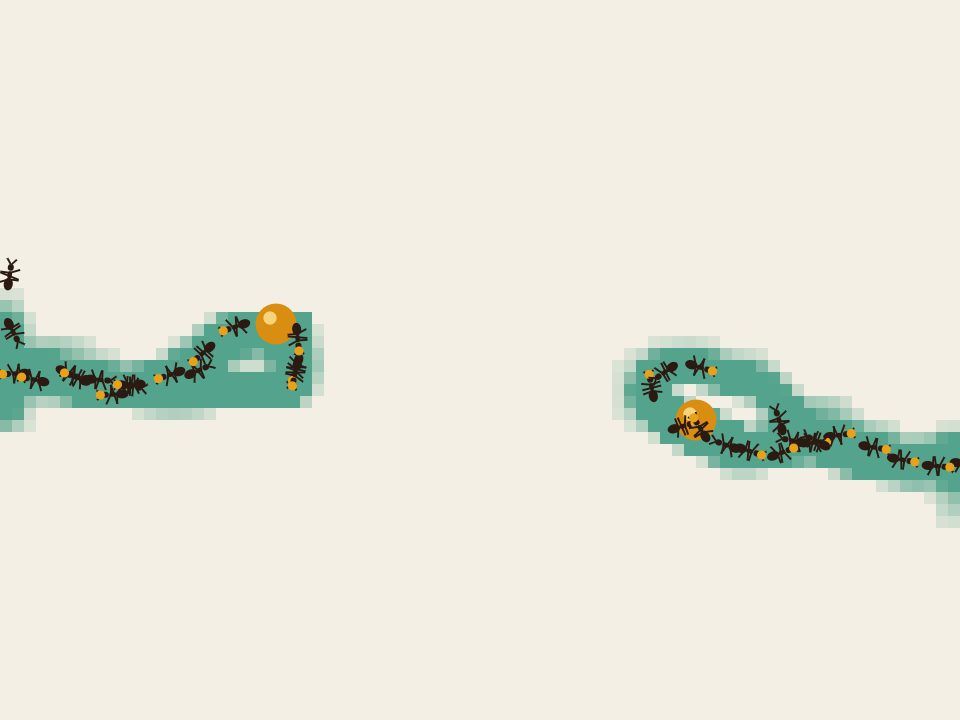
What holds the line together is a scent nobody can see. Every ant lays it as it walks, more when it comes home carrying food. Each one feels for it with its antennae, and if there's more on the left, it turns left. The scent fades within a minute or so unless ants keep walking it, so the trail is wherever ants really went.
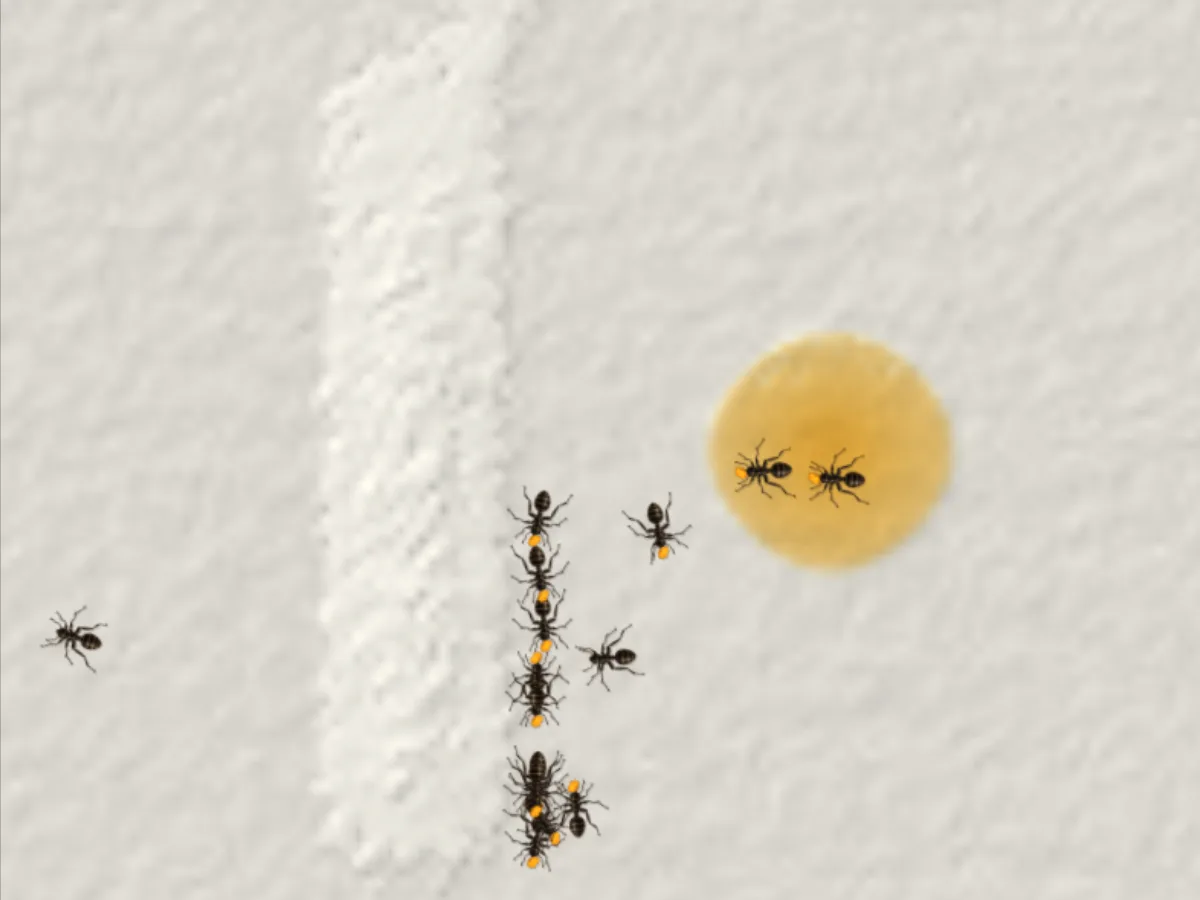
Because the trail is real, a child can break it. Sift flour or baking soda across it and no ant crosses: fine powder is something they won't walk on, and it wipes the scent off underneath. An automated test checks each of these. A smear of dish soap is different. It doesn't stop them, but it wipes the scent off, so they reach it, stop, feel about and some lose their way. In the test fewer than half as many get past. Pour a puddle across and they walk round it, and the new path round is laid by the ants coming home. A dab of mustard on the trail turns them before they touch it, because they smell it ahead. A ring of soda round some ice cream and nobody reaches it; they give up and go home.
The turning rule is short. It has the same form as the rule measured in real Argentine ants, the difference between left and right divided by the total Perna 2012. That's a match we point out; the code doesn't claim to follow the paper. One thing the ants don't do is search. The scout is told where the food is, and the trail forms along the way it walked. Leave honey out and skip three days, and the ants are there on a trail the scout's own steering laid, step by step.
Ants are already walking in from the edges to two drops of honey. The green haze is their scent, which the game never draws. Pick flour, soap, water or mustard and draw across the trail, or pick Call ants and tap to send a scout somewhere else; Draw across the trail does the same with a button. What to look for: flour stops them dead and they walk its edge; soap lets them walk on but they lose the scent and wander; water they go round; mustard turns them before they touch it. These are the game's rules for scent, feelers, turning, speed, barriers and wipes, on a 160 × 120 cell page instead of 512 × 384. The mustard's smell spread is simplified.
This part of the page could not start.
This is a game for young children, full of hammers, irons, rolling pins and fire, and it also has animals. We decided that no animal in it can ever be squashed, burnt or harmed, by anything, so the store ratings can say "no violence". Tools are for doing things to things, never to creatures.
The animals don't stay safe by being quick. Every press in the game, from a sponge to a hammer, goes through one shared channel that records how hard it presses and where. Each animal has a number for how much pressure it minds. A pigeon's toes put an ant to flight but don't bother a snail. A dog's paw on a cat's back is something the cat puts up with. When something presses harder than an animal minds, the animal gets out from under it at that moment, each in its own way (below). The harder the press, the faster it goes, up to a limit.
Usually they're gone before then anyway, because the hand coming down or the hammer's swing is movement they can see. The rule at the moment of the press is the guarantee behind that. None of the animals has a health value, so the code has nowhere to store an injury.
A test holds the game to it. In the released version it puts the animals, in eight set-ups, through 61 kinds of trouble, from a hammer and a rolling pin to a fire lit beside it and the oven, and fails if anything presses on an animal that minds it, burns under it, or makes it vanish. In the next update next update it grows to 10 set-ups and 97 kinds, and a hammer or a slap coming down on a cat or dog waits in the air until the animal has moved; if it hasn't moved within two seconds, it never comes down.
A few things are scripted on purpose. Before the oven or the freezer does its work, every animal is taken off the table. A snail that comes to salt turns back. The puppy sniffs chocolate, sits drooling, looks at you and leaves it, and the game says once why chocolate is bad for dogs.
Pick what comes down and tap anywhere, on an animal or beside it, or press Press it down. The strip at the bottom shows its pressure against how much each animal minds; under the canvas, what each one did. What to look for: a sponge sends the fly, ant, pigeon and snail out from under it, while the cat and dog don't mind; an iron or a hammer moves everyone, and the pigeon, snail, cat and dog go faster the harder it presses. This is the game's pressure test and escape-speed rule; footprints are drawn as discs, and what each animal does afterwards is simplified.
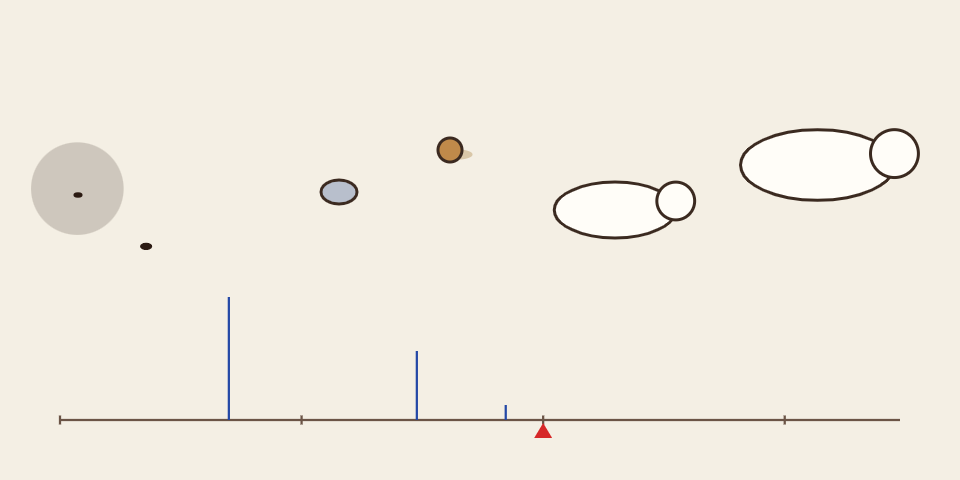
This part of the page could not start.
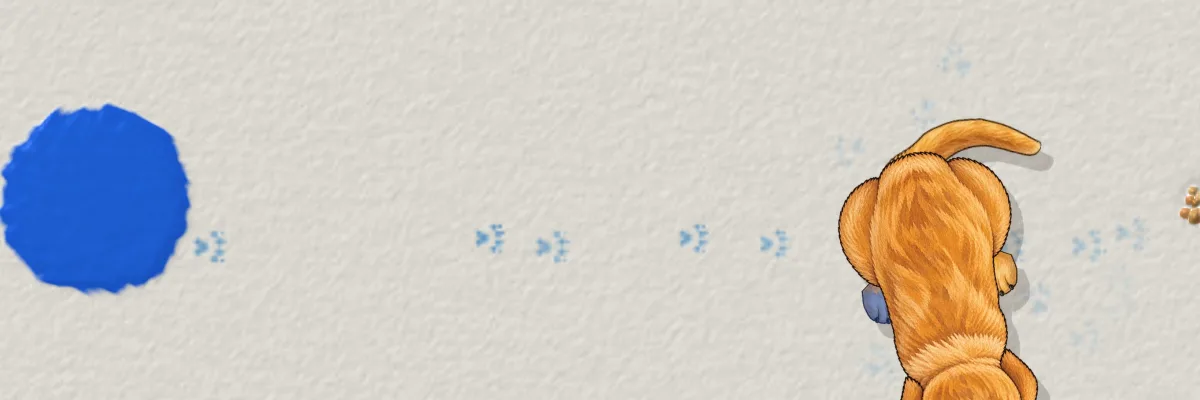
Walk the puppy through a puddle of paint and it leaves a track across the page, darker at first, fainter with every step, until its paws are clean. A cat leaves neat prints with no claw marks unless it digs in; a dog's always show four claw dots. A pigeon's toes push wet paint aside into little ridges. A fly that walks through oil carries it off on its feet.
Every foot uses the same rule as a toy car's wheels or a rolling ball. It picks up some of what it steps in, and each print puts down a share of what it carries: a fly's sticky feet give up the most, a pigeon's foot the least. Paint is moved about and never made or lost, with one small exception: a clean paw leaves a very faint grubby print, like a real one. Spray paint over a dog, a pigeon and a cat and a test finds all of it again, on the page or on them, to within 2 %. A dog that walks through ketchup or gets squirted shakes itself, and every drop that flies off is a real drop carrying a share of its coat.
Feet are also how the cat and dog meet the ground. Honey slows the dog by the same stickiness rule that slows an ant. Each paw grips only so hard, and the cat's grip is more than twice the dog's. Chase the laser dot round a sharp corner and the cat skids, and a skidding paw drags and scratches the paper.
Behind the feet sit two characters. Their energy and boredom run down and recover, so a cat chasing the laser lies down tired after 45 seconds to two and a half minutes, as a test measures. A tired cat finds a warm spot on the paper by itself, such as the ring round a hot cup, by reading the paper's temperature. Who backs off when the dog noses up to the cat is settled by weight: a cat stands its ground, hissing and swatting, at any much heavier creature that comes close, and the dog, 20 kg to the cat's 4, backs off when the swat lands. What a cat or dog chooses to do next is written as scripts with priorities and a roll of the dice, and the cat and dog know flies and pigeons by name when they hunt them. How the world answers, and how the prey gets away, is computed.
Down to 5 % left, a fly's foot takes 9 prints, a paw 13 and a pigeon's foot 24.
| prints since the paint | fly foot, 30 % a print | paw, 22 % a print | pigeon foot, 12 % a print |
|---|---|---|---|
| 0 | 100 | 100 | 100 |
| 1 | 70 | 78 | 88 |
| 2 | 49 | 61 | 77 |
| 3 | 34 | 47 | 68 |
| 4 | 24 | 37 | 60 |
| 5 | 17 | 29 | 53 |
| 6 | 12 | 23 | 46 |
| 7 | 8 | 18 | 41 |
| 8 | 6 | 14 | 36 |
| 9 | 4 | 11 | 32 |
| 10 | 3 | 8 | 28 |
| 11 | 2 | 7 | 25 |
| 12 | 1 | 5 | 22 |
| 13 | 1 | 4 | 19 |
| 14 | 1 | 3 | 17 |
| 15 | 0 | 2 | 15 |
| 16 | 0 | 2 | 13 |
| 17 | 0 | 1 | 11 |
| 18 | 0 | 1 | 10 |
| 19 | 0 | 1 | 9 |
| 20 | 0 | 1 | 8 |
| 21 | 0 | 1 | 7 |
| 22 | 0 | 0 | 6 |
| 23 | 0 | 0 | 5 |
| 24 | 0 | 0 | 5 |
| 25 | 0 | 0 | 4 |
Source: Curves are (1 − share)n, with each foot's own share in the game. The shares are tuned; no test pins them.
None of the chains below was written as a pair. Each runs through a layer every system shares.
Shared: sweet smell in the air + wind
Flies arrive from downwind and fly up the smell. Pinned by a test.
Shared: moving bodies stir the air
The flame blows out, because the dog's body stirs the air. Standing beside it, nothing. Pinned by a test.
Shared: warm paper temperature
A tired cat goes and sleeps by it. No cup is named in the cat's code. Pinned by a test.
Shared: sweet smell × how busy the yeast is
A fly comes for it. Pinned by a test.
Shared: one vibration write
The pigeon flies, the snail tucks in and the ants scatter, from one shake with no list of who. Pinned by a test.
Shared: the paw's pressure against the yolk's skin
The yolk bursts under its paw and runs. Pinned by a test.