Floating film
Oil, marbling ink.
Moves on the water's surface.
Game Tailors
Source: How colours mix
The drawing app where the paper is real. No ads. No accounts. No personal data: only anonymous counts, which you can switch off.
Game Tailors · Schieweg 15Y-40, 2627 AN Delft (NL)
KvK 92437702 · VAT NL866044474B01
info@gametailors.com · +31 6 4227 5919
© 2026 Game Tailors
How colours mix
Stir blue paint into yellow and you get green. Lay one wash over another and it goes darker. Touch a black marker dot with water and it splits into a blue ring, a pink band and a yellow middle. No code draws those rings or mixes those colours. They follow from how the game writes colour down: three numbers for every spot of paper, saying how much red, green and blue light the colour there soaks up.
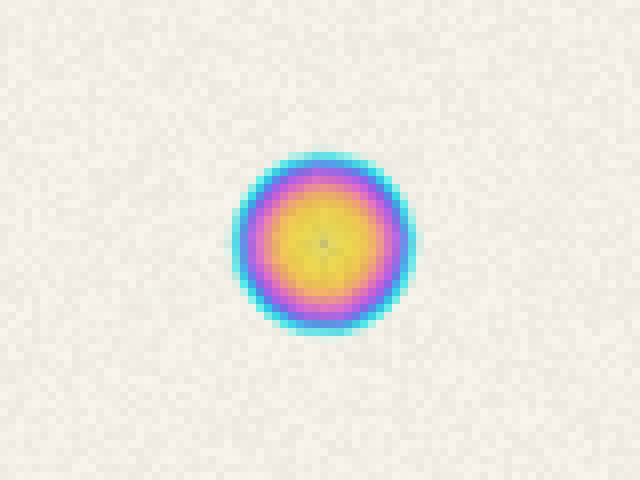
A screen makes colour by adding light. Red light plus green light looks yellow. Paint works the other way round. Each pigment soaks up part of the light, and what's left bounces back to your eye. Yellow paint soaks up blue light, blue paint soaks up red, and a mix of the two lets mostly green through.
Professor Oops keeps colour the paint way round. Every spot of paper holds three numbers: how strongly the colour there absorbs red, green and blue light. Those numbers are turned back into a colour only when the page is drawn.
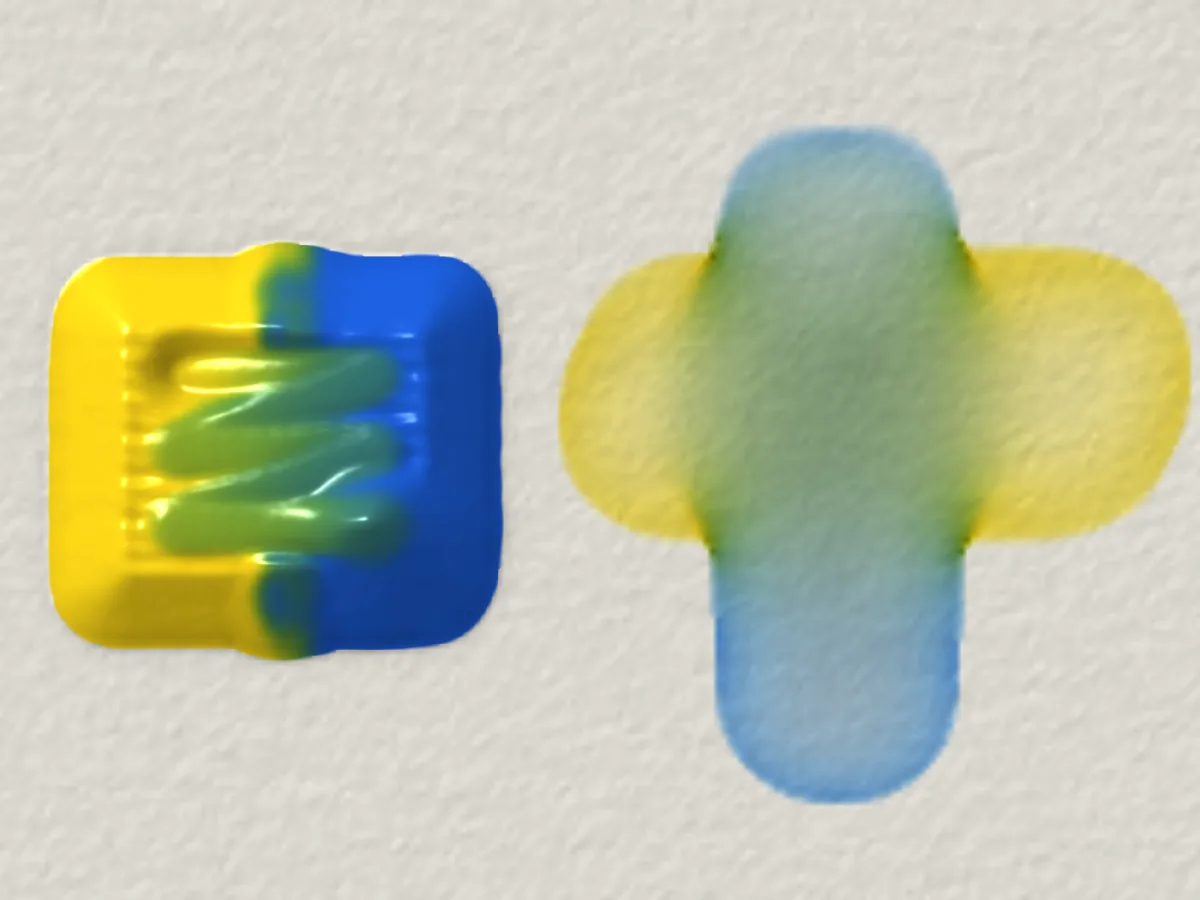
That one choice gives two kinds of mixing for free, depending on where the colour lives. Colour soaked into the paper stacks. A wash over a dry wash adds its absorbance to the first, so the light has to get through both and comes back darker than either, like a glaze. Paint, ketchup and other thick stuff lying on top is stirred. Each spot of it stores its colour multiplied by how much of it there is, so when two blobs run together their colours average by volume. Nobody has to tell them to mix.
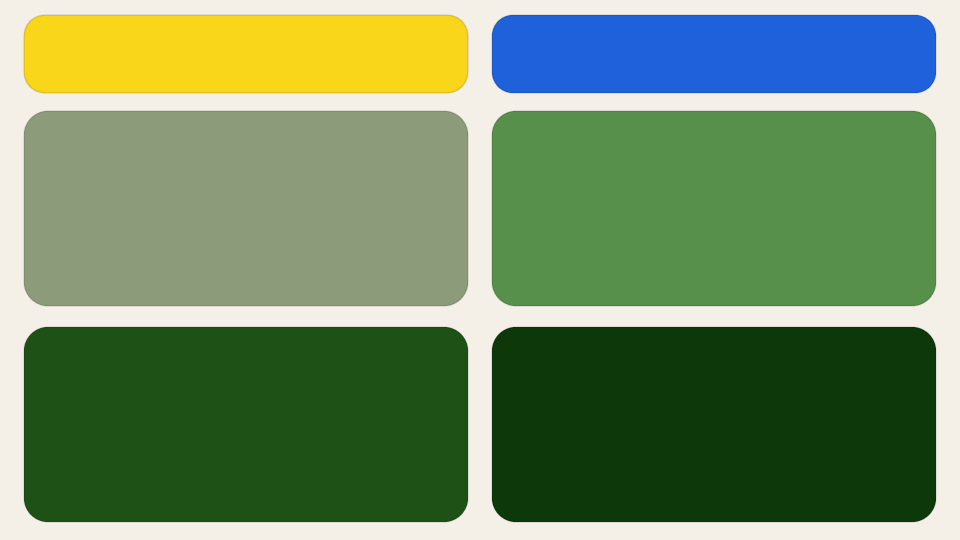
Pick two colours from the game's palette and slide how much of the second goes into the stir. What to look for: blue and yellow stirred come out green, where a screen's usual average comes out a dull grey-green. Laid over each other they go darker than either. (Layered lays one full unit of each colour's absorbance; built up takes two washes to the wash rule's ceiling.) Then try black and white: stirred, it stays dark, because this model has no scattering white (see where we simplify).
This part of the page could not start.
Dab real watercolour on the same spot again and again and it gets deeper, but it never turns black. In the game each drawing tool has its own rule for laying colour, and every rule levels off. A wash creeps up to a ceiling set by its own colour. A marker saturates instead of getting darker forever. Pencil levels off at a strength set by its colour and how hard it's pressed, and crayon stops adding once the spot is as dark as its own colour. So a patch a child goes over twenty times gets deeper but stays recognisably the colour the child chose.
The price is small and honest. Two thin glazes multiply almost exactly. Two washes built all the way up don't: each channel ends at the darker of the two ceilings.
After 60 stamps of yellow the blue channel levels off near 3.15; after 60 more of blue the red channel ends near 2.92, while the plain sums run past 6.
| stamps on one spot (60 of yellow, then 60 of blue) | red channel | green channel | blue channel | red, plain sum | green, plain sum | blue, plain sum |
|---|---|---|---|---|---|---|
| 0 | 0 | 0 | 0 | 0 | 0 | 0 |
| 1 | 0.002 | 0.014 | 0.184 | 0.002 | 0.014 | 0.184 |
| 2 | 0.003 | 0.027 | 0.358 | 0.003 | 0.028 | 0.368 |
| 3 | 0.005 | 0.041 | 0.522 | 0.005 | 0.042 | 0.553 |
| 4 | 0.006 | 0.053 | 0.676 | 0.006 | 0.056 | 0.737 |
| 5 | 0.008 | 0.066 | 0.822 | 0.008 | 0.07 | 0.921 |
| 6 | 0.01 | 0.078 | 0.96 | 0.01 | 0.084 | 1.105 |
| 7 | 0.011 | 0.089 | 1.089 | 0.011 | 0.098 | 1.289 |
| 8 | 0.013 | 0.101 | 1.212 | 0.013 | 0.112 | 1.474 |
| 9 | 0.014 | 0.112 | 1.327 | 0.015 | 0.126 | 1.658 |
| 10 | 0.016 | 0.122 | 1.436 | 0.016 | 0.139 | 1.842 |
| 11 | 0.017 | 0.133 | 1.539 | 0.018 | 0.153 | 2.026 |
| 12 | 0.019 | 0.143 | 1.635 | 0.019 | 0.167 | 2.21 |
| 13 | 0.02 | 0.153 | 1.727 | 0.021 | 0.181 | 2.395 |
| 14 | 0.022 | 0.162 | 1.813 | 0.023 | 0.195 | 2.579 |
| 15 | 0.023 | 0.171 | 1.894 | 0.024 | 0.209 | 2.763 |
| 16 | 0.025 | 0.18 | 1.971 | 0.026 | 0.223 | 2.947 |
| 17 | 0.026 | 0.189 | 2.043 | 0.027 | 0.237 | 3.132 |
| 18 | 0.028 | 0.197 | 2.111 | 0.029 | 0.251 | 3.316 |
| 19 | 0.029 | 0.206 | 2.176 | 0.031 | 0.265 | 3.5 |
| 20 | 0.031 | 0.213 | 2.236 | 0.032 | 0.279 | 3.684 |
| 21 | 0.032 | 0.221 | 2.293 | 0.034 | 0.293 | 3.868 |
| 22 | 0.033 | 0.229 | 2.347 | 0.036 | 0.307 | 4.053 |
| 23 | 0.035 | 0.236 | 2.398 | 0.037 | 0.321 | 4.237 |
| 24 | 0.036 | 0.243 | 2.446 | 0.039 | 0.335 | 4.421 |
| 25 | 0.038 | 0.25 | 2.491 | 0.04 | 0.349 | 4.605 |
| 26 | 0.039 | 0.256 | 2.534 | 0.042 | 0.363 | 4.789 |
| 27 | 0.04 | 0.263 | 2.574 | 0.044 | 0.377 | 4.974 |
| 28 | 0.042 | 0.269 | 2.612 | 0.045 | 0.391 | 5.158 |
| 29 | 0.043 | 0.275 | 2.648 | 0.047 | 0.404 | 5.342 |
| 30 | 0.045 | 0.281 | 2.682 | 0.048 | 0.418 | 5.526 |
| 31 | 0.046 | 0.287 | 2.714 | 0.05 | 0.432 | 5.71 |
| 32 | 0.047 | 0.292 | 2.744 | 0.052 | 0.446 | 5.895 |
| 32.57 | 6 | |||||
| 33 | 0.049 | 0.298 | 2.772 | 0.053 | 0.46 | |
| 34 | 0.05 | 0.303 | 2.799 | 0.055 | 0.474 | |
| 35 | 0.051 | 0.308 | 2.824 | 0.057 | 0.488 | |
| 36 | 0.053 | 0.313 | 2.848 | 0.058 | 0.502 | |
| 37 | 0.054 | 0.318 | 2.871 | 0.06 | 0.516 | |
| 38 | 0.055 | 0.322 | 2.892 | 0.061 | 0.53 | |
| 39 | 0.057 | 0.327 | 2.912 | 0.063 | 0.544 | |
| 40 | 0.058 | 0.331 | 2.931 | 0.065 | 0.558 | |
| 41 | 0.059 | 0.336 | 2.948 | 0.066 | 0.572 | |
| 42 | 0.06 | 0.34 | 2.965 | 0.068 | 0.586 | |
| 43 | 0.062 | 0.344 | 2.981 | 0.069 | 0.6 | |
| 44 | 0.063 | 0.348 | 2.996 | 0.071 | 0.614 | |
| 45 | 0.064 | 0.351 | 3.01 | 0.073 | 0.628 | |
| 46 | 0.065 | 0.355 | 3.023 | 0.074 | 0.642 | |
| 47 | 0.067 | 0.359 | 3.036 | 0.076 | 0.656 | |
| 48 | 0.068 | 0.362 | 3.047 | 0.078 | 0.67 | |
| 49 | 0.069 | 0.365 | 3.059 | 0.079 | 0.683 | |
| 50 | 0.07 | 0.369 | 3.069 | 0.081 | 0.697 | |
| 51 | 0.071 | 0.372 | 3.079 | 0.082 | 0.711 | |
| 52 | 0.073 | 0.375 | 3.088 | 0.084 | 0.725 | |
| 53 | 0.074 | 0.378 | 3.097 | 0.086 | 0.739 | |
| 54 | 0.075 | 0.381 | 3.105 | 0.087 | 0.753 | |
| 55 | 0.076 | 0.384 | 3.113 | 0.089 | 0.767 | |
| 56 | 0.077 | 0.386 | 3.121 | 0.091 | 0.781 | |
| 57 | 0.079 | 0.389 | 3.128 | 0.092 | 0.795 | |
| 58 | 0.08 | 0.392 | 3.134 | 0.094 | 0.809 | |
| 59 | 0.081 | 0.394 | 3.14 | 0.095 | 0.823 | |
| 60 | 0.082 | 0.396 | 3.146 | 0.097 | 0.837 | |
| 61 | 0.247 | 0.453 | 3.146 | 0.267 | 0.914 | |
| 62 | 0.403 | 0.508 | 3.146 | 0.436 | 0.992 | |
| 63 | 0.55 | 0.559 | 3.146 | 0.606 | 1.069 | |
| 64 | 0.688 | 0.608 | 3.146 | 0.775 | 1.147 | |
| 65 | 0.819 | 0.654 | 3.146 | 0.945 | 1.224 | |
| 66 | 0.942 | 0.698 | 3.146 | 1.115 | 1.301 | |
| 67 | 1.059 | 0.739 | 3.146 | 1.284 | 1.379 | |
| 68 | 1.169 | 0.779 | 3.146 | 1.454 | 1.456 | |
| 69 | 1.272 | 0.816 | 3.146 | 1.624 | 1.534 | |
| 70 | 1.37 | 0.852 | 3.146 | 1.793 | 1.611 | |
| 71 | 1.463 | 0.885 | 3.146 | 1.963 | 1.688 | |
| 72 | 1.55 | 0.917 | 3.146 | 2.132 | 1.766 | |
| 73 | 1.632 | 0.948 | 3.146 | 2.302 | 1.843 | |
| 74 | 1.709 | 0.976 | 3.146 | 2.472 | 1.921 | |
| 75 | 1.783 | 1.004 | 3.146 | 2.641 | 1.998 | |
| 76 | 1.852 | 1.03 | 3.146 | 2.811 | 2.075 | |
| 77 | 1.917 | 1.054 | 3.146 | 2.981 | 2.153 | |
| 78 | 1.978 | 1.077 | 3.146 | 3.15 | 2.23 | |
| 79 | 2.036 | 1.1 | 3.146 | 3.32 | 2.308 | |
| 80 | 2.091 | 1.12 | 3.146 | 3.489 | 2.385 | |
| 81 | 2.143 | 1.14 | 3.146 | 3.659 | 2.462 | |
| 82 | 2.191 | 1.159 | 3.146 | 3.829 | 2.54 | |
| 83 | 2.237 | 1.177 | 3.146 | 3.998 | 2.617 | |
| 84 | 2.281 | 1.194 | 3.146 | 4.168 | 2.695 | |
| 85 | 2.322 | 1.21 | 3.146 | 4.338 | 2.772 | |
| 86 | 2.36 | 1.225 | 3.146 | 4.507 | 2.849 | |
| 87 | 2.397 | 1.24 | 3.146 | 4.677 | 2.927 | |
| 88 | 2.431 | 1.254 | 3.146 | 4.846 | 3.004 | |
| 89 | 2.464 | 1.267 | 3.146 | 5.016 | 3.082 | |
| 90 | 2.494 | 1.279 | 3.146 | 5.186 | 3.159 | |
| 91 | 2.523 | 1.291 | 3.146 | 5.355 | 3.237 | |
| 92 | 2.55 | 1.302 | 3.146 | 5.525 | 3.314 | |
| 93 | 2.576 | 1.313 | 3.146 | 5.694 | 3.391 | |
| 94 | 2.6 | 1.323 | 3.146 | 5.864 | 3.469 | |
| 94.8 | 6 | |||||
| 95 | 2.623 | 1.332 | 3.146 | 3.546 | ||
| 96 | 2.645 | 1.341 | 3.146 | 3.624 | ||
| 97 | 2.665 | 1.35 | 3.146 | 3.701 | ||
| 98 | 2.685 | 1.358 | 3.146 | 3.778 | ||
| 99 | 2.703 | 1.366 | 3.146 | 3.856 | ||
| 100 | 2.72 | 1.373 | 3.146 | 3.933 | ||
| 101 | 2.736 | 1.38 | 3.146 | 4.011 | ||
| 102 | 2.751 | 1.386 | 3.146 | 4.088 | ||
| 103 | 2.766 | 1.393 | 3.146 | 4.165 | ||
| 104 | 2.779 | 1.399 | 3.146 | 4.243 | ||
| 105 | 2.792 | 1.404 | 3.146 | 4.32 | ||
| 106 | 2.804 | 1.409 | 3.146 | 4.398 | ||
| 107 | 2.816 | 1.414 | 3.146 | 4.475 | ||
| 108 | 2.826 | 1.419 | 3.146 | 4.552 | ||
| 109 | 2.836 | 1.424 | 3.146 | 4.63 | ||
| 110 | 2.846 | 1.428 | 3.146 | 4.707 | ||
| 111 | 2.855 | 1.432 | 3.146 | 4.785 | ||
| 112 | 2.864 | 1.436 | 3.146 | 4.862 | ||
| 113 | 2.872 | 1.44 | 3.146 | 4.939 | ||
| 114 | 2.879 | 1.443 | 3.146 | 5.017 | ||
| 115 | 2.886 | 1.447 | 3.146 | 5.094 | ||
| 116 | 2.893 | 1.45 | 3.146 | 5.172 | ||
| 117 | 2.9 | 1.453 | 3.146 | 5.249 | ||
| 118 | 2.906 | 1.456 | 3.146 | 5.326 | ||
| 119 | 2.911 | 1.458 | 3.146 | 5.404 | ||
| 120 | 2.917 | 1.461 | 3.146 | 5.481 |
Source: Arithmetic from the game's watercolour rule at full brush, with the palette's yellow and blue.
Pour water over a real drawing and the marker runs while the pencil and crayon stay put. Marker ink is dye, and dye dissolves. Pencil and crayon are solid pigment pressed into the paper.
The game keeps the same difference. Beside its three colour numbers, every spot records how much of that colour is dissolved dye and how much is held in the fibres. Water may move only what isn't held, and dye is never held. Each tool says what it lays. Marker ink is all dye. Watercolour is part dye and part pigment grains. Coloured pencil, grey pencil and crayon are almost entirely held.
So a wash brushed over a pencil drawing blooms right through, and the line is still there when it dries. Pour water on pencil or crayon and over 95 % of the line stays, which an automated test checks. Rub the same pencil line and it smudges, because graphite sits loose on the fibres. Crayon hardly smudges.
Oil, marbling ink.
Moves on the water's surface.
Paint, ketchup, mud. Its colour is kept together with how much of it there is.
Flows on its own, stains the paper below.
Standing water and wetness in the fibres.
Carries whatever is free.
All the colour soaked in, split into:
Dye: moves with water, each dye at its own speed.
Free pigment: the rest of the colour. Moves, more slowly.
Held: water can't move it.
Loose: a rubbing finger can.
Wax, soap: keep washes and bleach off.
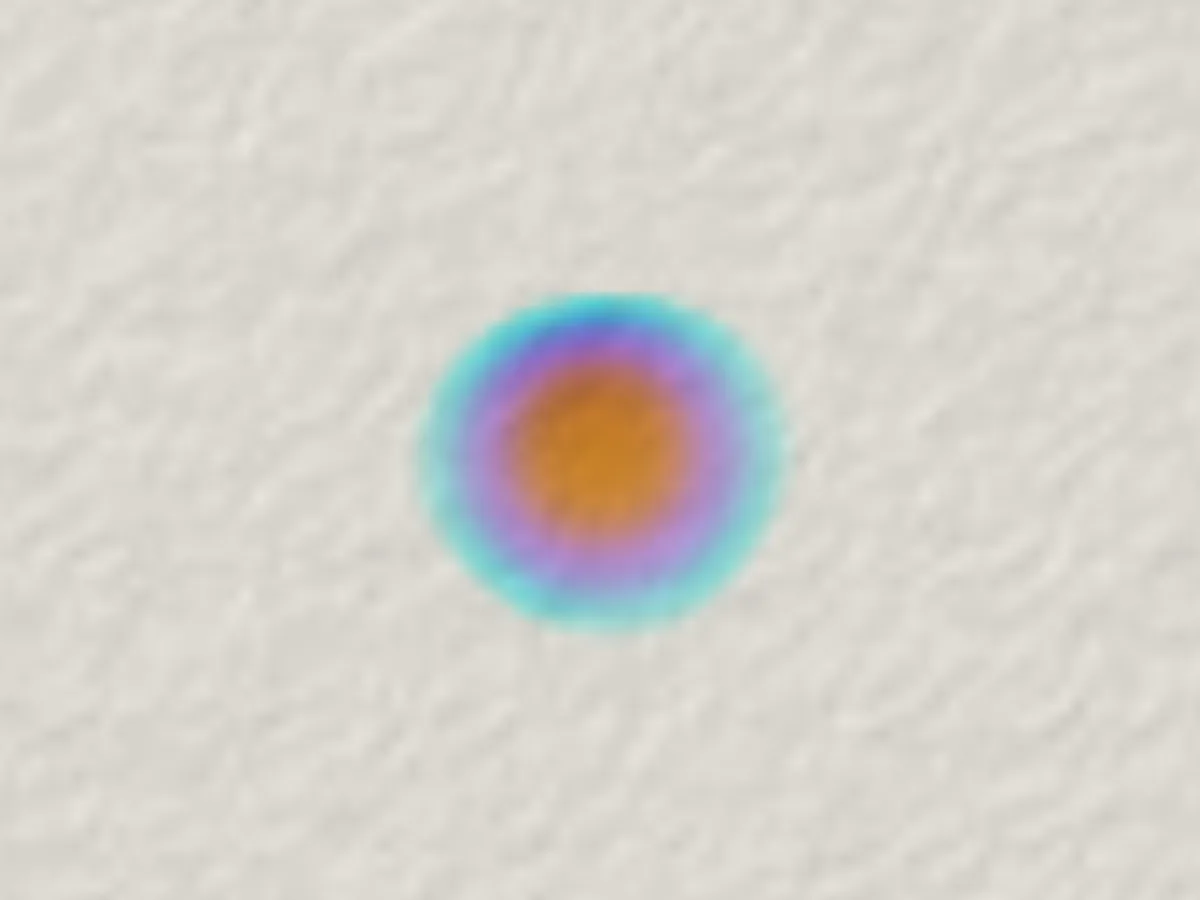
Draw a black dot, drop water on it and wait. A blue ring spreads out, a pink band follows, and a yellow patch stays in the middle. Science teachers call this chromatography. Black ink is a mix of dyes, and each one clings to the paper fibres by a different amount.
In the game a dye is one of the three colour channels. The dye that soaks up red light is the cyan one, green's is the magenta, blue's is the yellow. Whenever water moves between two spots of paper, each dye goes along at its own share of the water's speed. In a black marker the cyan dye nearly keeps up with the water, the magenta lags well behind and the yellow hardly moves. The water code has no idea what a marker is, and nothing draws a ring. The rings come out of three speeds.
The speeds were chosen so the rings show clearly, so they are tuned, not measured. In the released game every marker splits with black's three speeds. next update Each ink gets its own: green splits into yellow outside blue, purple into pink outside blue, brown into yellow, pink and a little blue.
A drop has just landed on a black marker dot. Tap the paper to add another drop, or press Add a drop. What to look for: the cyan dye rides out with the water's edge and dries there as a blue ring, the magenta stops halfway, the yellow hardly leaves the dot. The readout gives how far out each dye sits on average and checks none is lost. The water's spread, the dye rule and every rate are the game's; the drop soaking in and the drying are simplified. Green, purple, brown and red show each ink's own split next update.
This part of the page could not start.
A wash's dye has no reason to split. In a wash, free dye goes at the same speed in all three channels, so a blue wash stays blue to its edge. In an automated test, every spot of a blue, red or yellow wash 30 seconds into drying is within 3° of hue of the middle.
The pigment half is grains, and grains only ride along while the paper is properly wet. As a wash dries, its thin edge empties first, water flows out toward it and brings colour with it. In the game's test a dried wash's rim is 1.3 to 2.5 times as dark as its middle, as in a dried coffee drop Deegan 1997. The picture of water in the sheet carrying pigment to the edges comes from early computer watercolour Curtis 1997; the game gets there with a much simpler local rule. Wet a dried wash again and it blooms in its own colour.
A watercolour dab goes from 1.02 at 20 s to 2.54 at 180 s; an ink drop from 1.44 at 20 s to 4.15 at 60 s.
| seconds after laying it | watercolour dab | ink drop |
|---|---|---|
| 20 | 1.02 | 1.44 |
| 60 | 1.15 | 4.15 |
| 180 | 2.54 |
Source: Measured on the released engine. An automated test holds a dried wash's rim to 1.3 to 2.5 times the inside.
Free dye is carried at its full 0.9 share from a wetness of 0.2; pigment grains reach their 0.5 share only at a wetness of 0.5.
| wetness of both cells | free dye | pigment grains |
|---|---|---|
| 0 | 0 | 0 |
| 0.02 | 0.09 | 0.0008 |
| 0.04 | 0.18 | 0.0032 |
| 0.06 | 0.27 | 0.0072 |
| 0.08 | 0.36 | 0.0128 |
| 0.1 | 0.45 | 0.02 |
| 0.12 | 0.54 | 0.0288 |
| 0.14 | 0.63 | 0.0392 |
| 0.16 | 0.72 | 0.0512 |
| 0.18 | 0.81 | 0.0648 |
| 0.2 | 0.9 | 0.08 |
| 0.22 | 0.9 | 0.0968 |
| 0.24 | 0.9 | 0.1152 |
| 0.26 | 0.9 | 0.1352 |
| 0.28 | 0.9 | 0.1568 |
| 0.3 | 0.9 | 0.18 |
| 0.32 | 0.9 | 0.2048 |
| 0.34 | 0.9 | 0.2312 |
| 0.36 | 0.9 | 0.2592 |
| 0.38 | 0.9 | 0.2888 |
| 0.4 | 0.9 | 0.32 |
| 0.42 | 0.9 | 0.3528 |
| 0.44 | 0.9 | 0.3872 |
| 0.46 | 0.9 | 0.4232 |
| 0.48 | 0.9 | 0.4608 |
| 0.5 | 0.9 | 0.5 |
| 0.52 | 0.9 | 0.5 |
| 0.54 | 0.9 | 0.5 |
| 0.56 | 0.9 | 0.5 |
| 0.58 | 0.9 | 0.5 |
| 0.6 | 0.9 | 0.5 |
| 0.62 | 0.9 | 0.5 |
| 0.64 | 0.9 | 0.5 |
| 0.66 | 0.9 | 0.5 |
| 0.68 | 0.9 | 0.5 |
| 0.7 | 0.9 | 0.5 |
| 0.72 | 0.9 | 0.5 |
| 0.74 | 0.9 | 0.5 |
| 0.76 | 0.9 | 0.5 |
| 0.78 | 0.9 | 0.5 |
| 0.8 | 0.9 | 0.5 |
| 0.82 | 0.9 | 0.5 |
| 0.84 | 0.9 | 0.5 |
| 0.86 | 0.9 | 0.5 |
| 0.88 | 0.9 | 0.5 |
| 0.9 | 0.9 | 0.5 |
| 0.92 | 0.9 | 0.5 |
| 0.94 | 0.9 | 0.5 |
| 0.96 | 0.9 | 0.5 |
| 0.98 | 0.9 | 0.5 |
| 1 | 0.9 | 0.5 |
Source: The shape of the game's own rules for what the water carries.
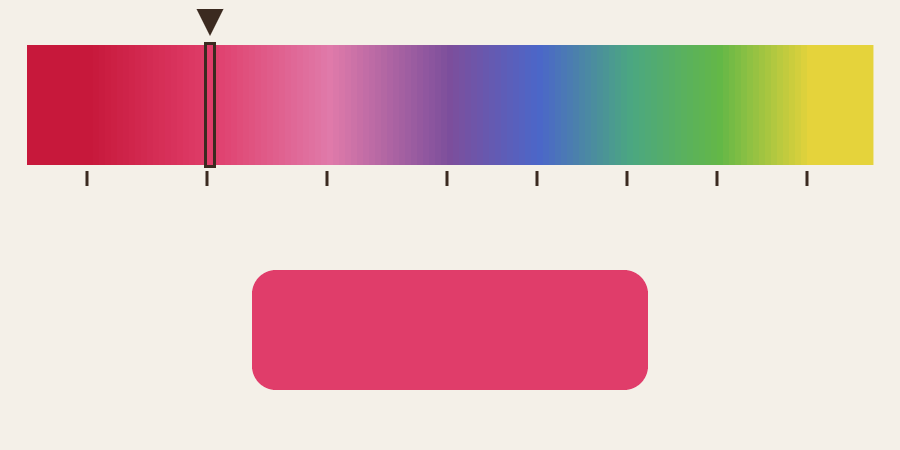
Red cabbage juice is a real acid detector. Lemon turns it pink, baking soda turns it blue and then green. In the game, a spot soaked with cabbage juice stores no colour for it at all. It stores how much dye is there. Each time that part of the page is packed for the screen, the game reads how acidic the spot is and looks the colour up in a chart.
The chart has 141 shades, one for every tenth of a pH unit from 0 to 14. They are blended from 8 hand-picked colours, in the order published cabbage charts give. The shades are ours, so we say the colour is looked up from a chart, not computed from chemistry.
Because the colour is never stored, it can never go out of date. Add soda and the spot changes colour the next time it's redrawn. Turmeric and tea work the same way, as a shift from their own stain colour. A blob of blueberry on soap turns blue-green, because goop carrying a dye reads how far the paper under it is from neutral. An automated test checks it.
Drag along the strip or use the pH slider. What to look for: the colour is the chart's entry times the amount of dye, so more juice gives a deeper shade from the same entry; only the pH moves you along the chart. The ticks under the strip are the 8 hand-picked knots.
This part of the page could not start.
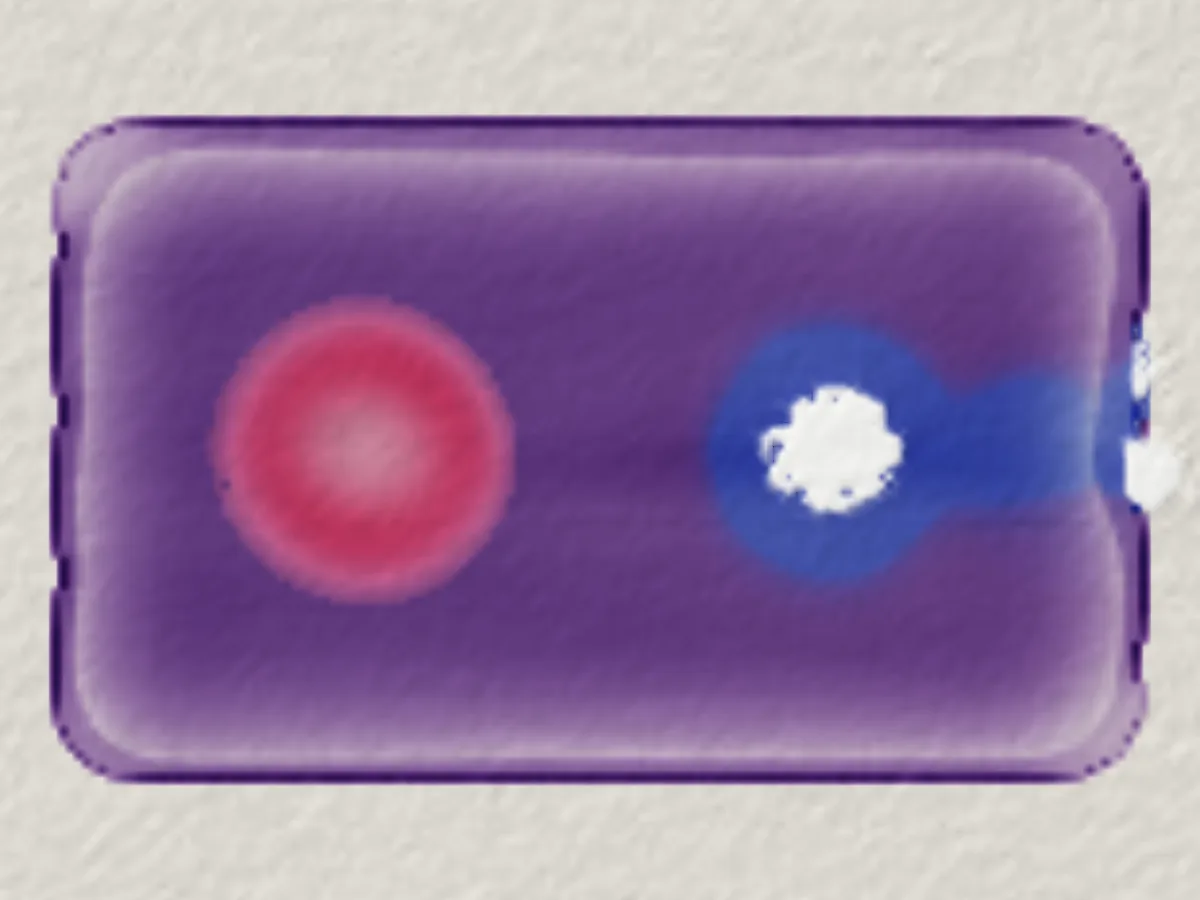
Draw a bleach pen over black marker and it doesn't just go paler. It turns red-brown, then orange, then pale yellow, the way real bleach-pen art does. The game's bleach takes absorbance out faster in red and green than in blue. Black loses its yellow part last, so the in-between colours appear on their own. Crayon or soap under the colour keeps most of the bleach off, and every bit of colour it removes uses some of the bleach up, so a small drop on a dark patch runs out.
Bleach is a named rule in the game's table of reactions, so this part is written chemistry, not emergent chemistry. What it shares with everything else is that it reads the colour numbers, whatever put the colour there. Rust in the paper bleaches just like marker.
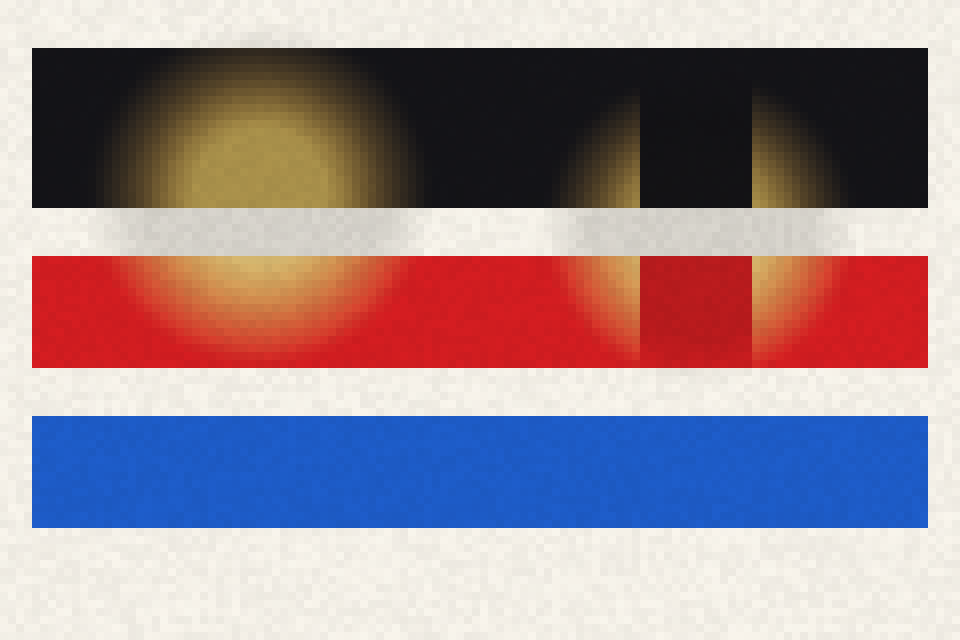
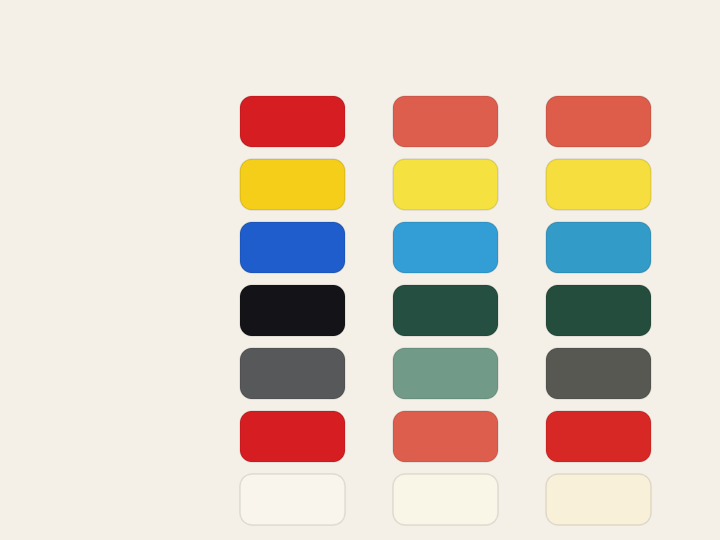
Sunlight fades too. Leave a page for a week in a sunny window and the dyes fade, reds and yellows first. Whatever lay on the paper, a sticker, tape, a leaf or a blob of paint, keeps its patch dark, and you get a sun print. In the released game the fade is three flat factors on every uncovered colour, pencil included. next update The fade depends on what made the colour. Marker dye takes the full fade, crayon and coloured pencil much less, grey pencil none, and the paper itself yellows a little.
Black, red and blue marker stripes, with an invisible white crayon stripe drawn down the right. Two drops of bleach have just landed. Tap to drop more, or press Drop bleach. What to look for: black goes through brown and orange to pale yellow, thinner bleach at a drop's edge leaves an orange ring, and the colour under the crayon stays. The drop's size is ours; the fading, the bleach used up and the wax's protection are the game's rule. In the game bleach also travels with the water; here it stays where it lands.
This part of the page could not start.
Worked from the game's own fade rule (arithmetic, not a screenshot): each swatch is a solid patch on the game's paper colour. In the released game a week of sun applies the same three factors to everything uncovered. The next update next update fades by what made the colour and yellows the paper.
This part of the page could not start.
The page you see isn't stored as a picture. The game keeps only the numbers: absorbance, dye, wetness, goop height and the rest. The simulation runs in a background worker. It packs the parts of the page that changed into small square tiles and hands them to the graphics chip, which turns absorbance back into colour for every pixel, lights it with the room's light and adds relief and shine.
Some things get their look only at that moment. Cabbage colour is looked up then. Grease stains, salt crust and wires get their colour then, and oil floating on water is folded into what's under it. Because these are worked out at drawing time, they can't drift out of step with the simulation.
Wet paper is drawn darker, as wet paper looks. Clear goop like honey or oil is looked through, not painted over. Its colour is the light that comes back up through it, so honey or oil over a dried ketchup stain doesn't pale it. When you save a picture, the same shader draws the page again with sharper edges and pigment settling into the paper's grain, detail that exists only in the saved picture.
Absorbance, dye, wetness, goop and the rest, simulated in a background Web Worker.
Only tiles that changed. Cabbage, grease, salt and wire get their colour here; floating oil is folded in.
Handed to the main thread without copying.
Filtered as absorbance, so cell edges blend like paint.
Absorbance back to light, wet darkening, goop over it, shadow, light, shine.
A child's painting, from a handful of numbers a spot.
Water, fire, bleach, smudging fingers, tape, stencils, sponges, ants and dogs all read or write the same colour channels. None of them asks who put the colour there. That's where the surprises come from: the water doesn't know about markers, and the bleach doesn't know what drew the colour it fades. Where we did write a special rule, such as bleach, iron-gall ink or the cabbage chart, it reads the shared numbers, never which tool put the colour there. Each tool's way of laying colour is its own rule, but they all write into the same numbers.
Shared: acid element → cabbage chart
The paper turns pink at one clip. The circuit writes acid; the chart reads it; neither knows the other.
Electricity · pinned by a test
Shared: tannin + iron in the paper
Blue-black ink forms where water brings the tea to the rust, slower under a puddle.
Chemistry and pH · pinned by tests
Shared: free colour + surface flow
The paint is pushed back into a ring, because surface flow moves whatever colour is free.
Runny, sticky and oily · pinned by a test
Shared: carried colour
Paw prints fade step by step as the paws run out of paint, by the same carrying rule balls, tyres and rollers use.
Animals with their own minds · pinned by a test
Shared: water wicking faster through salt
The colour races along the line and the crust takes it on.
Water in paper · pinned by a test
Shared: wax in the paper
The crayon lines stay clean: wax keeps off the wash and most of the bleach.
Pencil, crayon and paper · pinned by tests
Real colour is a spectrum of light meeting particles that absorb and scatter it. On a child's tablet we keep the part people recognise, that paint mixes like paint and layers go darker, and spend nothing on the rest. These are the trades we made, and what they cost.