100×+
How much faster water evens out through a salt crust than through paper, from the game's own rules.
Game Tailors
Source: Water in paper
The drawing app where the paper is real. No ads. No accounts. No personal data: only anonymous counts, which you can switch off.
Game Tailors · Schieweg 15Y-40, 2627 AN Delft (NL)
KvK 92437702 · VAT NL866044474B01
info@gametailors.com · +31 6 4227 5919
© 2026 Game Tailors
Water in paper
Put a drop of water on a black marker dot and it opens into rings of blue, pink and yellow. Let tea dry and its edge turns darker. Wash over a pencil drawing and the line stays put. In Professor Oops these all come from water moving between neighbouring specks of paper, with everything dissolved in it riding along at its own pace.
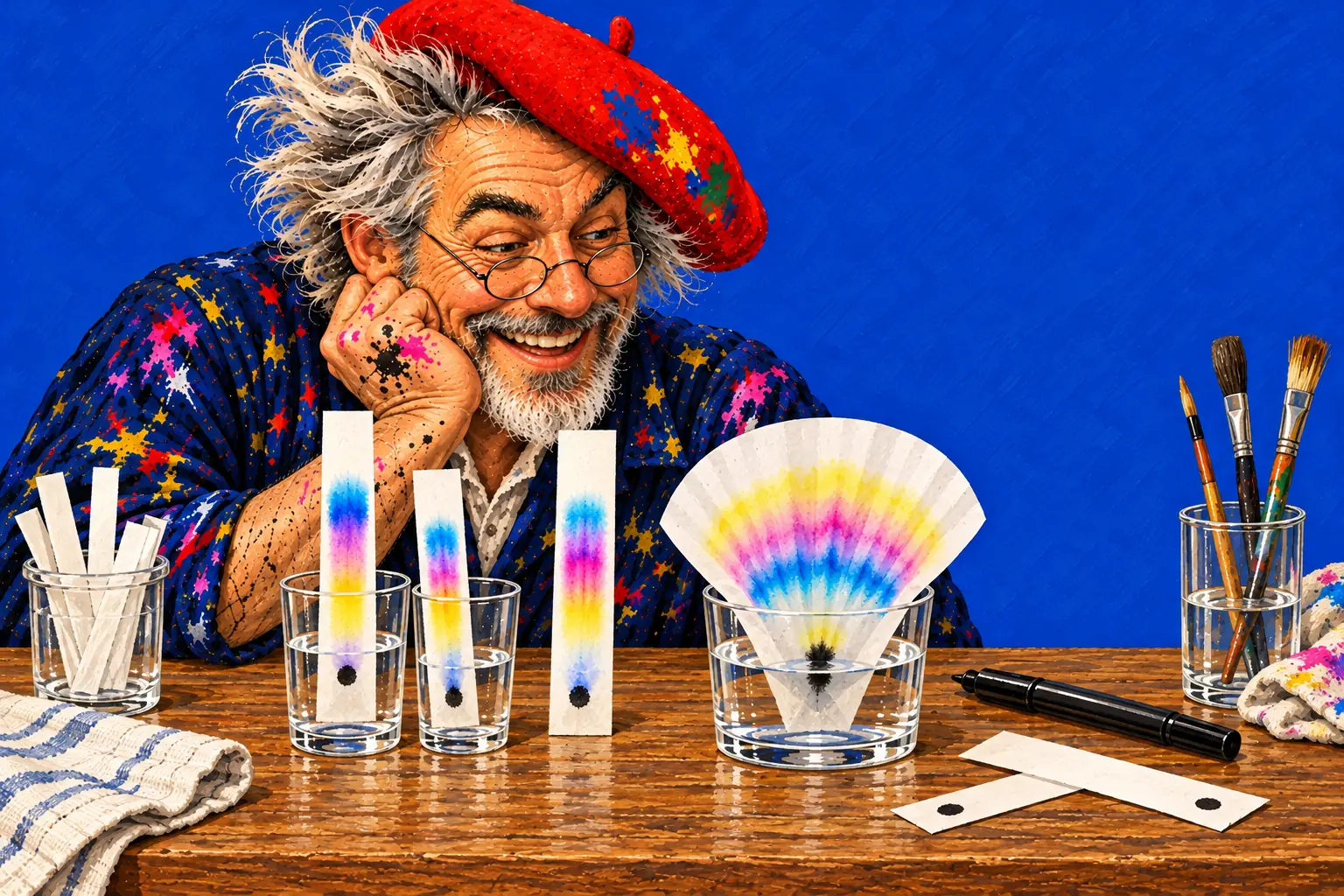
The sheet in Professor Oops is a grid of tiny squares, each about half a millimetre across. Every square remembers two kinds of water: a puddle standing on top, and water that has soaked into the fibres.
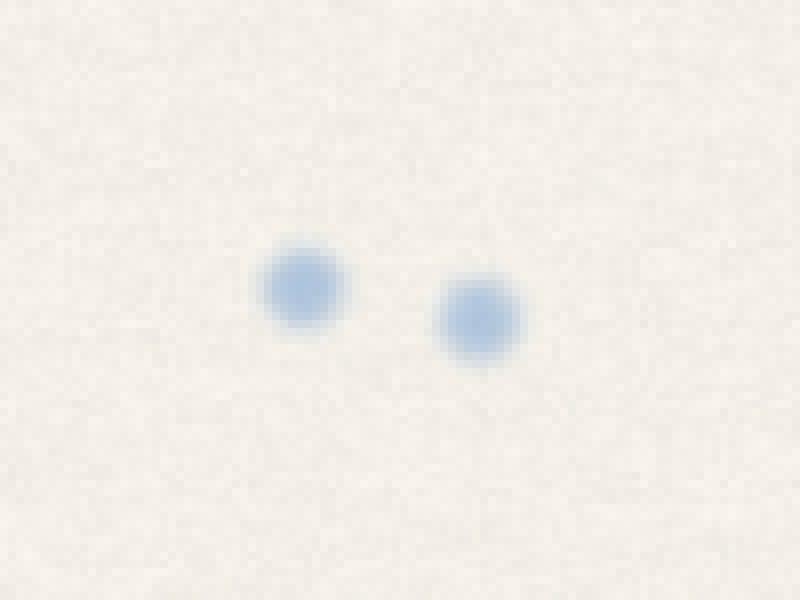
Drop water on the page and the puddle sinks in over two or three seconds. From then on, soaked-in water creeps to drier squares next door, a little every thirtieth of a second. It doesn't spread in a perfect circle. Each square has its own grain, fixed when the sheet is made, and where the grain is stronger water passes on more readily. That is why the edge of a wet patch comes out ragged, as on real paper.
All the while the paper dries. At room temperature a soaked patch is dry in a little over two minutes. Warm paper dries many times faster. Because the spreading slows as the water thins out, a soaked patch stops growing a few millimetres past its edge, where the drying and the creeping balance out (about 3 mm in a stand-alone copy of the rule).
Keeping water on the sheet apart from water in the fibres, and carrying colour to the edges, is inspired by the watercolour work of Curtis 1997. The game gets there with a much simpler local rule.
The game's own rule Two drops have just landed. Tap the paper to add more, or press Add a drop. What to look for: the puddle (bright blue) sinks in within seconds, the soaked patch creeps outward with a ragged edge, then stops and dries. Turn the grain off and the edge goes smooth. Warm the paper and watch it dry far faster. The grid is 100 × 75 cells, a 5 × 3.75 cm corner of the page.
This part of the page could not start.
The measured middle falls from 0.97 at 5 s to under 0.05 at 135 s; the drying rule alone reaches zero at 166.7 s at room temperature and at 14.3 s at 60 °C.
| seconds | measured in the released game | drying rule alone, room temperature | drying rule alone, 60 °C |
|---|---|---|---|
| 0 | 1 | 1 | |
| 5 | 0.97 | ||
| 14.3 | 0 | ||
| 65 | 0.59 | ||
| 125 | 0.12 | ||
| 135 | 0.05 | ||
| 166.7 | 0 |
Source: Measured: the middle of a soaked patch on the released engine (the last point is "under 0.05").
Salt, vinegar, soap, tea, food colouring, ink and watercolour all travel through the paper by the same means: the water moving from one speck to the next. The game works out each of those little exchanges of water once. Then every dissolved thing in the cell rides it, at its own share.
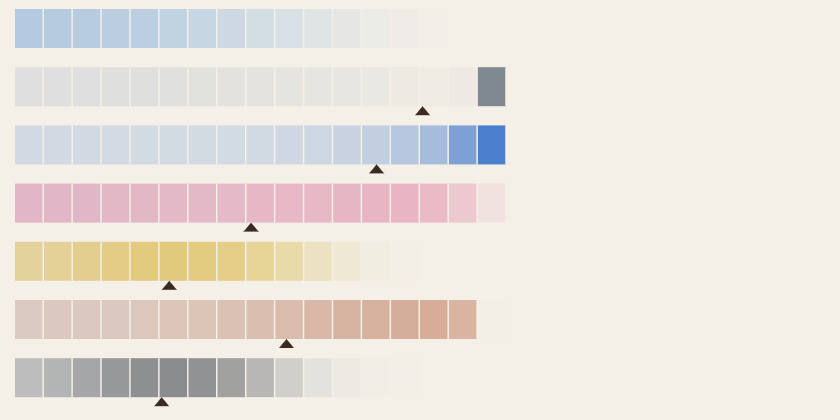
Salt and acid ride each exchange in full. Free dye, such as food colouring, goes nearly as fast. The grains of a watercolour paint go too, but only while the paper is really wet: as it dries, the fibres catch them. Pencil hardly moves, because almost all of it is held in the fibres.
This is how the game connects so many things without a rule for each pair. Nothing in that loop says "tea" or "vinegar". A new dissolved substance is described by its properties, and from then on it rides the water. The released game has 12 kinds of dissolved element; the next update has 21 next update.
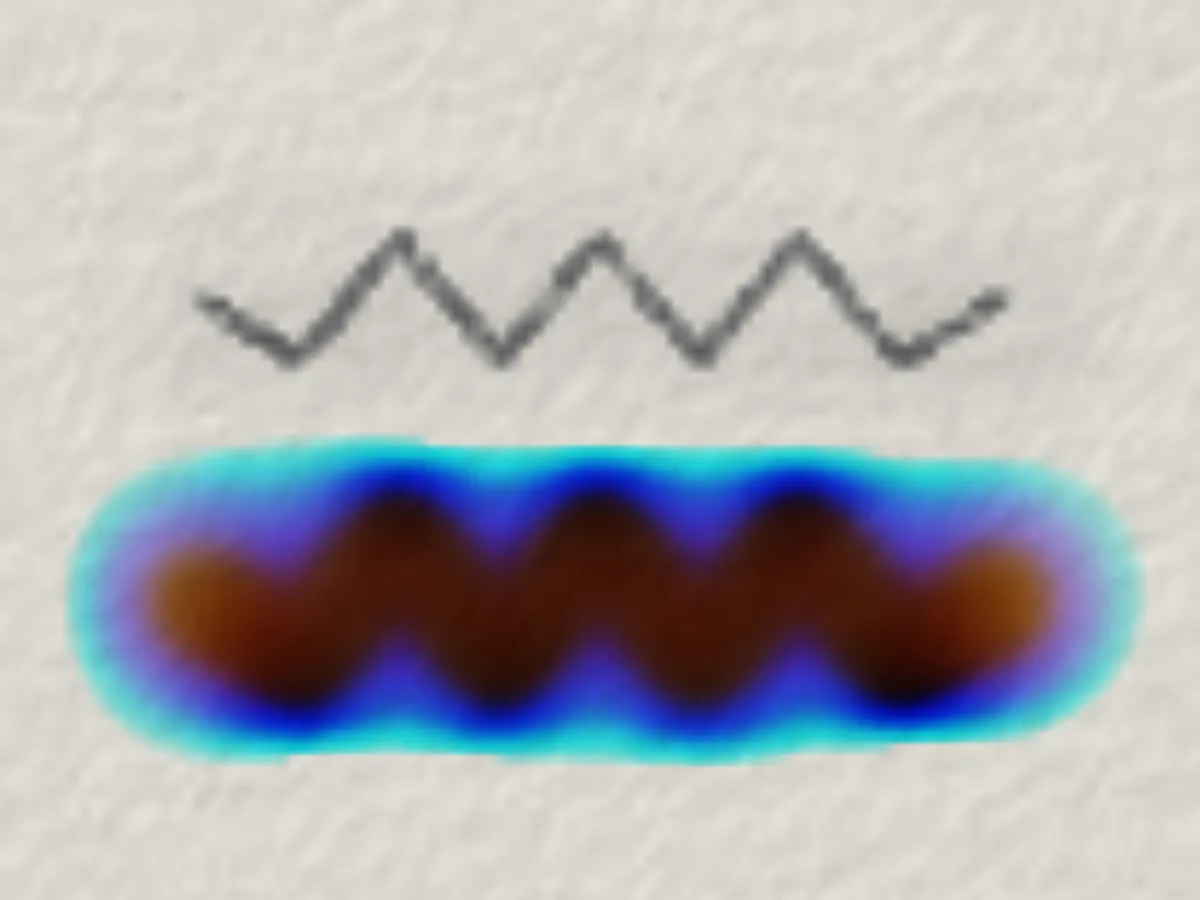
The game's own rule Each strip is the same 28 cells (14 mm) of paper, with water poured on the left end and a band of something at cells 3 to 6. From the top: water in the paper, salt, food colouring, the marker's pink, the marker's yellow, watercolour grains and pencil; the small mark under each strip sits at the middle of what it carries. The water moves the same way in every strip; only the rider's share differs. What to look for: salt runs furthest, free dye nearly as far, the marker's pink lags and its yellow stays home, and pencil doesn't budge. Pour less water and the watercolour grains stay behind. The clock runs 4× fast.
This part of the page could not start.
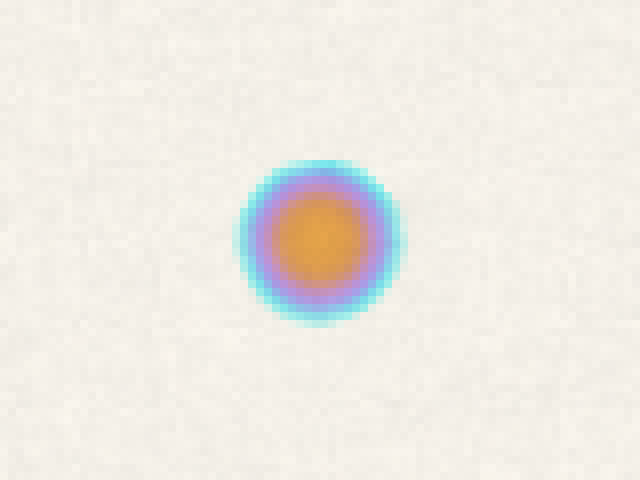
This is the classic kitchen-table experiment, and it happens in the game by itself. A black marker in the game is made of three dyes that cling to the fibres by different amounts. Drop water on the dot and the water spreads outward, carrying the blue dye almost as fast as itself, the pink well behind, and the yellow hardly at all. The blue ends up as a ring at the edge, the pink as a band inside it, the yellow in the middle. Blue food colouring clings to nothing, so it stays one colour as it spreads.
An automated test puts a real marker dot and a real drop on a page and checks that the dot dries into clear bands, with the blue ring outside and the yellow at the centre. Another checks that blue food colouring keeps its hue to within 2 %. In the released game every marker splits the same way; in the next update each ink has its own next update.
The game's own rule A black dot has just had a drop of water put on it. Pick a tool and tap the paper to add more, or use the buttons. What to look for: the blue rides out to the edge, pink stops halfway, yellow stays. Squeeze the dye speeds together with the slider and the rings smear into one, which is why the game spreads them far apart. Food colouring never splits.
This part of the page could not start.
At 60 s yellow is strongest at the centre (0.82), pink around cell 6 (0.37) and blue around cells 8 and 9 (0.43).
| distance from the centre, cells | blue (cyan) dye, fastest | pink (magenta) dye, slower | yellow dye, slowest |
|---|---|---|---|
| 0 | 0.05 | 0.28 | 0.82 |
| 1 | 0.05 | 0.28 | 0.82 |
| 2 | 0.06 | 0.29 | 0.8 |
| 3 | 0.07 | 0.31 | 0.76 |
| 4 | 0.09 | 0.33 | 0.64 |
| 5 | 0.11 | 0.35 | 0.41 |
| 6 | 0.16 | 0.37 | 0.15 |
| 7 | 0.25 | 0.33 | 0.02 |
| 8 | 0.42 | 0.18 | 0 |
| 9 | 0.43 | 0.04 | 0 |
| 10 | 0.07 | 0 | 0 |
| 11 | 0 | 0 | 0 |
Source: The game's rule in a stand-alone copy (the same rule as the demo above), a black-marker dot under one drop, averaged in rings at 60 s. Arithmetic, not a measurement of the game.
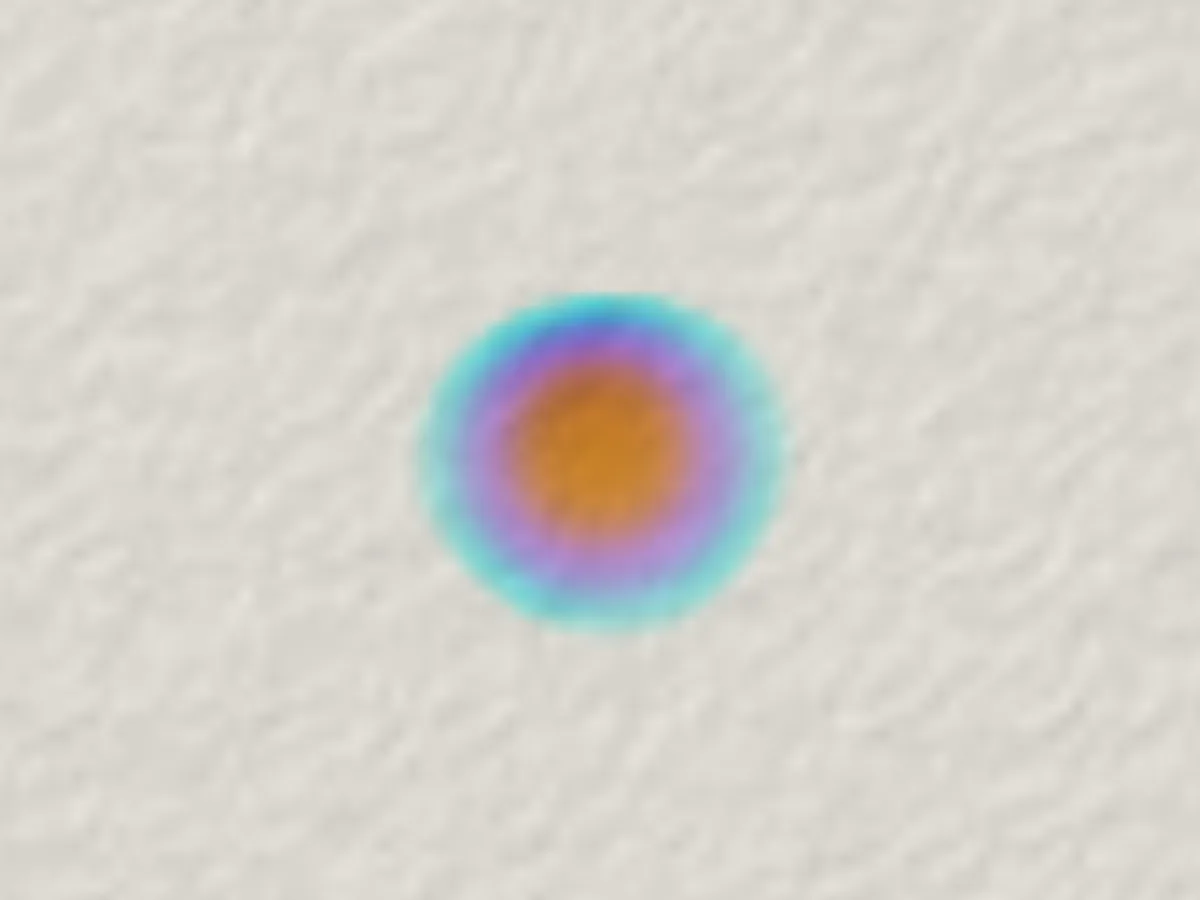
Paint a watercolour wash, leave it, and its edge slowly darkens. Nobody draws that rim. As the wash dries, the thin edge loses its water first, water from the middle creeps out to even it up, and the colour goes with it. Measured in the released game, a watercolour dab's rim is 1.15 times as dark as its middle after a minute and 2.54 times after three. An ink drop gets there faster.
Real coffee rings form for a related reason: at a pinned edge, water evaporates fastest and is replaced from inside, and that outward flow carries the grains Deegan 1997. The game's paper dries at the same rate everywhere, so the mechanism differs, though the result points the same way. The game also adds a tuned pull toward the drier side; in a copy of the rule, that about doubles the rim.
A tear dries the same way, into a faint ring of salt. Tears carry a little salt; it rides the water to the edge and crystallises there as the paper dries. An automated test checks that the edge holds at least 1.3 times the middle's salt, and that 95 % of it is still on the page.
A watercolour dab goes from 1.02 at 20 s to 2.54 at 180 s; an ink drop from 1.44 at 20 s to 4.15 at 60 s.
| seconds after painting | watercolour dab | ink drop |
|---|---|---|
| 20 | 1.02 | 1.44 |
| 60 | 1.15 | 4.15 |
| 180 | 2.54 |
Source: Measured on the released engine.
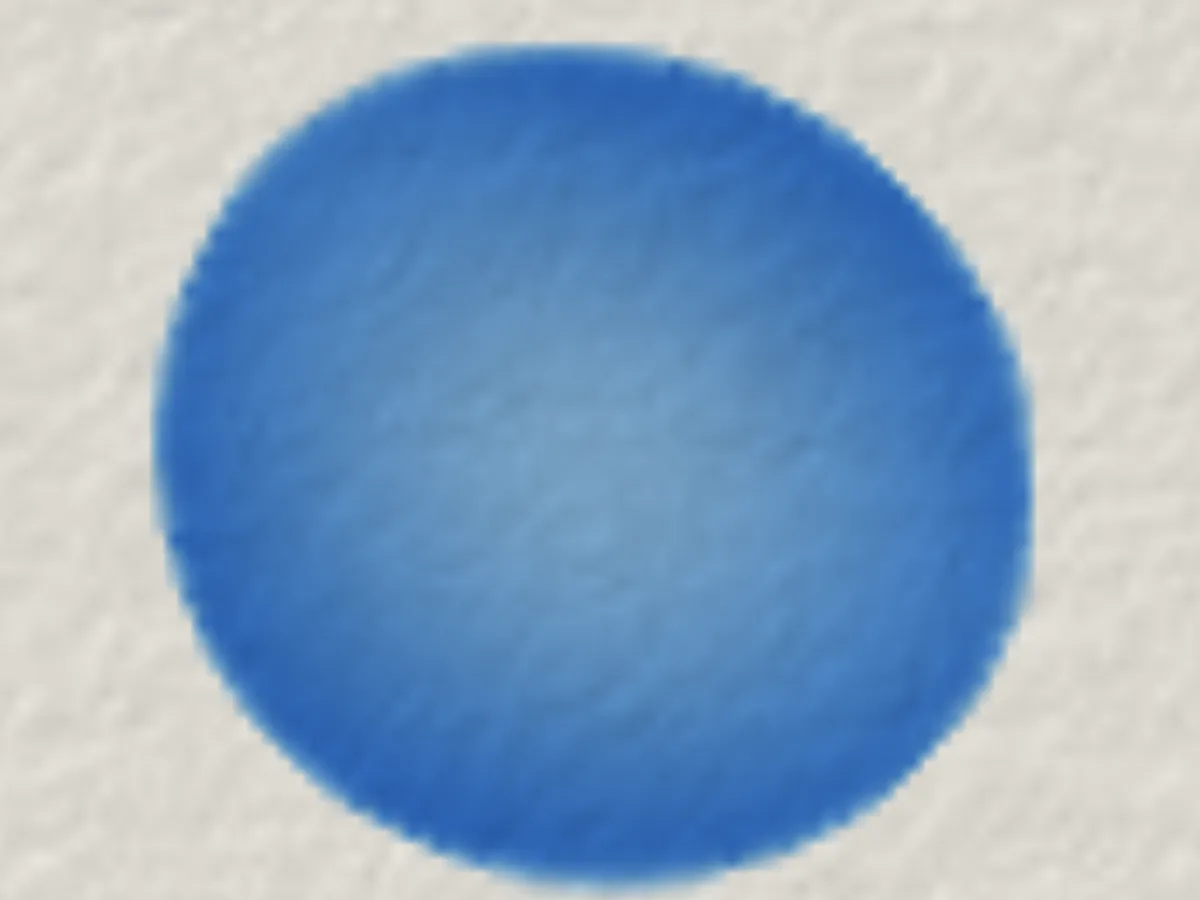
Some things in water stick to the paper fibres. Tea's tannin does, and so do red cabbage's dye, turmeric and rust. While the paper is soaked, only a small part of them floats free in the water; the rest clings. As the paper dries, all of it sets. Wet a dried tea stain again and it stays where it is: an automated test keeps over 90 % of the stain's colour under a fresh drop. The test's notes record that before this rule, the same drop washed the colour down to 75 %.
Fresh cabbage juice is different. Liquid that has just arrived stays free until it dries, so new juice still bleeds and runs. Drop vinegar on cabbage-dyed paper and you get a pink spot with a soft rim, because only a small part of the dye is free to move.
A tea bag dabbed on the page also dries with a darker edge, at least 1.6 times the middle in the same test.
On soaked paper (wetness 1) about 12.5 % of red cabbage is free, 6.3 % of tea, 2.4 % of turmeric and 1 % of rust.
| wetness of the paper (1 = soaked) | red cabbage | tea | turmeric | rust |
|---|---|---|---|---|
| 0 | 0 | 0 | 0 | 0 |
| 0.05 | 0.709 | 0.332 | 0.125 | 0.05 |
| 0.1 | 1.408 | 0.662 | 0.249 | 0.1 |
| 0.15 | 2.098 | 0.99 | 0.374 | 0.15 |
| 0.2 | 2.778 | 1.316 | 0.498 | 0.2 |
| 0.25 | 3.448 | 1.639 | 0.621 | 0.249 |
| 0.3 | 4.11 | 1.961 | 0.744 | 0.299 |
| 0.35 | 4.762 | 2.28 | 0.867 | 0.349 |
| 0.4 | 5.405 | 2.597 | 0.99 | 0.398 |
| 0.45 | 6.04 | 2.913 | 1.112 | 0.448 |
| 0.5 | 6.667 | 3.226 | 1.235 | 0.498 |
| 0.55 | 7.285 | 3.537 | 1.356 | 0.547 |
| 0.6 | 7.895 | 3.846 | 1.478 | 0.596 |
| 0.65 | 8.497 | 4.153 | 1.599 | 0.646 |
| 0.7 | 9.091 | 4.459 | 1.72 | 0.695 |
| 0.75 | 9.677 | 4.762 | 1.84 | 0.744 |
| 0.8 | 10.256 | 5.063 | 1.961 | 0.794 |
| 0.85 | 10.828 | 5.363 | 2.081 | 0.843 |
| 0.9 | 11.392 | 5.66 | 2.2 | 0.892 |
| 0.95 | 11.95 | 5.956 | 2.32 | 0.941 |
| 1 | 12.5 | 6.25 | 2.439 | 0.99 |
| 1.05 | 13.043 | 6.542 | 2.558 | 1.039 |
| 1.1 | 13.58 | 6.832 | 2.676 | 1.088 |
| 1.15 | 14.11 | 7.121 | 2.795 | 1.137 |
| 1.2 | 14.634 | 7.407 | 2.913 | 1.186 |
| 1.25 | 15.152 | 7.692 | 3.03 | 1.235 |
| 1.3 | 15.663 | 7.975 | 3.148 | 1.283 |
Source: A linear partition between water and fibre, with each substance's grip typed in by chemical reasoning, not measured.
Draw with a grey pencil and a marker, then pour water over both. The marker line bleeds and blurs; the pencil line stays crisp, and the water goes right across it. That matches what happens on a real desk, and it's why artists sketch in pencil under a watercolour.
The game knows this because every drawing tool says how much of its colour is held in the fibres against water. Pencil, coloured pencil and crayon hold nearly all of it. Marker ink and watercolour are dissolved or loose, so water moves them. In an automated test, pencil and crayon keep over 95 % of their line under poured water, and watercolour and marker keep under 60 %.
Crayon does a second job. Its wax keeps colour out, so a white crayon drawing appears through a watercolour wash, the old wax-resist trick (Pencil, crayon and paper).
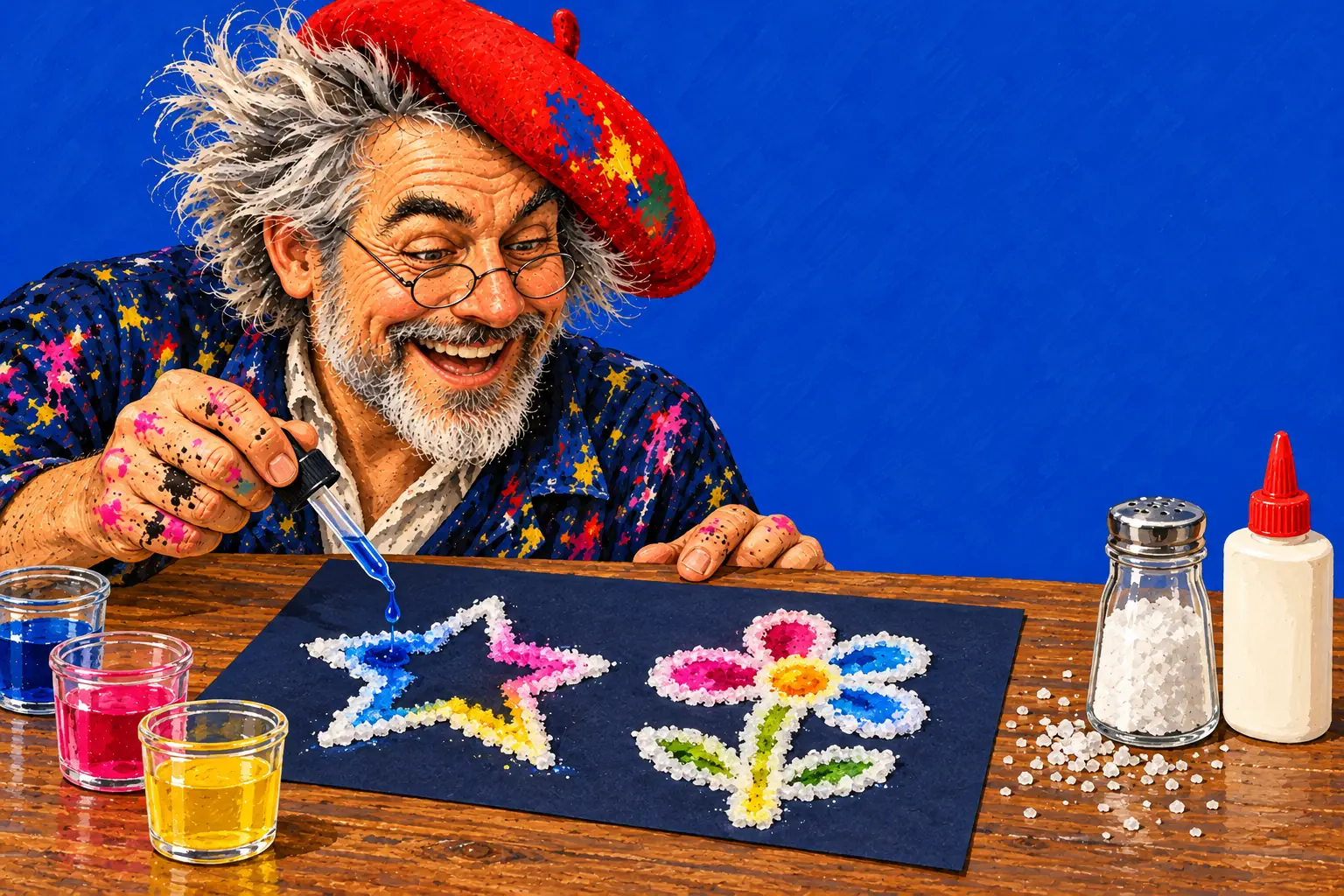
Salt painting is a favourite at home and in class: draw with glue, sprinkle salt on it, touch a wet brush to the line and watch the colour race along it. The game does this too. Salt crystals in a crust are porous, so the game lets water pass through them far faster than through paper. Touch a wet brush to one end and the colour runs along the line.
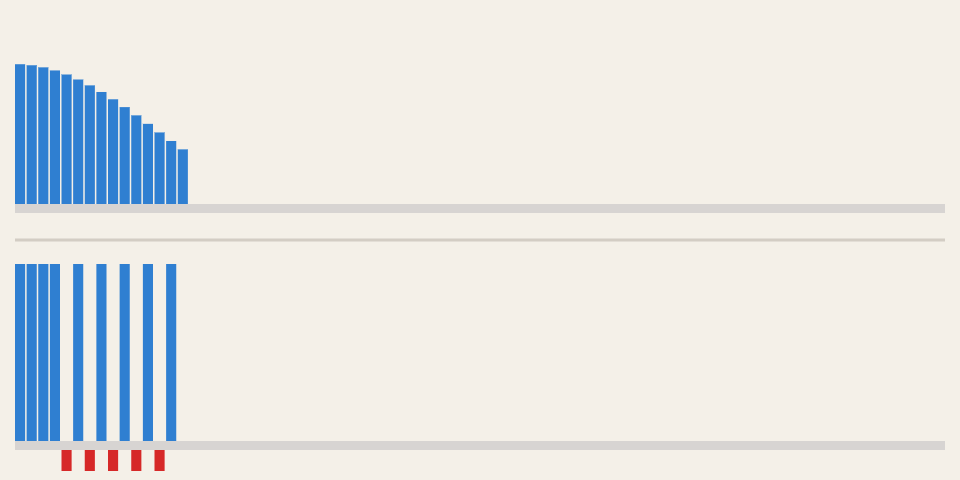
Fast is a problem for a simulation. The simple way to compute spreading takes small steps, and if one step tries to even out more than half the difference between two neighbours, the numbers start to swing wildly and blow up. Through salt each step would go more than ten times past that limit. So for salt the game uses a different kind of solver, one that works out where the water ends up rather than only where it's heading. It stays calm however fast the water goes.
It also never makes or loses a drop. Computers round every number a little, and an earlier version slowly made water out of rounding. Now each exchange is worked out once and taken from one cell and given to the next, so the total stays put. A test pins it to within one part in a million over 600 solves.
The game's own rule A wet dab sits at the left end of a salt line of 80 cells (4 cm). The top line uses the game's implicit solve; the bottom one the simple explicit step, with the same exchange rate. Blue bars are water, red ones below zero. It starts over every 4 seconds. What to look for: at full salt the explicit line swings and blows up within a few steps, while the implicit front marches one cell a step. Lower the salt until the rate falls under 0.5, where the explicit step is stable, and the explicit one behaves too, but crawls.
This part of the page could not start.
The salt line reaches 60 cells in 4 s; plain paper reaches about 4.
| seconds | salt line, implicit wick solve | plain paper, capillary rule |
|---|---|---|
| 0 | 0 | 0 |
| 0.25 | 1.48 | |
| 1 | 15 | 2.51 |
| 2 | 30 | |
| 3 | 45 | |
| 4 | 60 | 4.15 |
Source: The game's rules in a stand-alone copy, not measured in the game.
Most of a drawing is dry most of the time, so the game doesn't work on it. The sheet is cut into small squares, and only the squares with water in them run. A few seconds after the last wet thing has dried, the water simulation goes to sleep.
Squares that are barely changing, such as a wash that is slowly drying, are worked less often and catch up in one go. On a slow tablet the game shares out each frame's time by how much visible change each square is owed, so far-off paper updates less often but catches up, and paint should dry about when it does on a fast device.
The heaviest loops also run as WebAssembly that handles four cells at once. In the benchmark the paper pass came out 1.8 to 2.9 times cheaper than the plain JavaScript, and a salt wash 1.6 to 1.9 times.
Fire, electricity, chemistry and mould never ask where the water came from. They read the same wetness fields, most of them through one shared reading of how wet a spot is, and the dissolved elements the water brought. That is how a drop of water changes what a flame or a battery does without a line of code joining the two.
Shared: shared wetness
Damp paper won't light, and soaked paper won't light at all (checked by a test). A wet strip 1.5 cm wide held a front up for about 12 s, then it burnt through (measured).
Shared: dissolved salt, damp paper
The dissolved salt carries the current and fizzes at the clips (checked by a test, with the salt water laid in directly). Plain water has no ions in the game, so it doesn't conduct. Ions conduct only while the paper is damp, and drying turns the brine back into crystal.
Shared: acid, and the dye's grip on the fibres
A pink spot with a soft rim. The middle keeps at least about 70 % of its dye (checked by a test).
Shared: porosity, the same wick solve
The crumb drinks the colour more than 4 cells further than the paper does within 8 s (checked by a test).
Shared: soap's surface flow on wet paper
The paint is pushed out into a ring (checked by a test).
Shared: wax
The crayon lines take much less of the wash's colour than the paper between them (checked by a test).