512 × 384
Cells on the largest sheet, each with its own height, lit by one shader.
Game Tailors
Source: Light and shadow
The drawing app where the paper is real. No ads. No accounts. No personal data: only anonymous counts, which you can switch off.
Game Tailors · Schieweg 15Y-40, 2627 AN Delft (NL)
KvK 92437702 · VAT NL866044474B01
info@gametailors.com · +31 6 4227 5919
© 2026 Game Tailors
Light and shadow
Squeeze ketchup onto the page and it stands up off the paper. It shines along its top edge and throws a small shadow down to the right, as it would on a real table. Every spot of the paper keeps its own height, so paint, dents, puddles and burnt edges are all lit by the same light. And hold a magnifying glass still over the paper, and the sun's light gathers into a spot hot enough to set it alight.
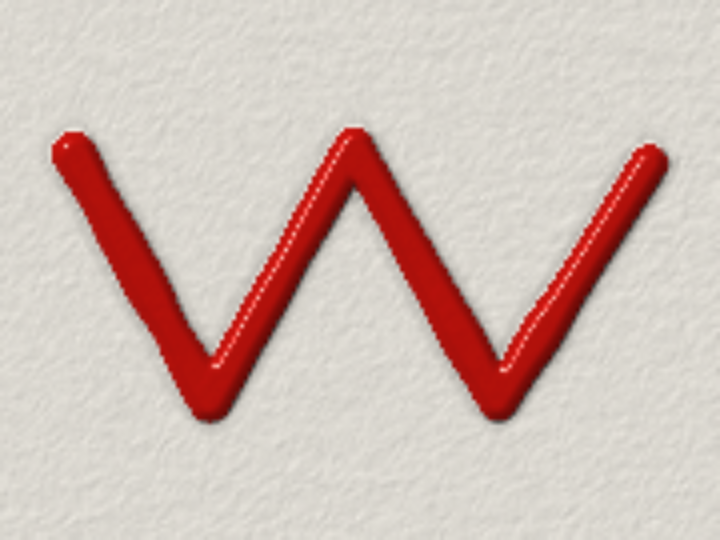
The simulation underneath doesn't hand the screen a picture. It hands over numbers for every spot of the paper: how much colour has soaked in, how wet it is, how thick the ketchup lies, how charred it is. To draw a frame, the game adds some of those numbers up into a single height for each spot, and lights the result.
So the relief you see is made of things the game already keeps. Press hard with a pencil and the dent is a low line. Wet the paper and it goes wavy, and once it dries it never goes completely flat again, until you iron it. A colouring page's outlines are low ridges, raised so that paint pools inside the shapes. Paint and ketchup stand as tall as they lie thick. Burnt paper lifts at its edges, and a burnt hole is a pit you see the table through.
The dents and waves aren't painted on. Water and paint flow over the same ground height that the light shades, so the low place you see is the low place a puddle runs into. A few bumps are mostly for the eye. The lift of a burnt edge and a laid wire are lit, but they don't steer the flow, and the paper's fibre steers it only when the page is tilted.
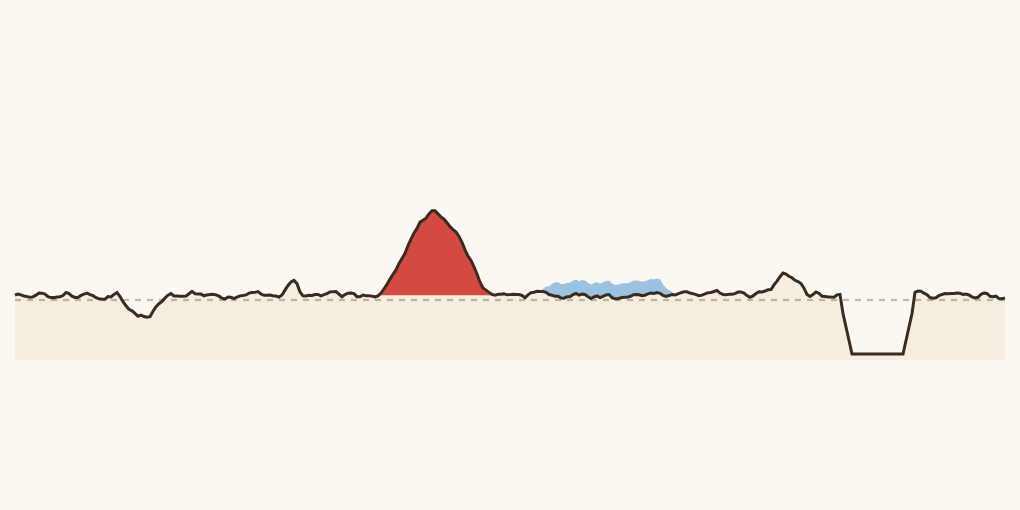
A cross-section, heights exaggerated. Each part adds to, or takes from, the one height the light reads: the fibre a faint grain, a pressed dent lowers the ground, a page outline is a low ridge, paint adds its own thickness, a water film its depth, a burnt edge lifts a little, and a hole is a pit.
This part of the page could not start.
One light hangs over the page, up and to the left, about 45° above the table. Each spot is lit by how squarely its surface faces that light. The side of a blob that faces up and left is bright; its far side is darker. A spot that sits lower than the paper round it gets a little less light from all around, so the bottom of a dent looks deeper than its slopes alone would show.
Colour comes in underneath the light. In the game a colour is how much light the paper's ink or paint takes away, channel by channel, so two thin layers darken together, as the Beer-Lambert law describes for light through a dye Swinehart 1962. Wet paper is a little darker, and standing water tints it faintly blue-grey. The colour chapter has the whole story of mixing.
Liquids get one more touch. Surface tension pulls a real liquid's small bumps flat, so on paint and ketchup the shader tones down slopes a cell or two across and keeps the big shape. Without it, every cell would light as a little facet and a puddle of sauce would sparkle like gravel. This is a choice about the look; the picture doesn't compute surface tension.
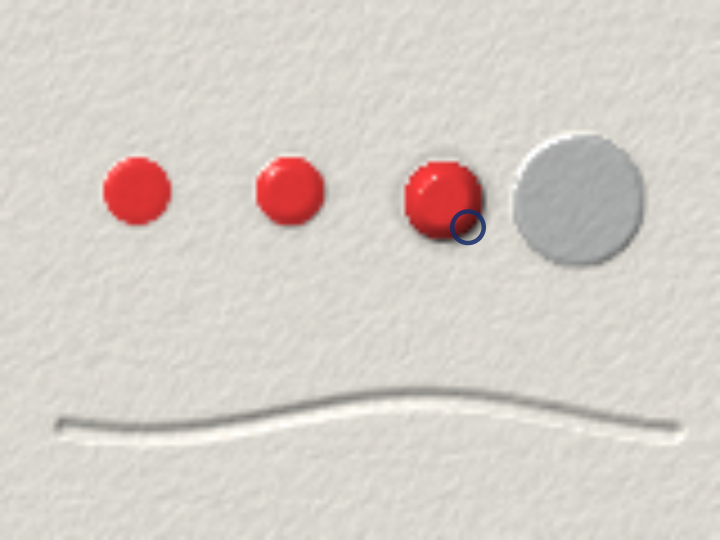
Three blobs of paint, 0.8, 2 and 6 cells tall from left to right, a pressed line and a puddle, lit by the shader's own sums on a 160 × 120 sheet. Pick a tool and drag on the paper, or press Use the tool. What to look for: the two smaller blobs are shaded but throw no shadow, and the tall one throws a short one to the lower right; a dent is dark on its upper-left wall; drop the shadow steps and short shadows vanish. Our simplifications: the blobs' shapes are ours, the paint's colour is one flat red, and the paper's fibre is our own noise with the game's weights.
This part of the page could not start.
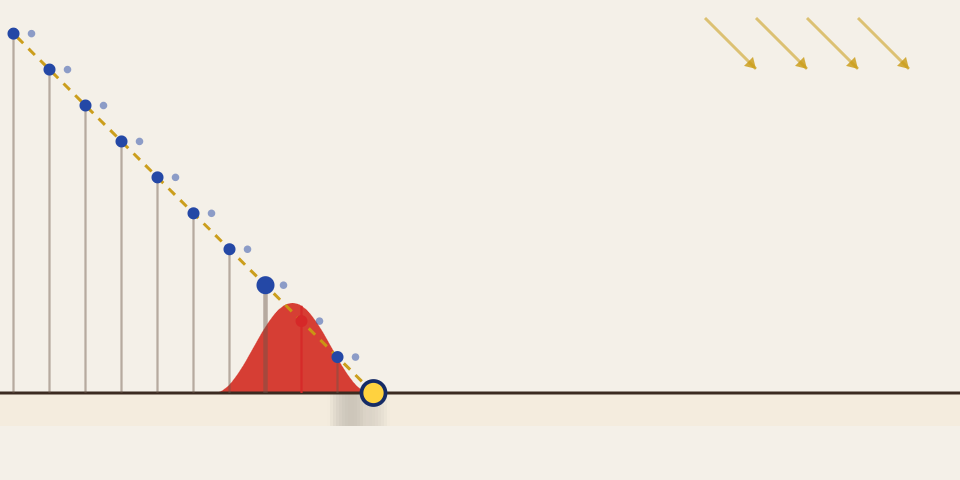
For every spot, the shader takes a short walk toward the light, in a handful of steps, and checks at each step: is anything here taller than the line of light coming down to me? If it is, the spot is in shadow. The further away the thing in the way, the softer the shadow it makes, as a real shadow blurs the further it falls from what casts it.
The line of light climbs about one cell for every cell it travels, and the first check is a little way off. So only something clearly taller than a spot can throw a shadow onto it, and it has to rise steeply: a slope gentler than the light's own 45° never gets above the line of light, however tall it grows. A dent, a watercolour wash or a film of water is lower than that. Their slopes are shaded, but they never cast. A blob of thick paint or a ridge of ketchup stands taller and does.
On a slower tablet the walk takes fewer, longer steps, so the smallest height that casts rises a little. The page still has its shadows; only the shortest ones go. Even the deepest shadow keeps some of the key light, and all of the light from round about, so nothing on the paper turns black.
A side view along the light's direction. The light comes from the upper left. From the marked spot, the walk checks its steps toward the light; a red check is one where the bump stands above the line of light. The strip under the paper shows how much light every spot keeps. Drag along the paper to move the spot, or use the slider. What to look for: below 1.6 cells the bump throws no shadow at all, and with fewer steps the threshold rises. Around 2 cells this rounded bump still casts nothing, because its sides are gentler than the light. This side view leaves out the averaging across the ray close to the caster.
This part of the page could not start.
At the best quality a ledge starts to take light away at 1.6 cells; with 7 steps at 2.3, with 6 at 2.7. Even 6 cells tall it takes 75 % of the key light at best quality, never all of it.
| height of a long ledge above the spot at its foot (cells) | best quality, 10 steps | 7 steps | lowest, 6 steps |
|---|---|---|---|
| 0 | 0 | 0 | 0 |
| 0.05 | 0 | 0 | 0 |
| 0.1 | 0 | 0 | 0 |
| 0.15 | 0 | 0 | 0 |
| 0.2 | 0 | 0 | 0 |
| 0.25 | 0 | 0 | 0 |
| 0.3 | 0 | 0 | 0 |
| 0.35 | 0 | 0 | 0 |
| 0.4 | 0 | 0 | 0 |
| 0.45 | 0 | 0 | 0 |
| 0.5 | 0 | 0 | 0 |
| 0.55 | 0 | 0 | 0 |
| 0.6 | 0 | 0 | 0 |
| 0.65 | 0 | 0 | 0 |
| 0.7 | 0 | 0 | 0 |
| 0.75 | 0 | 0 | 0 |
| 0.8 | 0 | 0 | 0 |
| 0.85 | 0 | 0 | 0 |
| 0.9 | 0 | 0 | 0 |
| 0.95 | 0 | 0 | 0 |
| 1 | 0 | 0 | 0 |
| 1.05 | 0 | 0 | 0 |
| 1.1 | 0 | 0 | 0 |
| 1.15 | 0 | 0 | 0 |
| 1.2 | 0 | 0 | 0 |
| 1.25 | 0 | 0 | 0 |
| 1.3 | 0 | 0 | 0 |
| 1.35 | 0 | 0 | 0 |
| 1.4 | 0 | 0 | 0 |
| 1.45 | 0 | 0 | 0 |
| 1.5 | 0 | 0 | 0 |
| 1.55 | 0 | 0 | 0 |
| 1.6 | 0.0008 | 0 | 0 |
| 1.65 | 0.0144 | 0 | 0 |
| 1.7 | 0.028 | 0 | 0 |
| 1.75 | 0.0416 | 0 | 0 |
| 1.8 | 0.0552 | 0 | 0 |
| 1.85 | 0.0688 | 0 | 0 |
| 1.9 | 0.0824 | 0 | 0 |
| 1.95 | 0.096 | 0 | 0 |
| 2 | 0.1096 | 0 | 0 |
| 2.05 | 0.1232 | 0 | 0 |
| 2.1 | 0.1368 | 0 | 0 |
| 2.15 | 0.1504 | 0 | 0 |
| 2.2 | 0.1641 | 0 | 0 |
| 2.25 | 0.1777 | 0 | 0 |
| 2.3 | 0.1913 | 0.0046 | 0 |
| 2.35 | 0.2049 | 0.0171 | 0 |
| 2.4 | 0.2185 | 0.0297 | 0 |
| 2.45 | 0.2321 | 0.0423 | 0 |
| 2.5 | 0.2457 | 0.0548 | 0 |
| 2.55 | 0.2593 | 0.0674 | 0 |
| 2.6 | 0.2729 | 0.08 | 0 |
| 2.65 | 0.2865 | 0.0925 | 0 |
| 2.7 | 0.3001 | 0.1051 | 0.0091 |
| 2.75 | 0.3138 | 0.1177 | 0.0212 |
| 2.8 | 0.3274 | 0.1302 | 0.0333 |
| 2.85 | 0.341 | 0.1428 | 0.0453 |
| 2.9 | 0.3546 | 0.1554 | 0.0574 |
| 2.95 | 0.3682 | 0.1679 | 0.0694 |
| 3 | 0.3818 | 0.1805 | 0.0815 |
| 3.05 | 0.3954 | 0.1931 | 0.0935 |
| 3.1 | 0.409 | 0.2056 | 0.1056 |
| 3.15 | 0.4226 | 0.2182 | 0.1176 |
| 3.2 | 0.4362 | 0.2308 | 0.1297 |
| 3.25 | 0.4498 | 0.2433 | 0.1417 |
| 3.3 | 0.4635 | 0.2559 | 0.1538 |
| 3.35 | 0.4771 | 0.2685 | 0.1658 |
| 3.4 | 0.4907 | 0.281 | 0.1779 |
| 3.45 | 0.5043 | 0.2936 | 0.1899 |
| 3.5 | 0.5179 | 0.3062 | 0.202 |
| 3.55 | 0.5315 | 0.3187 | 0.2141 |
| 3.6 | 0.5451 | 0.3313 | 0.2261 |
| 3.65 | 0.5587 | 0.3439 | 0.2382 |
| 3.7 | 0.5723 | 0.3564 | 0.2502 |
| 3.75 | 0.5859 | 0.369 | 0.2623 |
| 3.8 | 0.5995 | 0.3816 | 0.2743 |
| 3.85 | 0.6132 | 0.3941 | 0.2864 |
| 3.9 | 0.6268 | 0.4067 | 0.2984 |
| 3.95 | 0.6404 | 0.4193 | 0.3105 |
| 4 | 0.654 | 0.4318 | 0.3225 |
| 4.05 | 0.6676 | 0.4444 | 0.3346 |
| 4.1 | 0.6812 | 0.457 | 0.3466 |
| 4.15 | 0.6948 | 0.4695 | 0.3587 |
| 4.2 | 0.7084 | 0.4821 | 0.3708 |
| 4.25 | 0.722 | 0.4947 | 0.3828 |
| 4.3 | 0.7356 | 0.5072 | 0.3949 |
| 4.35 | 0.7492 | 0.5198 | 0.4069 |
| 4.4 | 0.75 | 0.5324 | 0.419 |
| 4.45 | 0.75 | 0.5449 | 0.431 |
| 4.5 | 0.75 | 0.5575 | 0.4431 |
| 4.55 | 0.75 | 0.5701 | 0.4551 |
| 4.6 | 0.75 | 0.5826 | 0.4672 |
| 4.65 | 0.75 | 0.5952 | 0.4792 |
| 4.7 | 0.75 | 0.6078 | 0.4913 |
| 4.75 | 0.75 | 0.6203 | 0.5033 |
| 4.8 | 0.75 | 0.6329 | 0.5154 |
| 4.85 | 0.75 | 0.6455 | 0.5274 |
| 4.9 | 0.75 | 0.658 | 0.5395 |
| 4.95 | 0.75 | 0.6706 | 0.5516 |
| 5 | 0.75 | 0.6832 | 0.5636 |
| 5.05 | 0.75 | 0.6957 | 0.5757 |
| 5.1 | 0.75 | 0.7083 | 0.5877 |
| 5.15 | 0.75 | 0.7209 | 0.5998 |
| 5.2 | 0.75 | 0.7334 | 0.6118 |
| 5.25 | 0.75 | 0.746 | 0.6239 |
| 5.3 | 0.75 | 0.75 | 0.6359 |
| 5.35 | 0.75 | 0.75 | 0.648 |
| 5.4 | 0.75 | 0.75 | 0.66 |
| 5.45 | 0.75 | 0.75 | 0.6721 |
| 5.5 | 0.75 | 0.75 | 0.6841 |
| 5.55 | 0.75 | 0.75 | 0.6962 |
| 5.6 | 0.75 | 0.75 | 0.7083 |
| 5.65 | 0.75 | 0.75 | 0.7203 |
| 5.7 | 0.75 | 0.75 | 0.7324 |
| 5.75 | 0.75 | 0.75 | 0.7444 |
| 5.8 | 0.75 | 0.75 | 0.75 |
| 5.85 | 0.75 | 0.75 | 0.75 |
| 5.9 | 0.75 | 0.75 | 0.75 |
| 5.95 | 0.75 | 0.75 | 0.75 |
| 6 | 0.75 | 0.75 | 0.75 |
Source: Computed from the game's own shadow march, with its key light and its step counts for each quality level.
Objects you put on the page, such as a cup, are paintings laid over the paper. Each one throws a faint, dark-brown copy of its outline, shifted down and to the right by how high it stands. The direction matches the page's light to within half a degree, so a cup's shadow and a blob's shadow point the same way.
Their lengths don't match, and we'd rather say so. An object's shadow is about half as long as the relief's light would throw it. The objects' rule was lined up with the light's direction by hand; its length was never worked out from it.
A candle flame, burning paper and a lit bulb glow brightly on the page. They are drawn bright, and they light nothing else: no shadow falls from a candle, and the paper beside a flame isn't brighter for it.
Glossy things catch a sharp highlight; matte things get a soft, faint one. Each material carries its own gloss, set by hand: honey and oil are the glossiest, ketchup and paint close behind, and foam is nearly matte. Dry paper has a little, and only very wet paper starts to shine.
Here is a surprise from the geometry. You look straight down at the page, and the light comes in at 45°. A perfectly flat, glossy puddle would bounce that light off at 45° the other way, away from your eye. So the flat middle of a puddle shows almost no glint. The highlight appears only where the surface tilts about 22.5° toward the light, halfway between the light and your eye: the rim of a puddle, the rounded top edge of a ketchup line. That's the same rule a real mirror follows, and nobody had to write "make puddle edges shine".
Standing water adds 0.000 when flat and peaks at 0.85 at a 22.5° tilt; paint peaks at 0.72, foam at 0.17 and dry paper at 0.068.
| how far the surface tilts toward the light (degrees) | standing water | paint | foam | dry paper |
|---|---|---|---|---|
| 0 | 0 | 0.0001 | 0.0098 | 0.0135 |
| 0.5 | 0 | 0.0001 | 0.0111 | 0.0145 |
| 1 | 0 | 0.0001 | 0.0126 | 0.0156 |
| 1.5 | 0.0001 | 0.0002 | 0.0142 | 0.0167 |
| 2 | 0.0001 | 0.0003 | 0.016 | 0.0178 |
| 2.5 | 0.0001 | 0.0004 | 0.018 | 0.0191 |
| 3 | 0.0002 | 0.0006 | 0.0202 | 0.0203 |
| 3.5 | 0.0003 | 0.0008 | 0.0225 | 0.0216 |
| 4 | 0.0005 | 0.0012 | 0.025 | 0.023 |
| 4.5 | 0.0007 | 0.0017 | 0.0278 | 0.0244 |
| 5 | 0.0011 | 0.0024 | 0.0307 | 0.0258 |
| 5.5 | 0.0016 | 0.0033 | 0.0339 | 0.0273 |
| 6 | 0.0023 | 0.0045 | 0.0372 | 0.0288 |
| 6.5 | 0.0033 | 0.0061 | 0.0408 | 0.0303 |
| 7 | 0.0047 | 0.0082 | 0.0446 | 0.0319 |
| 7.5 | 0.0065 | 0.0109 | 0.0486 | 0.0334 |
| 8 | 0.009 | 0.0144 | 0.0528 | 0.0351 |
| 8.5 | 0.0123 | 0.0188 | 0.0572 | 0.0367 |
| 9 | 0.0166 | 0.0244 | 0.0618 | 0.0383 |
| 9.5 | 0.0221 | 0.0312 | 0.0665 | 0.04 |
| 10 | 0.0292 | 0.0397 | 0.0714 | 0.0416 |
| 10.5 | 0.0381 | 0.0499 | 0.0765 | 0.0432 |
| 11 | 0.0491 | 0.0621 | 0.0817 | 0.0449 |
| 11.5 | 0.0626 | 0.0766 | 0.0869 | 0.0465 |
| 12 | 0.079 | 0.0935 | 0.0923 | 0.0481 |
| 12.5 | 0.0986 | 0.1132 | 0.0977 | 0.0497 |
| 13 | 0.1217 | 0.1356 | 0.1031 | 0.0512 |
| 13.5 | 0.1486 | 0.161 | 0.1086 | 0.0527 |
| 14 | 0.1795 | 0.1894 | 0.114 | 0.0542 |
| 14.5 | 0.2143 | 0.2207 | 0.1193 | 0.0556 |
| 15 | 0.2533 | 0.2548 | 0.1245 | 0.057 |
| 15.5 | 0.296 | 0.2914 | 0.1296 | 0.0583 |
| 16 | 0.3422 | 0.3302 | 0.1345 | 0.0596 |
| 16.5 | 0.3914 | 0.3707 | 0.1393 | 0.0607 |
| 17 | 0.4429 | 0.4123 | 0.1438 | 0.0618 |
| 17.5 | 0.4958 | 0.4543 | 0.148 | 0.0629 |
| 18 | 0.5491 | 0.496 | 0.1519 | 0.0638 |
| 18.5 | 0.6016 | 0.5366 | 0.1555 | 0.0647 |
| 19 | 0.6521 | 0.5751 | 0.1588 | 0.0654 |
| 19.5 | 0.6993 | 0.6108 | 0.1617 | 0.0661 |
| 20 | 0.7419 | 0.6427 | 0.1642 | 0.0667 |
| 20.5 | 0.7788 | 0.6701 | 0.1662 | 0.0671 |
| 21 | 0.8089 | 0.6923 | 0.1678 | 0.0675 |
| 21.5 | 0.8312 | 0.7087 | 0.169 | 0.0678 |
| 22 | 0.845 | 0.7189 | 0.1697 | 0.0679 |
| 22.5 | 0.85 | 0.7225 | 0.17 | 0.068 |
| 23 | 0.8459 | 0.7195 | 0.1698 | 0.068 |
| 23.5 | 0.8329 | 0.71 | 0.1691 | 0.0678 |
| 24 | 0.8115 | 0.6942 | 0.168 | 0.0675 |
| 24.5 | 0.7821 | 0.6726 | 0.1664 | 0.0672 |
| 25 | 0.7459 | 0.6456 | 0.1644 | 0.0667 |
| 25.5 | 0.7037 | 0.6141 | 0.1619 | 0.0662 |
| 26 | 0.6569 | 0.5788 | 0.1591 | 0.0655 |
| 26.5 | 0.6067 | 0.5405 | 0.1559 | 0.0647 |
| 27 | 0.5543 | 0.5001 | 0.1523 | 0.0639 |
| 27.5 | 0.5011 | 0.4584 | 0.1484 | 0.063 |
| 28 | 0.4481 | 0.4164 | 0.1442 | 0.0619 |
| 28.5 | 0.3964 | 0.3747 | 0.1397 | 0.0608 |
| 29 | 0.347 | 0.3341 | 0.135 | 0.0597 |
| 29.5 | 0.3004 | 0.2952 | 0.1301 | 0.0584 |
| 30 | 0.2573 | 0.2583 | 0.125 | 0.0571 |
| 30.5 | 0.218 | 0.224 | 0.1198 | 0.0558 |
| 31 | 0.1827 | 0.1924 | 0.1145 | 0.0544 |
| 31.5 | 0.1515 | 0.1637 | 0.1091 | 0.0529 |
| 32 | 0.1242 | 0.138 | 0.1037 | 0.0514 |
| 32.5 | 0.1008 | 0.1153 | 0.0982 | 0.0498 |
| 33 | 0.0808 | 0.0953 | 0.0928 | 0.0483 |
| 33.5 | 0.0641 | 0.0781 | 0.0875 | 0.0467 |
| 34 | 0.0503 | 0.0634 | 0.0822 | 0.045 |
| 34.5 | 0.039 | 0.051 | 0.077 | 0.0434 |
| 35 | 0.03 | 0.0406 | 0.0719 | 0.0418 |
| 35.5 | 0.0227 | 0.032 | 0.067 | 0.0401 |
| 36 | 0.0171 | 0.025 | 0.0622 | 0.0385 |
| 36.5 | 0.0127 | 0.0193 | 0.0576 | 0.0368 |
| 37 | 0.0093 | 0.0148 | 0.0532 | 0.0352 |
| 37.5 | 0.0067 | 0.0112 | 0.049 | 0.0336 |
| 38 | 0.0048 | 0.0084 | 0.045 | 0.032 |
| 38.5 | 0.0034 | 0.0063 | 0.0412 | 0.0304 |
| 39 | 0.0024 | 0.0046 | 0.0376 | 0.0289 |
| 39.5 | 0.0017 | 0.0034 | 0.0342 | 0.0274 |
| 40 | 0.0011 | 0.0024 | 0.031 | 0.0259 |
| 40.5 | 0.0008 | 0.0017 | 0.0281 | 0.0245 |
| 41 | 0.0005 | 0.0012 | 0.0253 | 0.0231 |
| 41.5 | 0.0003 | 0.0009 | 0.0227 | 0.0218 |
| 42 | 0.0002 | 0.0006 | 0.0204 | 0.0204 |
| 42.5 | 0.0001 | 0.0004 | 0.0182 | 0.0192 |
| 43 | 0.0001 | 0.0003 | 0.0162 | 0.018 |
| 43.5 | 0.0001 | 0.0002 | 0.0144 | 0.0168 |
| 44 | 0 | 0.0001 | 0.0128 | 0.0157 |
| 44.5 | 0 | 0.0001 | 0.0112 | 0.0146 |
| 45 | 0 | 0.0001 | 0.0099 | 0.0136 |
| 45.5 | 0 | 0 | 0.0087 | 0.0126 |
| 46 | 0 | 0 | 0.0076 | 0.0117 |
| 46.5 | 0 | 0 | 0.0066 | 0.0108 |
| 47 | 0 | 0 | 0.0057 | 0.01 |
| 47.5 | 0 | 0 | 0.005 | 0.0092 |
| 48 | 0 | 0 | 0.0043 | 0.0084 |
| 48.5 | 0 | 0 | 0.0037 | 0.0077 |
| 49 | 0 | 0 | 0.0031 | 0.0071 |
| 49.5 | 0 | 0 | 0.0027 | 0.0065 |
| 50 | 0 | 0 | 0.0023 | 0.0059 |
Source: The game's Blinn-Phong highlight with its key light and its hand-set gloss per material.
Pick up the magnifying glass and hold it over the paper. At first its spot of sunlight is wide and only warms the paper. Keep still and in about two seconds it tightens to a small bright point that heats many times as fast. Paper browns from 200 °C and catches at about 230 °C. From then on it's the same fire as a match would start, spreading through the same paper (see Heat and fire).
Move the glass and it loosens. Every time it moves on, it loses part of its focus. A quick sweep only warms the paper. A slow drag keeps refocusing between moves, and by the game's own sums it can still set the paper alight.
The light falls on the first thing in its way. Hold the glass over a cup and the cup takes the light; the paper underneath stays below 40 °C, while bare paper beside it catches. An automated test holds the glass both ways and checks this.
next update The glass heats by colour. A black line takes in nearly all the light and white paper sends most of it back, so a dark line heats several times as fast; a test pins that it heats at least twice as fast. Wet paper has to boil dry first, and the glass can light a candle, which a test checks too.
The glass starts held still, then moves on by itself; drag on the paper to take it, or use the buttons. A dark marker line runs across the lower part. What to look for: the spot shrinks and brightens while you hold still, a fast sweep leaves no mark, and a slow drag scorches a trail. Switch to next update and the dark line catches far sooner than the white paper. Focus, spot, heating, ceiling and thresholds are the game's; conduction and cooling are the game's rates for average paper. Where a spot passes 230 °C the game's fire would take over and spread; here we only mark it black.
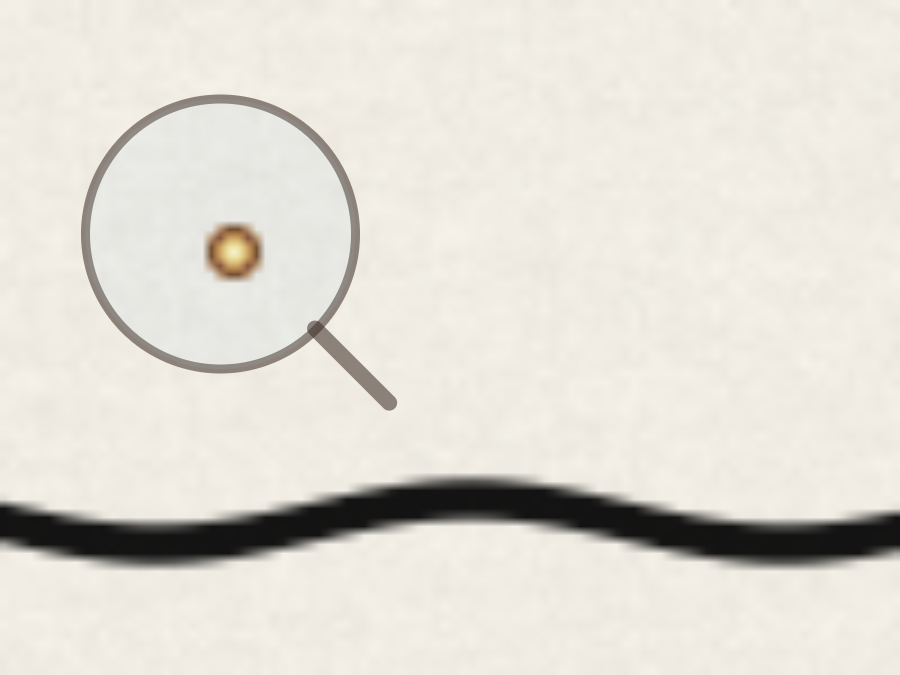
This part of the page could not start.
Held still from cold, the middle of the spot passes 230 °C after 1.25 s on white paper with heat spreading and cooling, 0.90 s with the bare formula, and 0.45 s on the dark line.
| seconds held still, from cold | white paper, heat spreading and cooling | white paper, no spreading (the bare formula) | dark line, next update |
|---|---|---|---|
| 0 | 20 | 20 | 20 |
| 0.05 | 27 | 28 | 46 |
| 0.1 | 33 | 35 | 70 |
| 0.15 | 39 | 43 | 93 |
| 0.2 | 45 | 51 | 115 |
| 0.25 | 51 | 60 | 138 |
| 0.3 | 57 | 68 | 160 |
| 0.35 | 63 | 78 | 183 |
| 0.4 | 70 | 88 | 207 |
| 0.45 | 76 | 99 | 231 |
| 0.5 | 83 | 111 | 257 |
| 0.55 | 90 | 123 | 284 |
| 0.6 | 98 | 137 | 312 |
| 0.65 | 106 | 151 | 343 |
| 0.7 | 114 | 167 | 375 |
| 0.75 | 124 | 184 | 409 |
| 0.8 | 133 | 202 | 444 |
| 0.85 | 143 | 222 | 482 |
| 0.9 | 154 | 244 | 510 |
| 0.95 | 165 | 266 | 517 |
| 1 | 177 | 291 | 517 |
| 1.05 | 189 | 318 | 517 |
| 1.1 | 203 | 346 | 517 |
| 1.15 | 216 | 376 | 517 |
| 1.2 | 230 | 408 | 517 |
| 1.25 | 245 | 443 | 517 |
| 1.3 | 261 | 480 | 517 |
| 1.35 | 277 | 519 | 517 |
| 1.4 | 293 | 520 | 517 |
| 1.45 | 310 | 520 | 517 |
| 1.5 | 327 | 520 | 517 |
| 1.55 | 345 | 520 | 517 |
| 1.6 | 363 | 520 | 517 |
| 1.65 | 382 | 520 | 517 |
| 1.7 | 400 | 520 | 517 |
| 1.75 | 419 | 520 | 517 |
| 1.8 | 438 | 520 | 517 |
| 1.85 | 458 | 520 | 517 |
| 1.9 | 477 | 520 | 517 |
| 1.95 | 496 | 520 | 517 |
| 2 | 503 | 520 | 517 |
| 2.05 | 506 | 520 | 517 |
| 2.1 | 508 | 520 | 517 |
| 2.15 | 510 | 520 | 517 |
| 2.2 | 512 | 520 | 517 |
| 2.25 | 513 | 520 | 517 |
| 2.3 | 514 | 520 | 517 |
| 2.35 | 515 | 520 | 517 |
| 2.4 | 516 | 520 | 517 |
| 2.45 | 516 | 520 | 517 |
| 2.5 | 517 | 520 | 517 |
Source: Worked out with the released glass's focus and heating, and heat's conduction and cooling for average paper. Not a measurement of the game.
An ant crossing under the glass is never burned. Before the light lands, every creature where the spot is, or where it's heading, is told it's in danger and gets out of the way. If one is too big to slide clear in time, the glass does nothing that moment and waits. Creatures aren't excused from heat. The light doesn't arrive while one is there. An automated test runs this for every creature in the game, awake or asleep, with the glass held on it and held beside it. The creatures chapter explains the shared danger they all read.
Spot burns within 1 s? → warn creatures in the spot and its path
One still under it? → yes: no light this step; no: heat the paper
The warning goes through the same danger channel every threat uses; a test checks it for every creature.
In the full version, the cat comes with a laser pointer. Shine its small red dot on the paper and the cat chases it, pounces and swats. Flick the dot away quickly and the cat is left behind, because it runs to where the dot was a split second ago. That delay is the cat's reaction time, and it's why a fast flick really does get away.
The cat only counts a light as a dot if it is small. The magnifying glass's spot is never small enough, and the cat never chases anything that burns. When the dot goes out under its paw, the cat counts it as caught, and is very pleased about it. A correlational survey of cat owners, which we found after building this, linked frequent laser play with cats that keep chasing lights and shadows, and mentions the suggestion that never catching the prey may frustrate them Kogan 2021. Letting the cat catch the dot is consistent with that. The dog sees the dot too, and on purpose it doesn't chase it.
The dot wanders and now and then flicks away. Drag on the paper to move it yourself, or press Flick the dot. The faint ring is where the cat is aiming: where the dot was one reaction time ago. What to look for: slow moves, and the cat stays on the dot; quick flicks, and it runs to an empty spot first. The history and the reaction delay are the game's (0.13 s); how the cat runs here is ours.
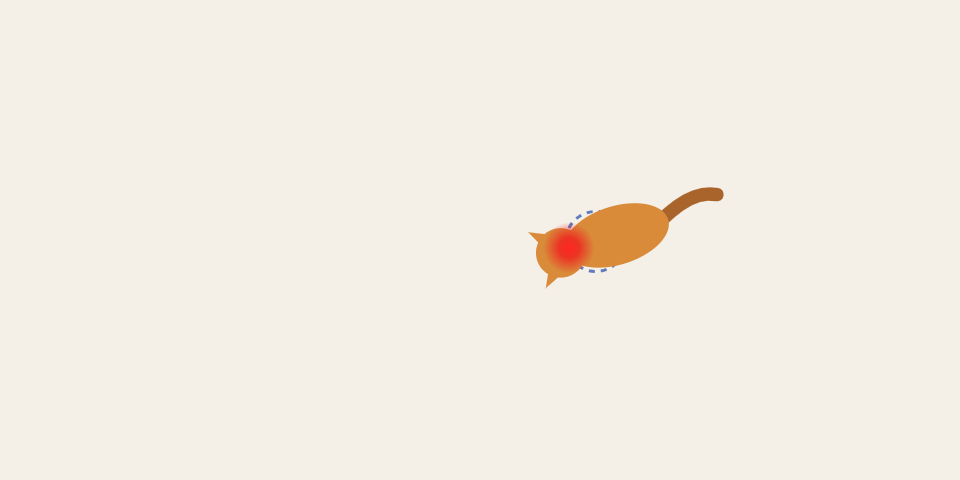
This part of the page could not start.
Light touches the other systems through two shared things. The height field ties what you see to where liquids flow. The temperature field takes the magnifier's light and hands it to everything that reacts to heat.
Shared: temp
The wax melts, the egg sets, the bank card melts, at the same temperatures a candle or an iron would need; a test checks each.
Shared: the first thing in the light's way
The paper under the cup stays below 40 °C; bare paper beside it catches. Pinned by a test.
Shared: danger
It moves away, and the light waits until it has. A test checks every creature.
Shared: covered
The colour round it fades and its own shape stays, as big as it was drawn. Pinned by a test.
Shared: ground height
The light shades the dent, and paint and water flow over the same ground. No test yet follows a liquid into a dent; the liquids and the light read the same ground.
Shared: temp
next update The candle lights, as it would from a match or burning paper. Pinned by a test.
Light is where a game is most tempted to fake things. We fake some, on purpose, and we say which. The page's relief is computed every frame from real state; the rest are choices that keep the picture readable and the frame fast on a cheap tablet.